Author: Eric Deeter

  • You can manage Manage Time.

    You can manage Manage Time.

    Speaking notes

    You may have heard about the mythical concept of time management.

    I can hear you say, Wait a minute! I use time management all the time.

    I work hard to manage my time so I can have work/life balance!

    If you missed Monday Morning Mindset from 2 weeks ago (Sept 5) I explain that work/life balance is also a mythical concept.

    You can’t manage time.

    I first came to the realization that time management is a myth when I wrote my first (and only) book. How to Be Your Own Boss – available on Amazon Kindle and in paperback.

    So let’s think about this idea that you can manage your time.

    When you “manage” something, it suggests that you have some amount of influence over it.

    Manage other people – they are supposed to listen and do what you ask them to do.

    You don’t have complete control, but you make decisions that affect what they do.

    So how much influence do you have over time?

    Can you tell it to slow down or speed up?

    Can you get it to wait for you?

    “Time and tides wait for no one.”

    No, you can’t “manage” time.

    You can only manage yourself and the decisions you make as you move through time.

    Well, isn’t that the same thing? 

    No. It’s not.

    The words you use to describe a thing affect the way you think about it.

    And the way you think about a thing determines the way you interact with it.

    When you use the word “time management” there is a subtle shift in your mind.

    Your mind creates a separation between “you” and “time.”

    What you’re actually trying to is to manage yourself. 

    Actually it’s more like creating a budget. You have only so much time, and you’re choosing how to spend it.

    What difference does it make?

    When you’re “managing” time, your mind separates you (just a bit) from full responsibility.

    Interruptions, distractions, cat videos, & Facebook.

    What I’m supposed to be working on VS what I’m doing right now.

    Managing yourself – puts all the responsibility on you and your decisions. 

    Yes, it’s a subtle difference. 

    But often the difference between success and failure comes down to tiny changes.

    Consider the story of Natalie Bickers from Ep. 76. 

    She entered the Moab 240 trail race.

    Cutoff time: 113 hours – 4 days 17 hours.

    She crossed the finish line in 112:59:58

    Two seconds before the cutoff.

    You may not be in competition, but

    The way you think about time does influence how you act.

    So shift your mindset about your relationship to time.

    Don’t try to manage it.

    Manage yourself. Get that slight edge, and go for success whatever you’re doing.

    If you want to make a shift in your mindset, schedule a free 25 minute conversation with me – ultramindsetpodcast.run

  • Maage Your Energy Not Your Time – Johnathan Prosser.

    Maage Your Energy Not Your Time – Johnathan Prosser.

    Like many ultramarthon runners I’ve talked to on the show, Jonathan Prosser hated running when he was young. But then, his experience with running was in training for high school basketball. Running consisted of sprints with a lot of stopping and starting.

    He started running after he left high school and discovered that he loved it. He started running two mile loops around Washburn University campus. He did it to stay in shape and he thinks the reason he loved running was because there wasn’t a coach yelling at him to go faster. It was his own inner challenge.

    Jonathan started running longer distances in 2019 as part of a goal to complete an Ironoman. He entered a triathlon in Topeka called the Tin Man. It’s an Olympic distance triathlon. 

    His friend, Josh Thompson, had a small group of runners that met at local trails and invited him to go out with them. He enjoyed the woods and found trail running to be harder than road running. But he loves the challenge of trail running and now only occasionally enters any road races.

    In the fall of 2019 he completed his first marathon, the Kansas City Marathon. Then in January of 2020 he finished a 50K trail race. These races made him curious to test his limits as a runner. And he likes the longer distances because he says he’s not a fast runner.

    Johnathan wasn’t satisfied with the 50k distance. He wanted to see what his body was capable of. So in the fall of 2020 he entered the Austin Rattler 66K. It was farther than a 50K, but he felt like he had more to give.

    After the race, he won a drawing for a free entry into the Leadville 100. His first thought was that he would have to find a qualifying race so he could run Leadville. He had the option to postpone his entry for a year. He said it was a good decision that he did so.

    He decided to enter the Silverheels 100 with his friend, Devin Nelson. They didn’t give themselves any time to adjust to running at altitude, and it caused them to struggle. They made it to an aid station at 65 miles and found they were the last ones on the course. The course sweeper was with them and said they had time, but they would have to push hard. Johnathan said that part of what contributed to the DNF was his mindset. Somewhere along the way doubt had crept in and he didn’t think he had time to make the cutoff. Sleep deprivation and lack of calories also contributed.

    He says that for anyone who is thinking about running this far to lean on the power of self-talk. It’s more powerful than you think, and it is something that he now uses in his running.

    After the DNF, he still needed a qualifying race. So he entered the Outlaw 100 in Oklahoma. He finished that race and took the lessons learned into his run at Leadville.

    He says his race started with a funny twist. He was with all 600 or so other runners at the start. Waiting for the race he was taking pictures and enjoying the moment. Then, four minutes before the start, he realizes he doesn’t have his nutrition in his pack. He quickly calls his wife who gets his coach. His coach sprints to get something out of his own car and runs to hand it to Johnathan. He says one of his favorite pictures is of him as the last person across the starting line. And, he ran faster in those first miles as he tried to catch up with the pack.

    His coach gave hun a strategy for his race. He said, “Don’t try to bank time. Focus on banking your energy.” So Johnathan was conservative during the first half of the race. He conquered the challenge of Hope Pass at the turn-around point. But he says that the back side of Hope Pass was even more challenging than the front. 

    But once he got to pick up his pacers, he began to push himself a little more. He began to pass runners who hadn’t managed their energy as well as he had. He was running strong for the final miles and felt great crossing the finish line.

    Next he plans to run the first of October the Ouray 100 and then he will recover and see what he will do next. But he still wants to go further and see how far he can go so he is working with his coach on the possibility of doing a 200 next year. But he knows it won’t be easy. 

    Bridge questions:

    Something you needed but didn’t have at Leadville: An actual headlamp earlier in the race. He had only a small one. 

    Something you had that you didn’t need: Carried too much nutition with me.

    Weirdest thing you’ve seen on the trails: He ran into some students who were getting high and looked at him like he was a weirdo.

    What is the word or phrase that sums up your philosophy of life: Comfort is a slow death.

    Facebook

    ______________________________________________

  • Broken Glass is Everywhere!

    Broken Glass is Everywhere!

    Speaking Notes

    I am a barefoot runner.

    What that means is that I wear minimal sandals when running on trails. 

    I’m going fast enough that a misstep hurts plenty. 

    But on streets and roads, I run barefoot.

    It’s been a good decision for me.

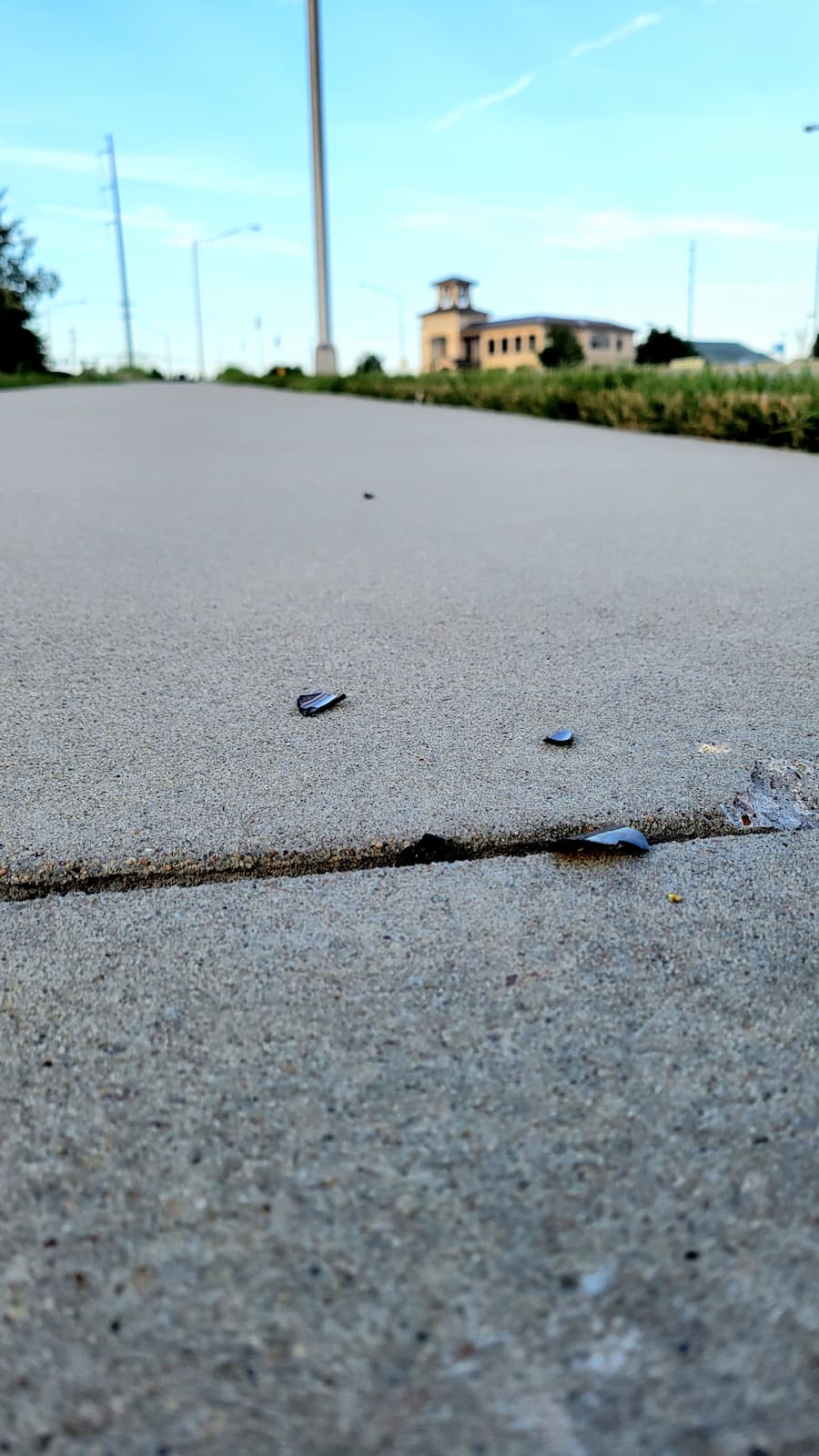
    Last week a lady was walking her dog as I ran by.

    She asked how I could run barefoot with all the broken glass on the sidewalk.

    I told her that I just avoid all the big pieces.

    But the reality is that there is hardly any broken glass on the sidewalk.

    She saw my bare feet and thought of broken glass and her mind created the idea that it was everywhere.

    This is how our brains work! 

    None of us are good at judging the amount of danger in the world.

    Part of your brain is wired to make you afraid.

    Amygdala – Lizard Brain – in charge of the 4 Fs: Feeding, Fighting, Fleeing, and Reproduction.

    No rational thought. Only survival. “What is out there that will kill me?”

    Anything outside of “normal” is a threat!

    Even bad habits.

    Most of us look at skydiving and bungee jumping as dangerous. Wouldn’t think of it!

    Stats: Just as likely to die at a dance party as you are skydiving.

    50x more likly to die in a canoe as bungee jumping.

    35x more likely to die in a car than riding a bicycle.

    But most of us will still feel safer driving a car than skydiving.

    If you’re happy with your life the way it is, then you don’t need to think about any of this.

    As long as you stay in your comfort zone, you’ll be fine.

    But if you want to have more than an average life, then you need to know how to deal with your lizard brain.

    When I was a kid I was terrified of snakes.

    But I wanted to be like Daniel Boone & Davy Crocket. 

    So I dreamed of being a mountain man. I read books and watched movies.

    But I was afraid to go into the woods.

    I imagined there were snakes everywhere.

    I was not different from the woman who imagined sidewalks full of broken glass.

    Now I spend hours in the woods running trails.

    When a bicycle comes, I have to step into the woods to get out of the way. 

    And I don’t have time to look where I’m stepping.

    But I know the chance of stepping on a snake is low.

    I also know that I’ve run by snakes and never seen them.

    What changed?

    I’ve learned some ways to manage my emotions . . . including fear.

    I had a similar experience when I began running through the rocks and roots in minimal sandals.

    I felt like I was going to tear up my feet because only the bottom was protected.

    Not perfect. But most of my fear was my imagination.

    So how do you get your Lizard Brain to be quiet long enough for you to do the things you want to do?

    I’ve learned several mindset tools you can use to manage the emotion of fear.

    But the first one I learned and the simplest technique to use: Do it afraid!

    The only thing I was more afraid of than snakes was heights.

    A friend promised he could cure my fear of heights.

    We went to Echo Cliff and he explaned the basics of rappeling.

    I backed up to a 50’ cliff and let my heels hang off the edge.

    My heart was hammering and I was hyperventilating.

    But I leaned back and felt the rope stretch and then hold.

    I went down the cliff and survived. Then I did it 10 more times until I wasn’t afraid any more.

    Disclaimer: Do it scared doesn’t mean “be stupid.” 

    Most dangerous words: “Hold my beer & watch this.”

    But there’s a good chance your Lizard Brain is keeping you from something you’d really like to be doing.

    Here’s the takeaway for this Monday Morning Mindset: Feeling fear is natural. Your brain uses fear to try to keep you from dying. But your brain isn’t a good judge of risk (skydive vs dance party). 

    Yes, there is a little glass on the sidewalk. But if you decide to join me and run barefoot, you’ll find there isn’t as much as you imagined.

    What I do as a mindset coach is to show you how to manage your energy, your thoughts, and your emotions.

    That’s what you need for success in ultramarathon.

    You need that when you’re a business owner.

    You need that for LIFE!

  • Healing the Body Through Movement – Vinny Crispino.

    Healing the Body Through Movement – Vinny Crispino.

    Vinny Crispino will be doing his first ultramarthon soon, the Old Cascadia on the Oregon Blue River in the Old Cascadia Range which is a 50 mile, 14,800 elevation gain trail with a time limit of 17 hours. His goal is to finish and survive.

    Vinny says he wasn’t very good at any sport except swimming. He wasn’t very athletic on dry land, but when it came to a pool it was his natural zone. Within the first years of swimming competition he was breaking pool records and state records. From age six to eighteen he spent every day in the pool. And when he had off-days from training he was playing in the pool with friends.

    When he got to high school he was captain of the team and broke a bunch of state records. He went on to compete in the division 1 swimming program at the University of Wyoming.

    But he says he had burned out on swimming at about age fifteen. He stayed in the sport because when you compete at that level your friends are all involved in the sport. And it was the sport that would give him a scholarship. Eventually he had to face the fact that he didn’t want to swim competitively any more. But he still loved the water so he decided to sell everything, leave the University of Wyoming, and go to California and become a professional surfer.

    He says he wasn’t a natural at surfing, but was making progress. He hadn’t been at it very long when a big wave knocked him off his board and crushed him to the bottom where he hit a rock and broke his back. 

    He went from being incredibly bulletproof and feeling invincible as an athlete and feeling like he could do whatever he wanted in the water to having that one moment break his back and his identity. It made standing for a minute or two a hell on earth for him, and that one moment launched him into living almost a full decade with a severe disability.

    He says he didn’t really surf for very long, but he definitely came to a place of enjoyment for the sport. Surfing allowed for competition, but it was free-form and flowing. It was a vehicle for expression that required skill and mastery without the analytical precision of swimming: the times, the splits, and the numbers in training and competition. He says that that first time he went surfing after giving up swimming he found deep joy, and he never missed swimming. He never looked back or regretted giving it up or thought about where he might have been had he kept at it. He was just fixated on that new chapter in his life that opened up, and unfortunately it was very short lived.

    Vinny’s official diagnosis was a multiple herniation of his T-12 vertebre. The fracture and the force of the impact displaced his lumbar spine 21 degrees to the left. So he basically developed lumbar scoliosis. He really was very fortunate that he didn’t have spinal cord damage. 

    At the time that happened, after he came out of shock he was left with no feeling in his left leg. He sought various medical views and some said he needed surgery. Some said just rehab, but he was going to require assistance to walk and that the best option wast maybe a wheelchair. 

    Vinny spent the next five years looking for alternatives that didn’t leave him immobilized for the rest of his life. He tried chiropractors, physiotherapy, yoga, and acupuncture. Nothing helped. 

    He finally found a “body worker,” that’s what he called himself. In his first session he was laying in a position the body worker was just telling him how to move how he wanted him to move and how to shift his body. He wasn’t even touching Vinny. He was only sitting in a chair beside him. So basically this re-educated him on how to move and how things should work. And after an hour of these annoyingly simple, disappointing exercises he told him to get up, and for the first time in 5 years he was able to stand up without a sharp stabbing pain in his lower back. Vinny was confused because he thought that when you have an intense problem you should need an intense solution to fix it. But these simple movements worked when nothing else had.

    Vinny continued working with his body worker and his body gradually healed. He then went on to learn the process and started the Pain Academy where he teaches others how to heal their bodies through movement. His program is a 52-week comprehensive course on how to move your body in a way that is natural and healing.

    He talks about how the body is incredibly brilliant at compensating, and without you having a formal education in mechanics your body is still going to find a way to rotate and re-align to compensate for pain. If you focus on correcting just that one movement it will cause an excess load and pain in a different part of your body. That’s why his program looks at the total body movement and doesn’t just focus on symptoms.

    Bridge Questions:

    Must-have gear: a Solomon backpack that has saved his life running on the trails, he says without it he wouldn’t be able to run as far as he is.

    Strangest thing he’s seen on the trails: a group of guys in full camo who ran away when they saw him.

    Word or phrase that defines his philosophy of life: What if?


    Connect with Vinny:

    Pain Academy

    Instagram

    Facebook

    YouTube

  • Work/Life Balance is a Myth!

    Work/Life Balance is a Myth!

    Speaking notes:

    How are you doing with your work/life balance?

    51% of workers say they have missed important life events because of work commitments.

    40% of employees say they use their personal devices for work purposes after business hours. 

    70% of employees will read their emails while watching television at home.

    60% of Americans say they have poor work-life balance mostly due to a lack of boundaries between work and home life.

    On average, employees take 26% of their work back home to complete during their personal time.

    Small business owners – work almost twice as much as employees.

    Work/life balance sounds like a big deal. Most need to do better.

    But I’m here to say that work/life balance is a myth!

    There is no such thing as work/life balance!

    I want to talk about the myth of work/life balance.

    I used to believe in work/life balance. And I believed I was terrible at it.

    I’ve been self-employed for almost 30 years.

    My wife and I are partners and we have no employees.

    As our business grew, we ended up working all the time.

    We ran for a lot of years on the edge of burnout.

    And we were saved by a time-share saleswoman.

    We went for a “free” weekend with some friends.

    Obligated to sit through a sales presentation.

    “We’re not going to buy! Right?”

    She asked, “What do you like to do on vacation.”

    Us: “We’re self-employed. We don’t take vacations.”

    She asked, “Do you think that’s healthy?”

    “I’m going to get a coffee. Do you want some?”

    We talked about how the time-share would force us to plan and take time off.

    We bought in. And it was a good decision.

    That was the step that led me to bust the myth of work/life balance.

    Think about this with me.

    There is no work/life balance.

    All you have is LIFE!

    Work is a part of life. It’s a big part of life. But it’s not separate from life.

    Part of the reason so many people feel out of balance is a mindset issue.

    If work is separate from life, it’s out of your control. You don’t manage it. You are the servant. It is the master.

    Worse for small business owners. Your business runs you instead of you running your business.

    If you keep thinking about work/life balance, the scales will always tip in favor of work/business.

    Make a mindset shift. You have your life.

    It’s up to you to manage your LIFE.

    Work and business is part of your life.

    But if you’re working all the time, you are a poor manager.

    The good news is that you don’t have to be stuck where you are.

    If LIFE isn’t working out like you want you can decide to change.

    For me, the big shift came when I realized that everything in my life was there because of my decisions.

    And I was responsible for those decisions.

    Yes, it was a hard truth to swallow. 

    But I also saw I could make different decisions.

    And I could head toward a life that had work and play and relationships and self-care.

  • Mindset for transformation through nature – Holly Worton.

    Mindset for transformation through nature – Holly Worton.

    Finding her athletic ability

    Holly Worton is a lover of nature, a runner, hiker, author, kickboxer, podcaster, and coach. And she is a storyteller. This week I’m honored to share her stories with you.

    When Holly was in school she thought she was going to be a traditional teacher, perhaps an English or Spanish teacher.  She says that she was never one of those people who knew from a young age what she wanted to be when she grew up.She did know that she liked to read, she liked to write, and she liked Spanish. But even after graduate school at UCLA and studying abroad in Mexico she didn’t have a clear plan for life.

    Holly also says that she wasn’t athletic in high school. In fact, she hated sports. She was always the one picked last for teams. She did well in school, but did poorly in sports. She had the belief that she wasn’t born with the “sports gene” and that she would always be terrible at athletics. She said that no teacher ever took her aside to tell her she could improve if she would only practice.

    It wasn’t until her early 20s that she started running and started to see that she could be athletic.

    There was a point where she gained a little weight. She always thought she was immune to weight gain because she had a fast metabolism and could always eat what she wanted. But her life became a little stressful and she put on a few extra pounds. She contacted a friend from high school who was in all the sports. Her friend told her to go buy a pair of running shoes and start running. Her friend advised her to start with the run/walk method and for a short period of time. Then she could gradually increase as she built up her endurance. 

    Holly found she enjoyed running. She had started running to lose weight, and found an added benefit of it reducing her stress. Her life was very stressful at that time, and running gave her time to herself as well as exercise. 

    When she started running she said to herself, “How about a marathon?” Runners typically start with a little less distance and work their way up, but she wanted to skip the rest of the distances to start with a marathon. She chose a marathon that was about six months from the day she started running to the day of the marathon. She found it amazing to be running with people on the street cheering her on. Her normal training was running alone on the road. But as the race when on she found herself to be the last runner on the course. And the course sweep vehicle was an ambulance. It was stressful and embarrassing for her as she walked and ran, and all the while the ambulance was right on her heels. Her mindset went into a downward spiral to a quit. 

    This experience led to her questioning her ability as a runner and shook her confidence. She ran occasionally on a treadmill at the gym, but she didn’t feel confident as a runner.

    She got involved in kickboxing, and that was her main source of exercise for years. But when the Covid shutdown happened she wasn’t able to attend class. She started running again because she decided she couldn’t just sit on the couch. She saw YouTube videos about ultramarathon running and thought, “This is amazing that people can do this!” So she signed up for her first race. 

    Holly started hiking and walking when she moved England. She discover a book about hiking and walking trails in England. And she began exploring. Then she moved to the countryside with a wealth of trails in every direction. So she started exploring and walking, and then started to hike some of the trails with longer distance like the national trails. And she did the Coast to Coast Trail this year. She likes to be constantly walking and hiking. She has always enjoyed being out in nature so hiking is something that rejuvenates her soul.

    She tells us that she loves reading books about other people on long distance hikes and when she doesn’t feel like spending a lot of time outdoors she tends to read more books about it and although it doesn’t have the same effect it gives her ideas for season planning and things like that but she really wants to contribute to that and wanted to share her experiences being outdoors to inspire other people to do the same so she loves getting feedback from readers. She tells us that she loves the fact that sharing her story inspires other long distanceers.

    She says it took her some trial and error when she went from day-hikes to longer distances. Longer distances require a bigger pack which is heavier. She discovered her training hadn’t fully prepared her for the extra weight. But she says that every backpacker, hiker, and runner have to go through this kind of learning process. 

    As she spent more time on the trails she found she wanted to learn more about how to manage being out in nature. She found a woodcraft school where she learned practical skills of ethnobotany and plant identification, wildlife tracking, and advance bushcraft. 

    Holly has a few long distance hikes in mind that she’d like to do. One of them is the Camino De Santiago. She’s still considering which route she’d like to travel.

    Holly’s podcast, Into the Woods with Holly Worton originally started as a business podcast almost 9 years ago. At the time she couldn’t find any business podcasts that talked about women’s stories. So she started one. She never thought it would still be going 9 years later, only now her podcast has changed to an outdoor podcast. But the underlying theme has always been personal growth and personal development through business.

    She tells us that thanks to all her personal growth she has a much broader vision of what she is capable of doing in all areas of her life.

    She offers personal coaching, and she also offers coaching for book writing and book publishing as well for athletics. She is certified in PSYCH-K® and as an NLP practitioner. Personal transformation is a part of her life and she enjoys helping others transform their lives.

    Bridge questions.

    What is your essential piece of gear: Solomon Advance 12.

    Strangest thing you’ve seen in a race: ”I was with a friend taking a walk and we were in the middle of the woods and we saw these two trays of food, they were almost like airline trays, we have different departments and different things, like two English breakfast trays, one was half eaten and one was not, right in the middle of the road, next to the trail.”

    What is your word or phrase that describes your philosophy of life: Just keep practicing and work on your mind to make it better.

    Connect with Holly:

    Website

    “Everything Page”

    Facebook

    Instagram

    Twitter

  • Cougars, Mantras, and Swearing – Shannon Mick

    Cougars, Mantras, and Swearing – Shannon Mick

    The mindset to keep going

    Shannon Mick is a returning guest. She was hear back in Episode 63 talking about her FKT that she calls “To Hell and Back.” She ran an out and back to a place called Hell’s Hollow. She encountered a cougar in the dark a few miles from her finish. 

    Shannon started running in 2010 as her husband inspired her to start running when they started dating. He was already a marathon runner, and once they started dating they discovered ultramarathons. She started ultramarathon running after they were married. It took her a few years to make the typical mistakes of the novice ultramarathon runner. For example, she had a stress fracture in her foot from overuse. She did plenty of research and ran her first 50-mile race in 2016.

    Her first 100 mile race did not go well. The organization was poor. Some of the aid stations ran out of water, and the little food they had was left in the sun for hours and either melted or spoiled.

    In her recent challenge, the Oil Creek 100, she faced tough conditions. There was rain before the race, and it was raining at the 5am start. The trails were slick with mud and had places with water standing on the trail. Because of the tough conditions there was a 69% drop rate, people who decided to call it quits.

    Shannon did her best to cope with the weather. She had layers, a winter jacket, and a North Face waterproof jacket. But she still came close to hypothermia when the temperature dropped in the night. The cold was a challenge to her mindset as well as the places where mud and water were almost knee-deep. 

    It was a tough road for her. What helped her was that she found a partner who was going at her pace so they were joking around and motivating each other. Shannon commented that she’s never dropped out of a race before. Her running partner said he hadn’t either. They decided they would keep going until they missed the cutoff and were pulled from the race.

    Shannon says it’s good to have someone help pull you through when running an ultramarathon. The conversation and shared suffering gives you the mental distraction to keep going. She also prepares her mental strategies for every race. She breaks the race up into sections and focuses on each as she comes to it. Ultramarathon runners refer to this as “running the mile you’re in.” If you start thinking about how far you have to go it saps your mental energy. She also uses positive self-talk. You need to be like your own cheerleader giving yourself encouragement and support.

    All of her running adventures opened doors for her to provide mental coaching for athletes, and she also counsels people in Mental Health.  Just as she works with mindset coaching she also works with people who struggle with anxiety, trauma and eating disorders. She says she believes that gives her a big advantage over other mindset coaches because she has that counseling experience.

    And she does a lot of mindfulness with athletes and teaches them strategies and breathing techniques so they can connect better with their body and they can transfer that to racing. She gives her clients mental strategies that they can use at home but also that they can transfer to their careers.

    Shannon has index cards ,and every time she thinks of something helpful that she knows works as a mindset tool she writes it on an index card. She uses these strategies for herself in her life and in running. So when she coaches athletes and ultra runners, she knows that she’s giving them solid strategies. Just like she trains her body for nutrition or hydration during her runs, in the same way she practices what she tells herself and what she thinks too.

    Bridge questions:

    What is your must-have gear? Her phone.

    Weirdest thing she saw running: a toolbox and an axe.

    Word or phrase that sums up her life philosophy: ”Finish stronger”.

    Instagram

    Coach website

    Youtube

    Twitter

  • Tough Mindset and Burnout

    Tough Mindset and Burnout

    I tell people I’m the ultramarathon mindset coach.

    I’m an ultramarathon runner.

    I’m a mindset coach.

    I help lawyers and business owners rescue themselves from burnout.

    A lot of people think that I developed an ultramarathon mindset from running ultramarathons.

    But that’s not the way it happened. 

    I became an ultramarathon runner because I had the mindset.

    Running an ultramarathon is hard.

    Marathon 26.2

    Define ultra … Most runners say 50K is the real definition of the shortest ultra.

    Only 4.8 miles more than a marathon.

    But marathon runners find out those miles take you into a whole different world.

    Yes, it’s harder physically.

    But it’s the mental challenge that makes it difficult.

    Average runner – 45 min to an hour longer

    Marathon runners talk about hitting the wall at around 19 or 10 miles.

    Dig deep & will themselves to go 6.2 more.

    And 4.8 more – that’s what makes an ultramarathon such a challenge.

    Then there’s 50 miles, 100K, 100 miles.

    You do need drive and mental toughness to run an ultramarathon.

    But mental toughness isn’t the same thing as having an ultramarathon mindset.

    When you have mental toughness your mind is driving your body like a jockey whipping a horse.

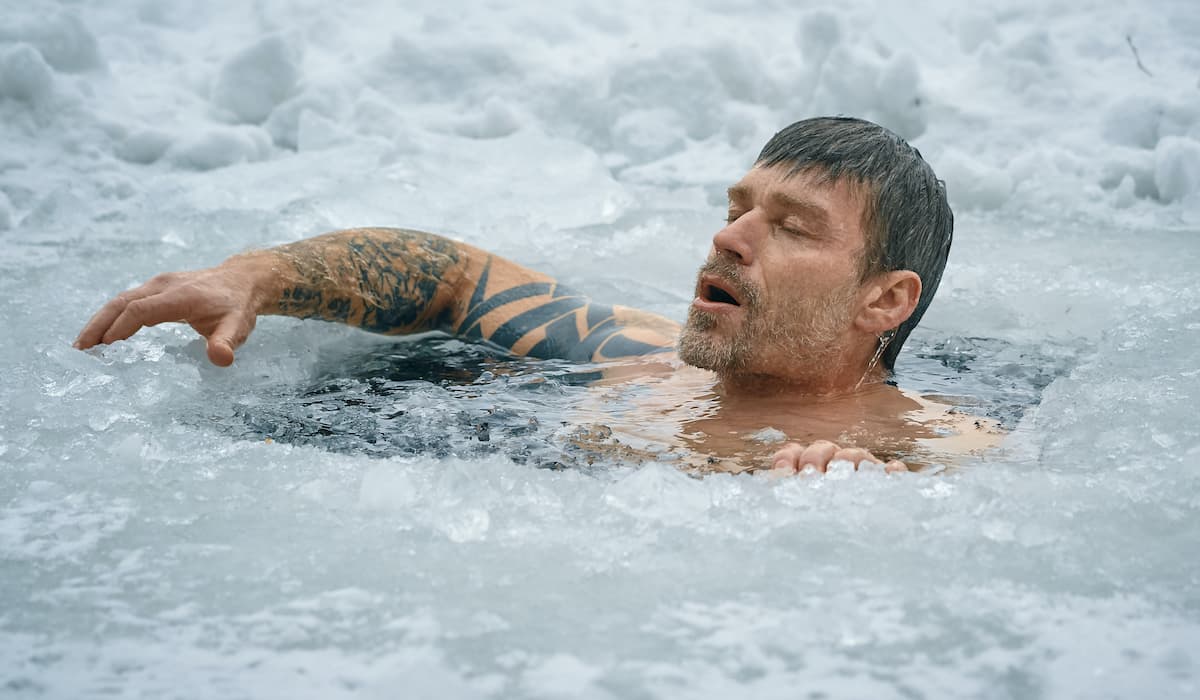
    Coaches say you can develop mental toughness by taking cold showers.

    “Get comfortable w/ being uncomfortable.”

    You can find plenty of people who use this approach. 

    Some do amazing things.

    But some of them border on abuse.

    Basis: identity comes from performance.

    “I feel like a winner because of what I can do.”

    Last Monday Mindset – manage thoughts and emotions . . . not control!

    Ultramarathon mindset – cooperation between mind and body.

    Managing energy, thoughts, and emotions for peak performance.

    It’s about going the distance. 

    It’s about planning for mile 73 before you even start the race.

    Basis: performance comes from my identity

    “I am an ultramarathon runner. So I run ultramarathons.”

    DFL or even DNF isn’t failure. 

    Ultramarathon mindset is for life, not just running.

    Mental toughness – eventually you burn out.

    Ultramarathon mindset – you manage energy, thoughts and emotions for the long haul.

    I learned the difference between mental toughness and having an ultramarathon mindset as a business owner first, long before I started running.

    I know what it feels like to be burned out as a business owner.

    So, as a coach, I talk about having an ultramarathon mindset for life. 

    Yes, running is a part of life, but when you have an ultramarathon mindset, you have confidence you can deal with “mile 73” or that difficult conversation you need to have with your client.

    It took me years of trial and error to learn how to do this.

    What I offer my clients is a way to avoid the trial and error and get on a quicker path to success.

    Free 25-min mindset reset

    Rescue yourself from burnout

    Photo by

    Vidar Nordli-Mathisen on Unsplash