The mindset for fueling for Ironman
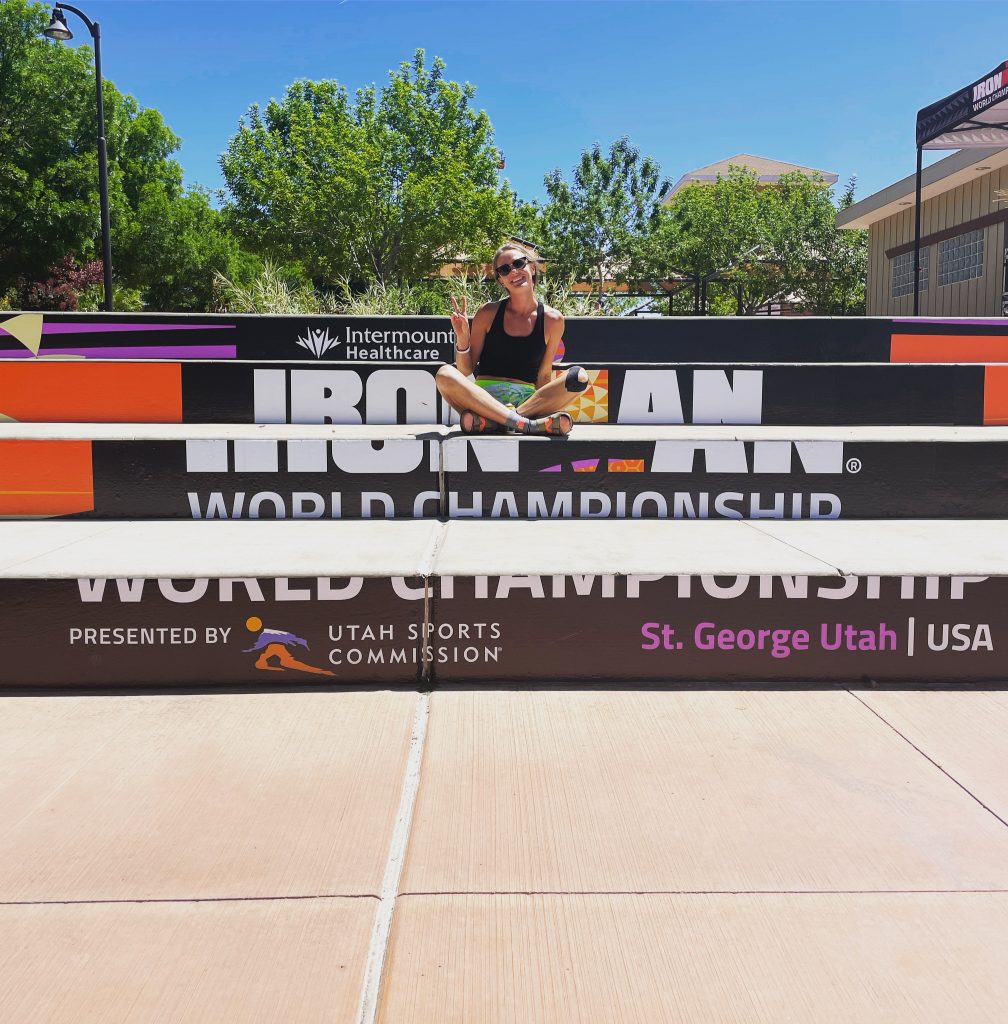
Dana Eshelman was living in Colorado when we recorded her previous episode. Dana is a nutrition coach working with endurance athletes. She was looking to complete a full Ironman when we last spoke. She decided to enter the St. George Ironman in Utah. She knew it would be hot when the race was held so she decided to move to Arizona to train and be a little closer to family.
Even though the climate was warmer, she still did some of her training sessions on a stationary bike. In her workouts, she focuses on quality over quantity. Her coach wanted to make sure she was hitting certain zones at certain times, basically to simulate a longer session. The stationary bike also had the advantage of a power meter to help Dana get the best from her workout. She is also very conscious of time and where she spends her training and what is going to serve her mentally and physically.
Dana says the treadmill is a great tool if you want to improve your pace and your legs have to understand what it feels like to move for a given distance. But there is a difference in resistance between running on a treadmill and running on the road.
She mentioned that training for a long endurance event is like having a part-time job. It takes time for the training, but also the attention to plan for how to fit it into work and the rest of life. She said it felt like her second job was eating. She was often hungry and had to make sure she was maintaining her nutrition.
She had some mental challenges in her training as well. She got an injury and it persisted through her training. She worried that she wouldn’t be able to finish the race because she wasn’t able to run for more than two hours without pain. She sought the help of a chiropractor and physical therapist. She was able to recover. And she learned that she had to understand and trust the process for healing and recovery.
Dana says that for anyone who doesn’t get paid to do sports it’s a challenge to recover because all recreational or group athletes have a job outside of their training. It makes recovery a challenge. What she does to help her recovery is to make bed time non-negotiable. And then another big part of her recovery is the integration of stretching and yoga.
She talks a lot about how we tend to be a carb-phobic society. She says that actually carbs are important in high performance training blocks. So when she increased her training she realized that her body needed carbs and she needed to find a balance with her protein and eating food with lots of color. Her training sessions usually start at 4am so she would wake up earlier to make sure she had something before heading out the door, toast with peanut butter, or she also needed small energy bites, which are like peanut butter and honey. And she always added protein powder as she is an athlete who struggles with her appetite after workouts.
She had a long history of disordered eating so she doesn’t count her calories and is quite economical with the amounts of calories she is eating but over the years she has gotten in tune with her body and understood what is called intuitive eating and what her body is asking for at any given moment.
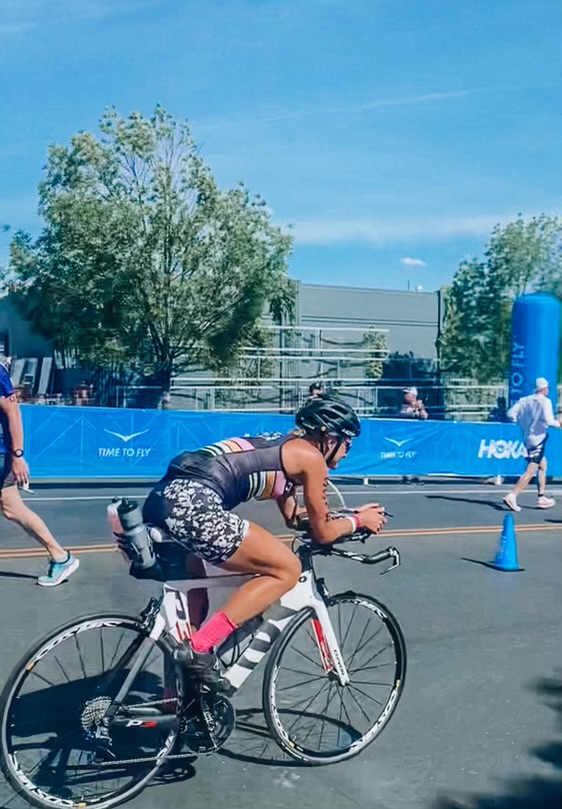
Dana usually eats 6 to 8 times a day and she plans her nutrition by the month. She makes adjustments when she does special workouts because if it is hot you naturally lose more sodium and use a little more carbohydrates. When cycling she can’t eat solid food. She usually eats honey sandwiches on the bike, usually with some salt every hour and also has liquid nutrition.
There is no one-size-fits-all nutrition plan, she says. You have to use some trial and error on training runs to find what works best for you. It’s important to find out what kind of food your body tolerates and uses efficiently. She says it’s good to have a backup plan in case you find that your original plan isn’t working that day.
The strangest thing she has seen in a race is having to pee on the bikes, which is something in the triathlon world and is a skill you have to master.
And her phrase or life philosophy is to run the race you’re in and focus on being present in the moment.
Connect with Dana:
Leave a Reply