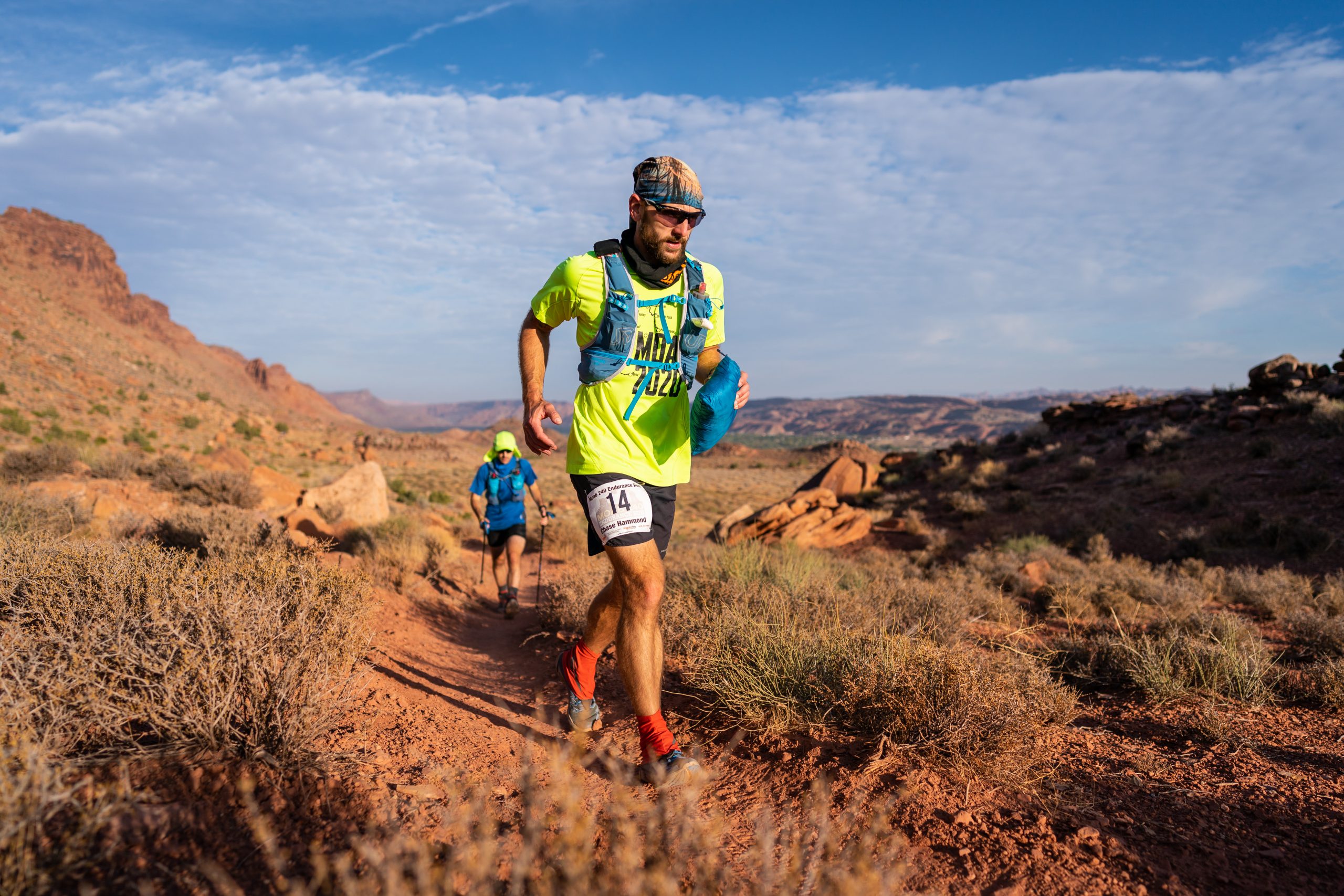
Mindset and vision to go the distance
Chase lives in Hays, Kansas, has lived there for about 20 years, worked at UPS for 14 years and went to college at Fort Hays State and graduated there with a degree in health and human performance. 5 years ago he and his wife decided to go back to school for nutrition, and she got her master’s degree at Hayes and psychology. Then they both finished getting their master’s degree in nutrition. So he quit working at UPS and they started the ultra-endruance-athlete supplement company Ultraverse.
He was always interested in nutrition, and when he was in college he never thought he would be smart enough to pass biochemistry and all that goes into getting a master’s degree in nutrition. But Ultrarunning was what opened his mind to learn that we are much more capable than we think we are. When he did his first 50 mile, he was going for mile 40 and he was in an extreme amount of discomfort and he thought he could pass biochemistry because there is no amount of studying that is going to suck as much as this. So he put it all together and then within a couple of months he said to himself that he wanted to find the best online nutrition school he could and he was going to enroll.
In high school Chase refused to run more than 200 meters ,but he was always a decent athlete in school. He liked soccer and weight lifting and just ran to stay in shape but never more than a mile. He decided on doing the Colorado 14ers (the mountains over 14K feet) because he enjoyed hiking. But after only doing one he got wiped out and thought he really liked doing that so to step it up he would first have to work on his cardio and getting in shape. A couple of weeks later he ran 2 miles and then just trying to increase his mileage it became an obsession with how far he was capable of going. At the time he had no idea ultrarunning existed so at that point he thought he was going to try to run a marathon. His previous max distance was 5K.
He then did a 10K and then a marathon program of his own in about 6 or 7 months, successfully finishing the the Colorado Marathon. He discovered ultramarathons when he saw someone wearing a shirt from a 100 mile trail race. He was impressed because his marathon left him hardly able to walk for several days.
He did some research and found out what it was all about, and then the next thing he did was sign up for the World’t Toughest Mudder with the goal of doing 50 miles in the obstacle race. Then little by little he decided that 100 miles would be an incredible goal for his life so he went through the 50K and then the 100 mile program which lasted 6 months each. It took him 3 years to get to the place he could run 100 miles. He thought it would be a life goal, but he realized what hard work could accomplish and how quickly you can achieve something that seemed unbelievable before.
After a few years of racing, Chase and his wife, Casey, decided to become race directors.. When he first got into trail running it was at Wilson Lake, in central Kansas, and he says it’s very different than most of the trails in Kansas and it has incredible views. He tries to get in at least a couple of times a month to run there and he would always talk to his wife since they are also big campers they thought why not have a trail race right there. It’s such an awesome place it could be one of the best showcase races because of how beautiful the land is. So they were always talking about it and finally they said that they knew enough about the sport and they like to organize events so they could work together on something like that and it seemed like a really fun thing to do so they did it. Their goal was to organize a good race and they liked it so much that they decided they wanted to do more races because it was an incredible experience.
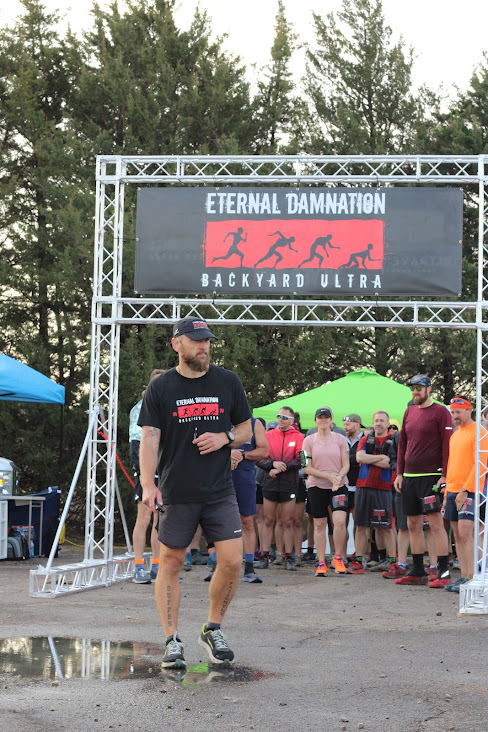
The race they host is called Hell Creek which is a 20 mile and 100 mile race, and this year they also incorporated the 140 mile race called Pure Hell 140 mile. They also do a last-man-standing race called Eternal Damnation. And this year they created a new race called the Cowboy 200. It will be a point-to-point race on a rail trail in Nebraska.
Chase says that in the last man standing race a lot of people get carried away with the amount of rest they’re going to get between laps, and that he prefers to take it easy and have only 5 or 6 minutes of rest in the laps, just enough time for his crew to help him refill the water bottles. He says that the slow pace is better than an extended rest because the impact on your legs is going to build up. In this race it’s a little different because on every lap everyone has a chance to drop out. It’s not like a 100 mile race where I have to do 100 miles, otherwise you don’t reach your goal and you fail. In the last man standing there can only be one winner.
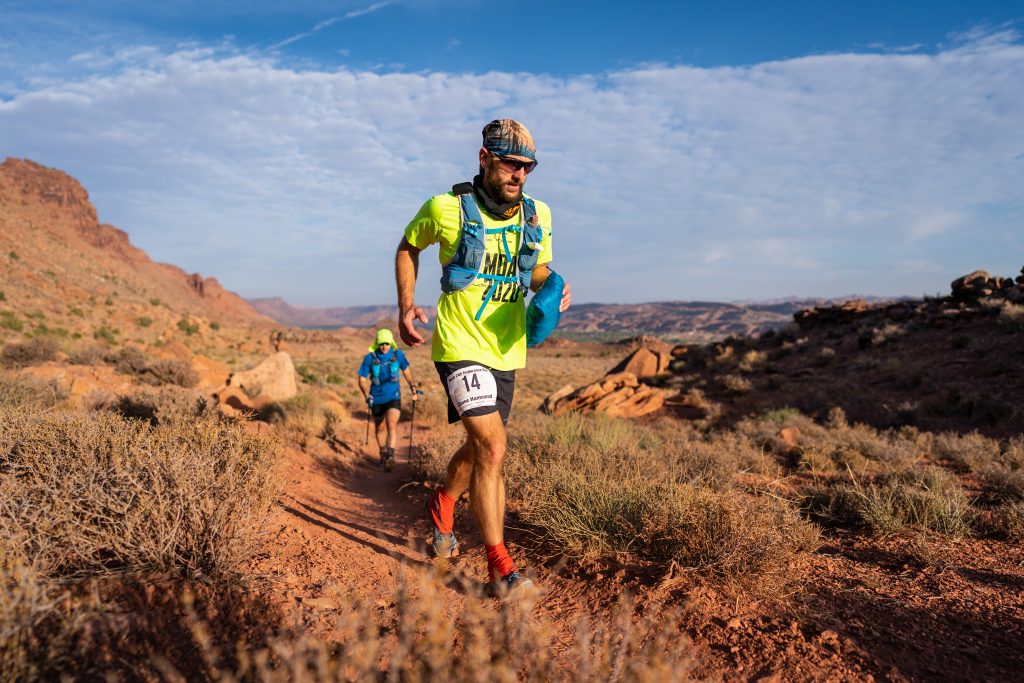
Chase tells us that he always tells people who want to do 200 miles that they can do it if they’ve already done 100, that it won’t be any harder on your body because you’re moving at a much slower pace. It’s a lot of hiking energy, and there’s not as much impact. You’re better off moving at a slower pace, and it’s more of a mental game than a big physical effort. Lack of sleep is a major issue that must be dealt with. Chase in the Moab 240 finished in 96 hours and slept 6 hours so it was about 6 hours of sleep in 4 days. He started having auditory hallucinations. He heard people whispering to him and he knew he was alone there and that’s how he knew he had to sleep.
He just finished an attempt at the Cocodona 250, and it is an extreme race. The terrain is much more difficult than the Moab, in his opinion. It has a lot more elevation and one section was just rocks on rocks, and he was really beat up after that section. The heat of the day and not having slept made him start having hallucinations and he felt terrible. He says that led him to make some terrible decisions. He decided he needed sleep, but he only had a few sips of water before he went to bed so he hadn’t rehydrated his body all day. After that he started again and he was only good for about a mile and he started to get confused again because of dehydration. He got sick to his stomach, and he was just walking from tree to tree. He was lying under a tree, and he says what he should have done is turn around and go back to his team to sleep and rehydrate. But his 96-hour goal was still on his mind and he wanted to keep going but he couldn’t, and he laid down under a tree. He called his crew and they were able to find him. The trail he was on wasn’t far from the road. They realized he probably had internal bleeding from severe dehydration. So they went to the emergency room and he was diagnosed with heat stroke and severe dehydration.
When he was in school to get his masters in nutrition, originally his wife and he had talked about opening an online nutrition consulting business focused on athletes but he also wanted to primarily transition on an individual basis. So that was the plan until almost the last Semester of his school and he started looking into the different supplements and things that he was taking as he wanted to learn about them and he found that most of the supplements out there are very mis-dosed for the most part. They really don’t conform to what the scientific literature says so he started putting together his own formulas and he told his wife that he should try that because it will be fun and it could potentially lead to something where they could live their dream and have a business they could do from anywhere..
When you go to a race you base your diet on a liquid diet with water and electrolytes. But he knows that there are people who travel and depend on seasonal food and his advice is to imagine what food you are going to find at the aid stations so that you can integrate it into your training diet before the race.
Connect with Chase:
Leave a Reply