
Setting the world record for 100 miles
Zach Bitter started running when he was in middle school. He tried several different sports and gravitated towards running track and cross country. His parents didn’t push him to any particular sport, they only encouraged him to be active and involved in something. He continued running through high school and college. In college he began to increase his training mileage and found that his favorite training was the long run.
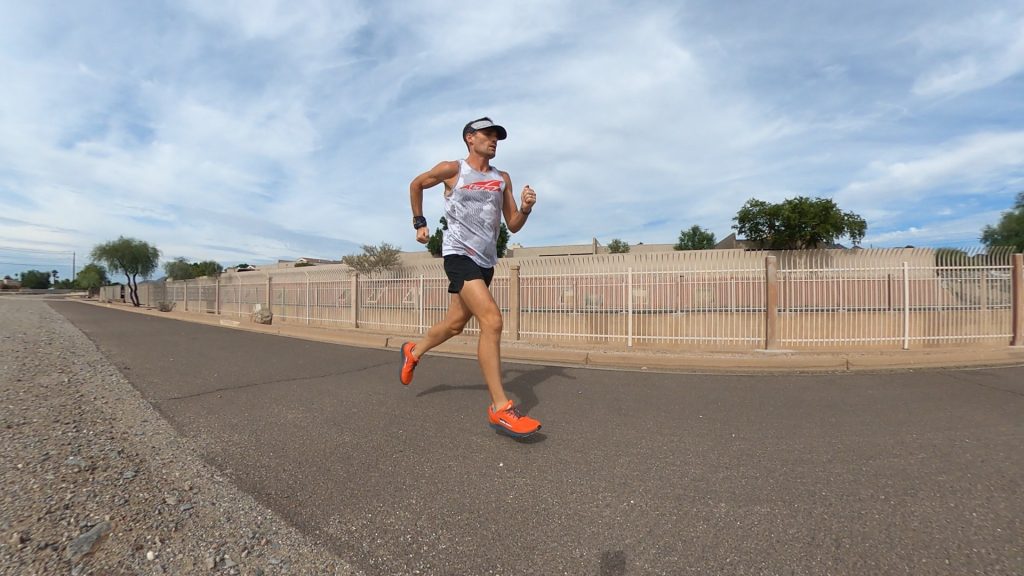
He hadn’t planned to run as a college athlete. He qualified for the state track meet in high school, but he didn’t receive any track scholarship offers. He went to University of Wisconsin Stevens Point. They had a track program, but didn’t offer scholarships. He walked on to the team, and it was that training that made him become curious about the “why” behind the workouts. It was this sense of curiosity that that served him well when he later started running ultramarathons because ultra running requires an awareness of what works and what doesn’t work.
Zach started a career as a teacher after college. He also had a chance to coach track for Jr. High and High School. This gave him the opportunity to take some of the things he had learned in his own training as a runner and see how they worked for others. He was able to take his knowledge and see how to adjust it for different athletes based on their strengths and weaknesses.
He had success running ultramarathons, and that opened up some opportunities with sponsors. And he had some friends ask him if he would coach them for 50-mile races and ultramarathons. He started taking on individual clients to the point where he felt like he had to make a decision. If he wanted to be 100% as a teacher, he was going to have to step away from working as a personal coach. If he wanted to be 100% as a personal coach, he would have to step away from teaching. He decided to step into his career as an ultra runner and coach. He could always go back to teaching. The window of time to be competitive as a runner was much shorter than what he could have as a teacher.
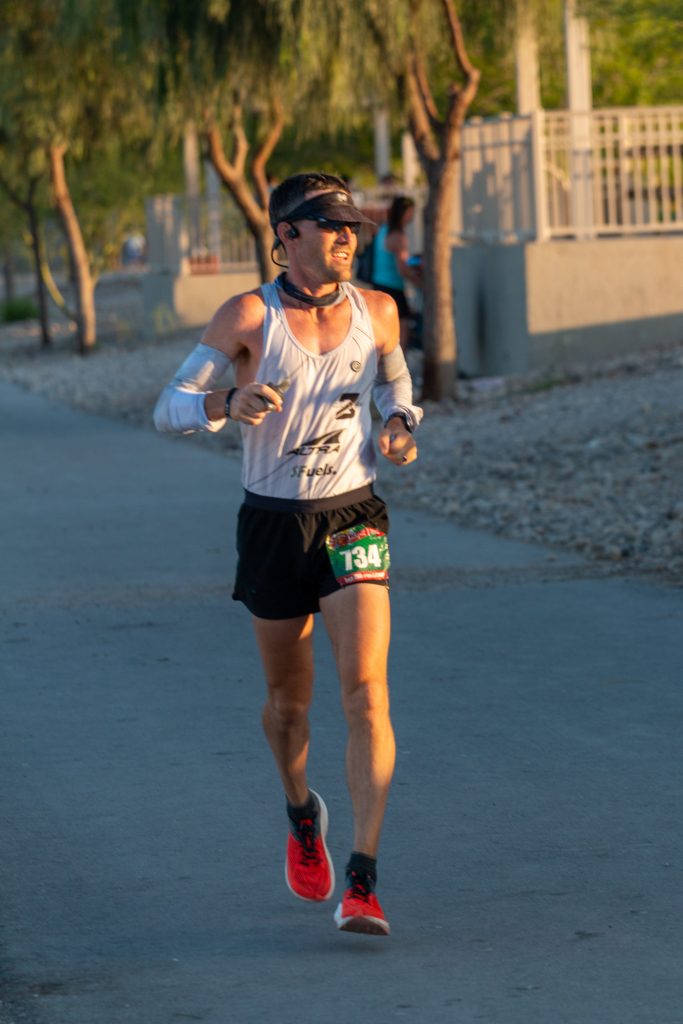
After college he stepped away from speed work. He knew he wanted to run, but he wanted to do longer races than the traditional 5K, 10K that are so common. He eventually settled on the 100 mile as the distance he likes to train for and compete in. He spent his time building up his volume of running miles. He did a few marathons more as training runs. Then he discovered ultramarathons. He found a race that was nearby that was 50 miles. He did several more 50 mile races before he settled into the 100 mile distances.
At the time, the sport of ultra running was heavy with races out west and focused more on trail running. So he thought he might have to become a trail runner. But he still did most of his training on roads. And he found several ultramarathons that were held on roads. He did well enough to be invited to the Desert Solstice Track Invitational, an invitation-only event for elite runners. He competed in the 12 hour timed event in 2013. He was told at mile 90 that he was on pace for the world record 12 hour time. Up to that point he had been feeling that he couldn’t go any faster. But after hearing he was on pace for the world record he was able to run 3 or 4 minutes faster per lap. Reflecting on this after the race, he realized the mental work you have to have for this kind of event.
His approach to the mental side of the sport has evolved over time. You don’t end up doing ultramarathons if you’re not willing to put some hard mental work into it. He mixes up running a few trail races in order to keep his mental focus fresh on the track and roads. He also focuses on keeping a positive and somewhat meditative state and so he minimizes everything else. This way he can run and focus on some intimate aspects of the race where he just has to think about one step at a time and be in tune with what his body is saying.
He prepares physically for that specific environment and what he’s going to need on race day. He also has the opportunity to practice things that are a little harder to practice, like nutrition and hydration. He realized that there is a lot of added value if you also use those more specific training sessions to visualize, because if you let your mind go into a negative spiral it can be very easy to lose your confidence and find yourself constantly trying to fight negative self-talk.
Talking about nutrition, Zach looks at how much food he can tolerate during races, and then if it’s going to be enough to defend muscle glycogen. What he likes to do with his athletes is that any push they make has to be sustainable.
He has a podcast called “Human Performance Outliers” and he interviews people who have done amazing things. He started on this in 2017 because it was always something he thought was fun.
Zach first ran in the Desert Solstice in 2013 and he wanted to go back and break the 100 mile world record. It took him almost 6 years to get there and in that process he learned what motivated him. The world record now is 10 hours and 51 minutes, and he believes he can beat it. He’s preparing for a race that will be a fast 100 mile race in June.
When asked what is the most overrated exercise for runners he said he was going to get in trouble because he thinks it is the HIIT sessions.
Connect with Zach:
https://www.instagram.com/zachbitter/
Leave a Reply