Category: Podcast

Great conversations with runners and others who have an ultramarathon mindset.

  • How to Manage Your Emotions

    How to Manage Your Emotions

    Speaker notes

    Important message: This won’t last!

    Happy or sad, it doesn’t matter.

    Emotions change. Whatever you are feeling right now . . . it won’t last.

    For most of my life, I’ve tried to control my emotions.

    Part of this came from growing up in church.

    Too much passion – not a good Christian

    Anger – not a good Christian

    Drive to win (competition) – not a good Christian

    Note: This is my own interpretation of what I learned. What got stuck in my subconscious.

    So I kept a tight grip on showing my emotions. 

    5 is the middle – I ranged 6.5 to 3.

    The only strong emotions: depression, shame, anger

    But I hid these & tried not to show them.

    Mindset work I’ve done is to connect my mind and body to experience my emotions.

    Even though I tried to control my emotions, they still showed up in my body.

    I wasn’t really controlling them. I was ignoring them.

    You can’t really control your emotions.

    Have you ever had times when everything is going great and you feel on top of the world?

    You want that feeling to last forever!

    But it will fade, no matter what you do.

    Or, when you feel like crap, even for good reason.

    You feel like you’re going to be in a funk forever.

    No matter what you do (or others) to cheer up. You feel better for a while, but then that heavy weight settles back over your heart.

    The bad news / good news is that “It won’t last.”

    Your good mood won’t last.

    Your bad mood won’t last.

    One of the things I’ve learned from running ultramarathons is that you will experience these emotional ups and downs during your race.

    You’ll feel like you can run forever . . .

    Then you’ll feel like you’re about to die . . .

    You can’t control these emotions.

    But you can manage them.

    Often the success of your race depends on how you manage them.

    3 steps – in context of running, but applies to life.

    1. Feel the emotion.

    Control: “I don’t want to feel this.” (block the pain)

    Or, “I can’t let myself feel too good because the higher the high the lower the low.”

    But when you accept the way you feel, the negative loses its power and you’re able to enjoy the good.

    Guests on my podcast – works for physical pain as well. Resist = persists. 

    Let it come then let it pass.

    1. Detach your story from the emotion

    “I can’t run any farther!”

    “I can run forever!”

    These are only stories you attach to your feelings.

    Results:

    Run faster. Burn through your energy.

    You quit. 

    Whatever story you’re telling, set it aside.

    1. Create a new story

    “I know this feeling won’t last. I’ll keep going until I feel better.”

    “I feel good! I need to manage this feeling to get the most out of it.”

    Two things to remember:

    The way you feel right now wont’ last forever.

    You can’t control how you feel, but you can manage your emotions by accepting the feeling and creating a story that helps you keep moving forward.

  • A mindset Almost Missed Olympic Gold: Lindsay Dare Shoop

    A mindset Almost Missed Olympic Gold: Lindsay Dare Shoop

    Changing beliefs about who you are is a success mindset.

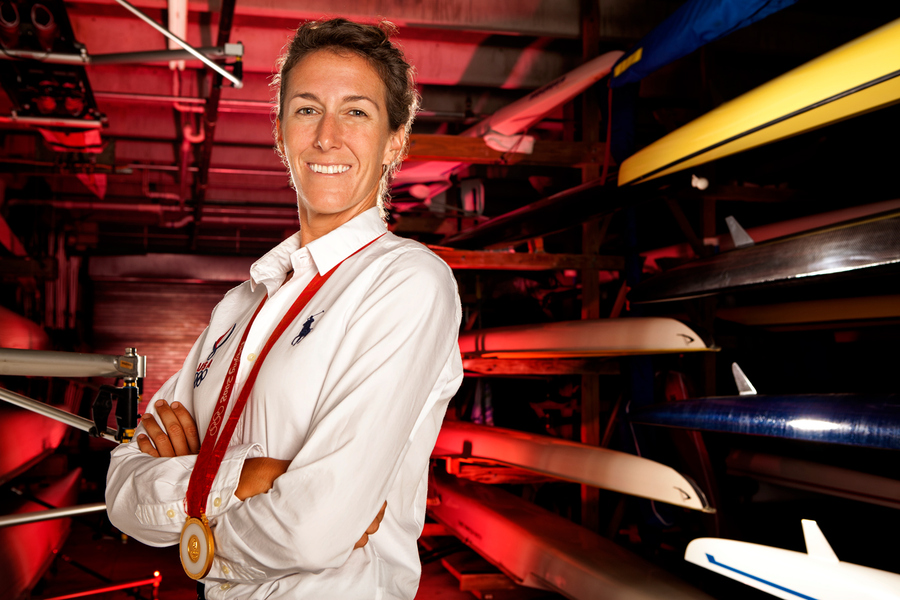
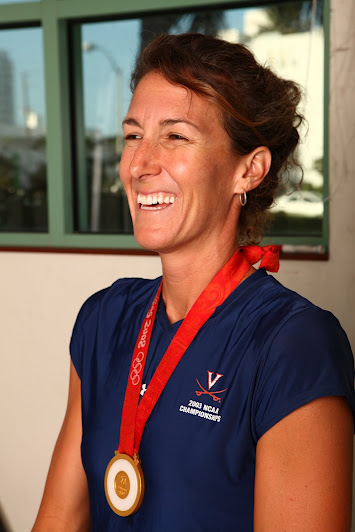
    Lindsay Dare Shoop is an Olympic gold medal winner in the sport of rowing. She got into the sport of rowing because she didn’t believe she was good enough to play college sports.

    She played all the sports in high school. She was tall and athletic and did well as a competitive athlete. She played volleyball for 10 years, and it was her favorite sport in high school. But she had the mindset that she would never be good enough to compete in any sport at the collegiate level. She looked at the collegiate athletes she admired, and they were all taller and faster than she was. So she never even considered playing sports in college.

    But she began to struggle with motivation in college. She missed the structure of team sports, it had helped her focus. And she began to get out of shape and gain some weight. Athletes in her high school were required to keep their grades up in order to play. And she was outside the structure of her parents being around to guide her and ask about her school work. Also, she missed the camaraderie that comes with being part of a team.

    Then she ran into the rowing coach at the University of Virginia campus on December 1st of her junior year. He told her that her height and athletic experience would be a good fit for rowing. She didn’t know anything about rowing, but she joined the team and started working out and learning. She made fast progress and soon attracted the attention of the coach of the National Team. She made it as part of the National Team and started at the bottom and eventually worked her way up to be the fastest starboard rower in the country. Her ability led her to be on the Olympic rowing team.

    She says that when her team won in the Olympics, only five of them had learned to row in college. They were the first women’s team to win Olympic gold for the United States in the 2000 meters. 

    What she noticed as an athlete and as a coach is that if you are lanky with a short torso and long arms and legs that is going to help you have better leverage,  minimizing the risk of injury. Also, rowing with a team requires attention to form as well as matching your power to that of the team. It sounds counterintuitive, but too much power will make the boat go slower. She says it’s similar to swimmers who may be less fit who will still win over stronger swimmers if they use a smooth efficient form.

    She paid attention to her form as an athlete, and sees the benefits now as a coach. She says that  to maintain our joints we have to keep the alignment that is most efficient. If the alignment is off, the muscles and ligaments have to work harder to keep the joints together as well as do the motion of rowing. This is where injuries come from.

    Physical training goes hand in hand with mental training for her. She says that because your mind is intrinsically linked to your physical body, stability and efficiency in one will affect the other. One thing that helped her mindset in training was to write down everything about her workouts. It helped her build confidence because she could easily forget the good days when one or two challenging days came along. She started to notice that sometimes it took 10 good days to make up for one bad one. Her workout journal helped her keep perspective.

    Her diet was all trial and error. She says that during her first world championships she was eating granola bars, cereal, and toast because that’s what she likes. She has never been a big meat eater, never liked to eat eggs or red meat. She thinks she could probably be a vegetarian if it wasn’t for seafood and barbeque pork. She believes the most important thing she did was to get plenty of sleep, stay hydrated, and eat lots of fruits and vegetables when she started training because she didn’t have many options. That went a long way for her.

    Bridge questions:

    What is the most effective exercise: rowing and swimming.

    What is your best diet tip: Sleep. Because if you don’t it’s going to affect your hormones.

    Word or phrase that sums up your philosophy of life: The more you know, the less you need.

    Connect with Lindsay:

    Instagram

    Twitter

    Website

    Book on Amazon

  • Beware the Comfort Zone.

    Beware the Comfort Zone.

    Speaking notes

    You can be in your comfort zone and still be uncomfortable.

    Yes! You can be going crazy and completely stressed out with too much to do. Yes, this is the life of a business owner.

    The chaos feels uncomfortable, but that very chaos can be your comfort zone.

    Life coaches and motivational speakers: Get out of your comfort zone!

    Quotes:

    Life begins at the end of your comfort zone.

    You’ll never change your life until you step out of your comfort zone.

    Great things never come from your comfort zone.

    Leave you comfort zone and arrive at your success zone.

    True self-discovery begins where your comfort zone ends.

    But for those of us who are business owners or attorneys, you can stay in your comfort zone and still be uncomfortable.

    Running a business or a law practice puts you in this strange reality: you’re stressed and have too much to do, but you’ve adapted your mindset to the chaos.

    The chaos is familiar. The chaos is your comfort zone.

    So when you’re not working, you’re thinking about what you have to do. You carry the weight of your business in your mind all day, every day.

    Call this the Chaos Comfort Zone.

    Your mind is always churning. You feel the weight as tension and stress in your body. And your body and mind develop resistance – just like taking drugs or alcohol.

    But eventually your body or mind will break from the stress – BURNOUT!

    This happened to Brenda and me. We were getting calls for business and had jobs booked out 4 to 6 months. We went 2 years working our butts off and never took a vacation.

    Friends invited us for a weekend at their condo. Free if we listen to a sales pitch.

    “We’re not going to buy!” 

    Sales woman: “When was the last time you took vacation.”

    “We’re self-employed. We don’t take vacations.”

    Her: “Do you think that’s healthy?”

    We bought – put 

    Paradox: you don’t realize that the stress and chaos is your comfort zone.

    Three steps to break out of the Chaos Comfort Zone

    1. Realization

    Ask yourself: Am I doing what is healthy for myself?

    Take a step back and look at your life and business from an outside perspective.

    1. Make a decision

    It doesn’t matter what kind of comfort zone you are in: Chaos Comfort Zone or just cruising through life on Easy Street.

    Human mind: Don’t change what we are used to. New and different feels like a risk.

    Truth: Comfort zone is more dangerous. If you’re not growing, you’re dying.

    Make a decision: “I’m not going to put up with this any more.”

    1. Take action

    Once you make a decision, take the first step immediately.

    It’s important to get started right away. 

    If you wait too long between decision and action, your mind will talk you out of it. 

    Your comfort zone is deadly. It doesn’t matter if you’ve adapted to chaos or you’re just cruising through life.

    Your comfort zone will eventually steal your soul.

  • Mindset for Mindful Movement – Tomasz Drybala

    Mindset for Mindful Movement – Tomasz Drybala

    Mindful running for ultramarathon distances

     For Tom the journey of starting running started many years ago so he is not even sure when it was but it was around 20 years ago. The first few years he was running just to clear his mind after work, but in early 2016 he started to increase his training daily. He did it for his mental health. He was running 5 or 6 times a week for around an hour or sometimes 3 hours a day. In March 2018 he wanted to increase the speeds and increase his steps with the intentions of starting some big challenges. He saw a story of a man who swam around the whole of Britain, spent almost 200 days at sea and thought he could do some kind of crazy challenge too. So in 2019 he started his first challenge.

    Tom struggles with anxiety and stress in his life and that’s why he decided to run. When he started running more it was a hard time in his life because he had stopped living with his two kids and he had lost his business. He wanted to improve his mental health and have challenges so he started looking for solutions to not be stressed all the time. Running was the sport he chose. It helped him, and that’s how he started to focus more on running.

    When he was trying to change his life he learned that his anxieties and tensions were connected to some traumatic experiences that he had lived through. He found that if we don’t listen to those traumatic experiences, then we will actually pass those traumatic experiences on to the next generation. He was also looking for solutions to inspire his children to keep pursuing their dreams and fighting for the life they want to have and make his family’s cycle of trauma end with him. He didn’t know where all this was going to take him, but he wanted to push his limits. When he started running and did 5K he knew it was great and 10K was cooler and he wanted to keep increasing the miles.

    He does self-supported running adventures. In 2019 his first big challenge was to do 5,000,000 steps. He started that challenge and really didn’t know what to expect from that first challenge. When he finished it he knew he could train for anything in his life because he went from doing 25,000 steps a day and in the start of his journey to doing over 100,000 steps a day which was a total of 14 hours of heavy exercise.

    When he finished, he took a 3 week break and started the next challenge which was to run 11,000 kilometers on his own, with a backpack. Both of these challenges he did in Asia so the weather was quite hot and sometimes it was very difficult to find water along the way.

    When he did his 11,000km challenge he started in Vietnam and ran through Cambodia, Thailand, Malaysia, and Singapore. But he got caught in a Covid lock-down in 2020 and got stuck on the beach next to the jungle. The first 3 weeks it was pretty tough because he was being harassed on the street by people and authorities thinking he was breaking the Covid quarantine. The police asked him to stay in the hotel room. There were only 2 people who spoke English, but he was able to finish his challenge despite being stuck there for 3 months.

    Now Tom is running the circumference of the earth and running on every continent. It is a massive challenge that will take him 14 months. For this challenge he is starting with just his backpack so he is running from hotel to hotel. In late October or early November the support team will join him when he is in Florida.

    In his backpack Tomasz carries his laptop, some food and water and some clothes. He plans his routes very well to buy things on the way and not have to carry a lot of things. He says there is often no place to hide when there is heavy rain or, as in Scotland, snow and strong winds. You just have to keep running because you have to get to the hotel you’ve booked for the night.

    He practices what he calls mindful running because one time he was running worried about the future and not paying attention to the present and he almost stepped on a dangerous snake. And he worried about his life as well.

    So he started to focus on the road ahead of him.

    After that he realized that he was running like crazy and doing heavy physical exercise and he was enjoying it. And after running, he was able to sit at his laptop and work. He started searching and found out that he was actually reaching a flow state and started practicing active meditation. He began to teach about his flow state practice at universities.

    When it comes to getting into the flow state, Tomasz says that your whole mind has to be in the present moment, in the here and now. Having a meditation practice can help you to create the conditions for full flow. For him the most productive way to do it is active meditation when running. He tries to focus on something specific. It can be a color like orange, and every time you run focus on that orange color. Just look around you and focus on the orange things and when you don’t see it look at other similar shades and you will be surprised that you can find little things of those colors. It’s a pretty simple activity to start practicing mindfulness. Another thing he does is to count his breaths. He says that anything that makes you focus on the present instead of letting all that cascade of thoughts that you know are coming like a swarm in your head will help you get into a flow state.

    Bridge questions:

    His most important piece is his laptop because even though he is running he has to work and organize everything along the way because even though he can knock on doors to tell what he is doing and see if people are willing to help him he can’t exist without his laptop.

    The strangest thing he has ever seen was in the Philippines and it was the gap between the rich and the poor, children in extreme poverty sleeping under bridges, he was so amazed that he had to leave the Philippines because he could not mentally handle seeing those things.

    The phrase or word that describes his philosophy of life is: that each one of us has the same opportunity to have the life we are proud to leave, regardless of our past experiences.

    Connect with Tomasz

    Instagram

    Twitter

    Website

    Linktree

  • Mindset to Love Yourself Like Your Neighbor.

    Mindset to Love Yourself Like Your Neighbor.

    Speaking notes:

    According to Jesus, the second greatest commandment in the Bible is this:

    Love your neighbor as yourself.

    I’ve been going to church all my life, and I’ve never heard a preacher talk about this like what I’m about to say.

    I don’t know if I really want other people to love me like they love themselves.

    Love your neighbor as yourself.

    Some people confuse this with the “Golden Rule:” Do unto others as you want them to do unto you.

    Love your neighbor.

    Treat others the way you want to be treated.

    They sound the same, don’t they?

    If you Google “love your neighbor as yourself” and look at only the results that come from Xans, they will focus on how do you love others.

    This is in line with every preacher I’ve ever heard speak about this “2nd greatest commandment.”

    But most Xans miss an implied truth.

    Let me state this commandment in a different way:

    Love yourself! Then love others in the same way.

    This is different from “do unto others.” It’s different from just loving your neighbor.

    This put the focus on you.

    And this is the reason I say I’m hesitant to say I want others to love me like they love themselves.

    Because most people I know don’t do a good job of loving themselves.

    Three examples:

    1. Self-talk

    Try this. Make a list of all the things you say to yourself this week. Then repeat these things to your friends and neighbors.

    Will they think you are a loving person?

    You’re such an idiot.

    You know how you are! You’ll find some way to screw up.

    You’re not good enough.

    1. Keeping promises

    How many times do you tell yourself you’re going to do something and then something comes up, or you just plain don’t feel like it.

    Diet and exercise.

    Taking time to rest.

    Most of us keep promises to others better than to ourselves

    1. Burning yourself out.

    Life can be hectic.

    We push ourselves and ignore the warning signs that we’re damaging our health (physical and mental).

    Usually you can see burnout or risk of burnout in others before you see it in yourself.

    It’s easier to love others than to love yourself.

    So here is what I suggest you do: 

    Love your neighbor – do good to others. And love yourself the same way.

  • The Mindset for Running Dangerously – Tom Foreman.

    The Mindset for Running Dangerously – Tom Foreman.

    Running again with a mindset to train for the distance.

    Tom Foreman is a correspondent for CNN, covering the news. He has been a journalist all his life, starting in high school and then a career working in radio and television. He has seen a lot of changes in journalism over the years. He appreciates the training he had in learning how to tell a story and make it informative.

    Tom wrote a book titled, My Year of Running Dangerously. The title came about because he went from being an average runner to being a distance runner in a short period of time. Tom ran marathons when he was in his 20s. He was competitive and place well in the races he entered, even though he hardly trained for them. But he stopped running as career and family obligations took more time and attention.

    Then his older daughter asked him to help her train for a marathon when she was in college. He started running again. And he went on to run 4 half marathons, 3 full marathons and his first 50 mile ultra, all in one year. 

    When Tom was young, as a natural runner, he barely trained for any races, but when he got older, in his fifties, he didn’t think he could fake his way through this time. So, for the first time ever, he trained for his races and found the training process to be fun. 

    He did some amazing things in order to promote his book, like running the Chicago marathon and then 2 weeks later he ran 5 marathons in 5 days, one of which was the Marine Corps Marathon. Two days after that, he ran the New York marathon and two weeks after that, he ran 50 miles. This led him to understand the appeal of running ultramarathons. For him the difference is that in ultra-distance running it’s more important to get into a kind of flow that feels like you can just go forever and appreciate the process of running rather than a time goal. That’s why when you have a bad moment in the race you have to have confidence in your training and keep moving until your head catches up and you can start fighting again.

    The fastest marathon of his life was when he was 52 years old. He said he could have been faster when he was younger, had he trained back then. Tom still feels competitive, but he says the race is about the distance, the day, and what he brings to it. There are races where he hasn’t finished very well, but he has been proud of the race. He believes that the older you get the idea is that you try to do well, not because it brings you individual honor or fame or attention, but because you become part of that rising tide that lifts all boats. You expand people’s imaginations about what humans can do. 

    He always tells people that he knows of no more welcoming community of athletes than the ultrarunners. “The longer the race the more welcoming people are. And I think that’s because you’re a smaller community.” 

    For him one of the secrets of all distance runners is learning that switch in your head that says I’ve gone as far as I can go. That switch is not right. It’s right for your comfort, but it’s not right for your ability. And people are surprised when he says that in his experience when you get to the point of saying “I don’t think I can go any further” that you’ve got probably about 20 miles left in the tank.

    Tom was running years ago, and he caught up with a 41 year old guy who was having a hard time.  Tom found him in the woods, and he helped him to start running with him again. This man said, ”I feel so bad about being the last one out here.” He convinced himself in his head that he had to be the last person on the course other than Tom. He wasn’t anywhere near last, it was only his imagination. This is an example of how our mindset can get confused about reality and sometimes cause us to give up.

    Some of the races Tom says he might consider is the Comrades Marathon, Dragon’s Back in Wales and even perhaps the Bigfoot 200 or Tahoe 200.

    The phrase that describes Tom’s philosophy of life is,’‘If it is inevitable it is ideal.” Whatever circumstance you find yourself in, whether it’s in your career or in your life, that’s the circumstance you have. Which makes it perfect.

    Instagram

    Book

  • Monday Mindset: Fear of Success.

    Monday Mindset: Fear of Success.

    The mindset to celebrate success.

    Speaking notes:

    There are some people out there who are afraid to feel good about success.

    These people are afraid to win. 

    And if they do win, they play it cool and act like it’s no big deal.

    Other people celebrate every time they win. Even the smallest wins they give a WHOHOO!

    Who do you suppose is going to have success in life?

    Some of you listening to this will be scratching your head and wondering, how can anyone be afraid of winning . . . success?

    If you Google “fear of success” you’ll get about 430 million results.

    There are a lot of us out in the world who struggle with the idea of winning and being successful.

    A lot of different reasons people develop fear of success.

    Mine came from growing up in church.

    Lessons I learned there:

    Blessed are the poor in spirit.

    Blessed are the meek.

    Put others before yourself.

    God will only give you money so you can support the church.

    Love of money is the root of evil.

    My takeaway: 

    Good Xans aren’t supposed to be competitive.

    Good Xans aren’t supposed to want a surplus of money.

    Good Xans aren’t supposed to be winners.

    Result:

    Second to bottom on my HS tennis team. Every game a tie.

    Rarely won at ping pong. Most games a tie.

    I never celebrated when I did win.

    Work with life coach to get over my limiting beliefs.

    One change I made was to celebrate my wins (achievements).

    Old me: Play it cool when I completed a goal. Check the box … next!

    Coach: If you don’t celebrate, your mind won’t realize that success is important.

    When you celebrate your wins, your mind remembers. The next time you are working on a goal or trying to win a game, your mind is a work pushing you forward.

    If you don’t celebrate your wins, your mind says, “Pfft! It doesn’t matter.”

    No matter who you are, you need to remember to celebrate when you reach your goal and when you come out a winner!

    Do the dance in the end zone. Jump up and down. Raise your hands in the air and yell. 

    Celebrating your success is just one of many tools you can use to live your best life.

    As a life coach, I help my clients find the most effective tools to reach their goals and avoid burnout.

    If you are a business owner or lawyer facing burnout and stress, I can help. Contact me for a free mindset reset call: Calendly

  • Tough Girl Challenge Mindset – Sarah Williams.

    Tough Girl Challenge Mindset – Sarah Williams.

     Inspiring women to have a mindset for adventure and challenge.

    Sarah Williams became a runner in order to save money on her commute to work. She had followed the typical path of getting an education and finding a career. She found herself short of money for the month and decided to run to work rather than take public transportation. She soon found that she enjoyed running.

    Some of her friends had signed up for the London Marathon, so she decided to join them. She wasn’t satisfied with completing just one marathon and decided to run a marathon every year until she turned 30. 

    Sarah had a corporate job but always felt that something was missing in her life and felt that she could never figure out why she wasn’t happy like the people around her in the company. She realized that her happiness wasn’t going to change on its own, if she didn’t change her environment. She was in a fortunate position because she had savings and just thought ”I can’t go on living my life like this” and made the decision to quit her job.

    She asked herself the questions ”what do I like, what don’t I like, what would I like for my life” and that’s when she started blogging which was a combination of her passions and when social media started to move forward she thought she could start a podcast and that’s when a friend of hers told her “why not talk about amazing women and that changed her life. She began to focus on motivating girls and women. She started the Tough Girl Podcast.

    She told herself that she couldn’t “talk the talk” if she didn’t “walk the walk” so she signed up for the Marathon des Salbes, a 251km (156 mi)  7-day race through the Sahara Dessert. She pumped up her training so much that she damaged her health and had to postpone her start for a year. She recovered and started training again at a more moderate pace. She completed the challenge and wrote about it in her blog and then in a book Tough Girl Sahara Challenge , that is both a memoir and a handbook for how to prepare for the Marathon des Salbes. 

    She loved the challenge, but felt that the adventure was over too quickly. So she decided to take on the Appalachian in 2017. She figured if she did the 2,000 miles in 100 days, averaging 22 miles per day, it would sound pretty enduring and challenging. 

    She That was her big Appalachian Trail hiking challenge but she ended up injuring her left knee. So her next challenge was cycling down the west coast of North America. She continued her adventures in hiking and is still pushing herself to keep going and find new adventures.

    She has always worked a lot on the mental side of things, on the power of visualization, imagining herself crossing the finish line, physically having that medal around her neck and always focusing on that being a choice, being there is a choice for her. She often checks in with herself to see how her body is feeling. She asks herself questions like: how do my feet feel, when was the last time I ate, do I need a sip of water, do I need electrolytes, and she goes through the things her body is asking her to do. She also has a spreadsheet where she can see how many miles she’s done, how many strength and conditioning sessions she has done and so she knows she’s ready. She reassures herself that she is strong and it’s just a case of getting out there and doing it.

    Another thing Sarah does is write down on a piece of paper, on the left side all the bad situations that could happen in a race and on the right side the things she can do if those things do happen. This helps her be prepared, and if it does happen she’s already worked all those things out in her head.

    Sarah wants to inspire girls believe in themselves. She believes it’s necessary to let young girls see women accomplishing big challenges like being in the Olympics. Too often women in sports get little media attention. Her podcast is a way to give positive role models for young women to see that they can go after big goals and a life of adventure.


    Connect with Sarah:

    https://www.toughgirlchallenges.com/

    Facebook

    Instagram

    Twitter