Category: Podcast

Great conversations with runners and others who have an ultramarathon mindset.

  • Healing the Body Through Movement – Vinny Crispino.

    Healing the Body Through Movement – Vinny Crispino.

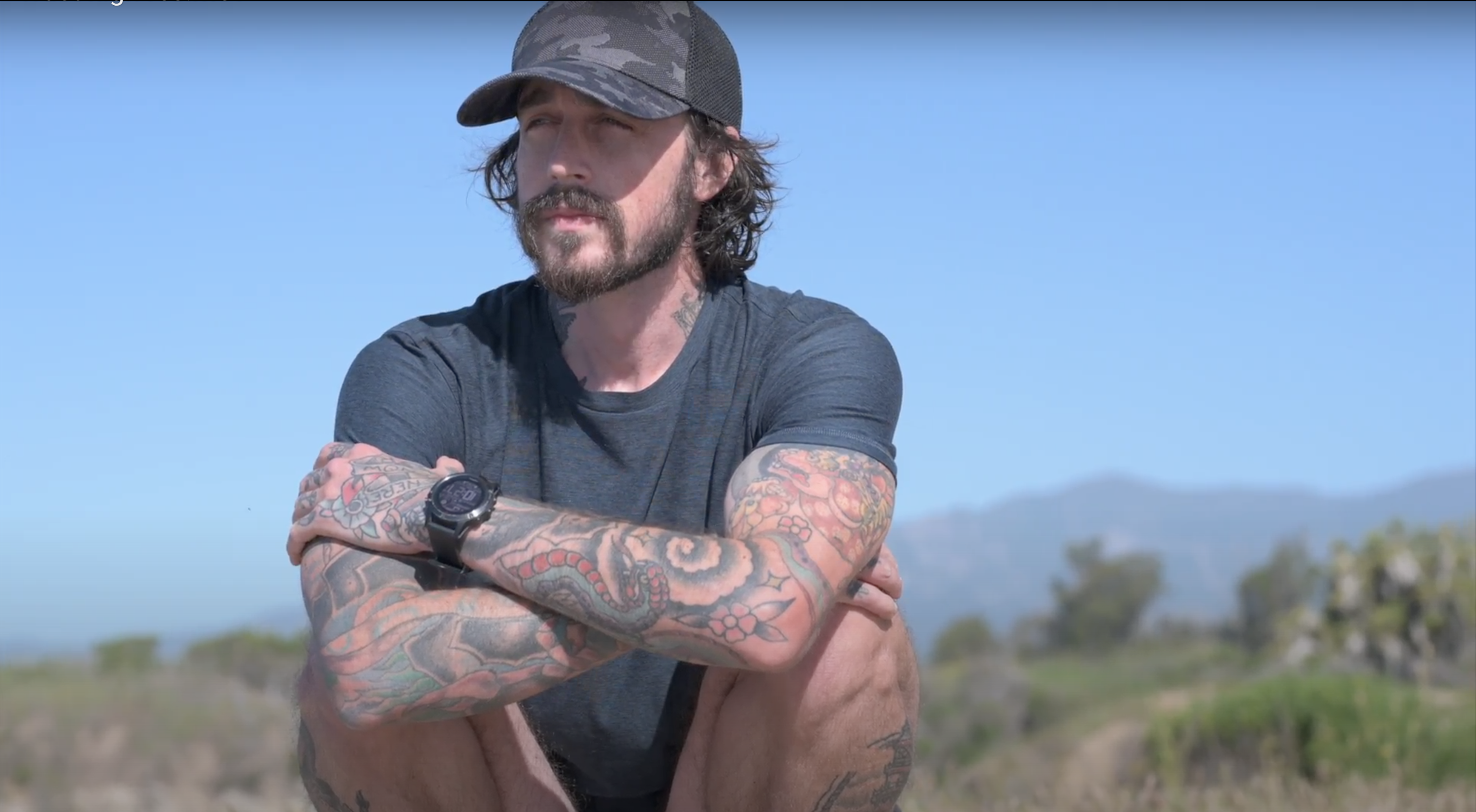
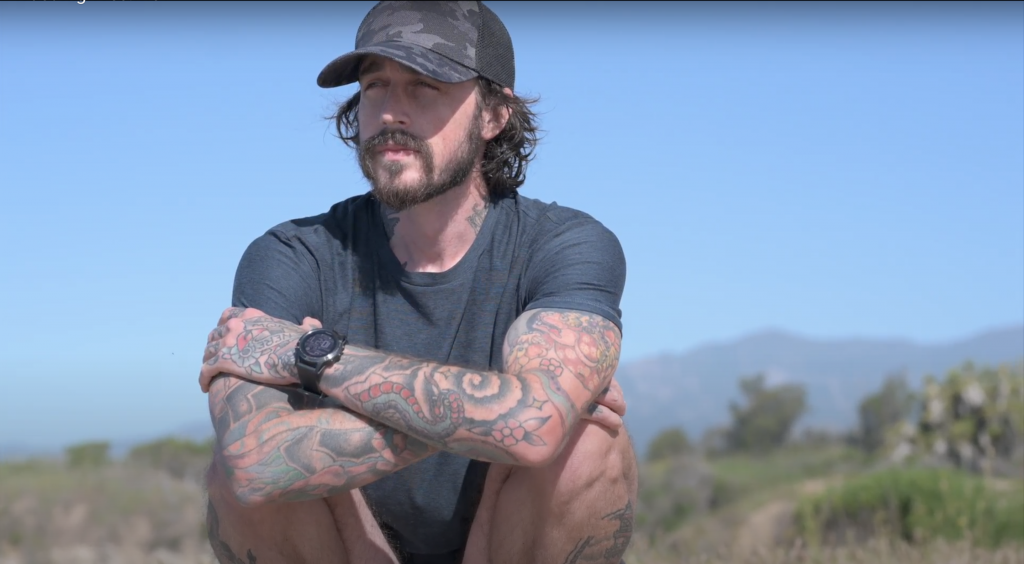
    Vinny Crispino will be doing his first ultramarthon soon, the Old Cascadia on the Oregon Blue River in the Old Cascadia Range which is a 50 mile, 14,800 elevation gain trail with a time limit of 17 hours. His goal is to finish and survive.

    Vinny says he wasn’t very good at any sport except swimming. He wasn’t very athletic on dry land, but when it came to a pool it was his natural zone. Within the first years of swimming competition he was breaking pool records and state records. From age six to eighteen he spent every day in the pool. And when he had off-days from training he was playing in the pool with friends.
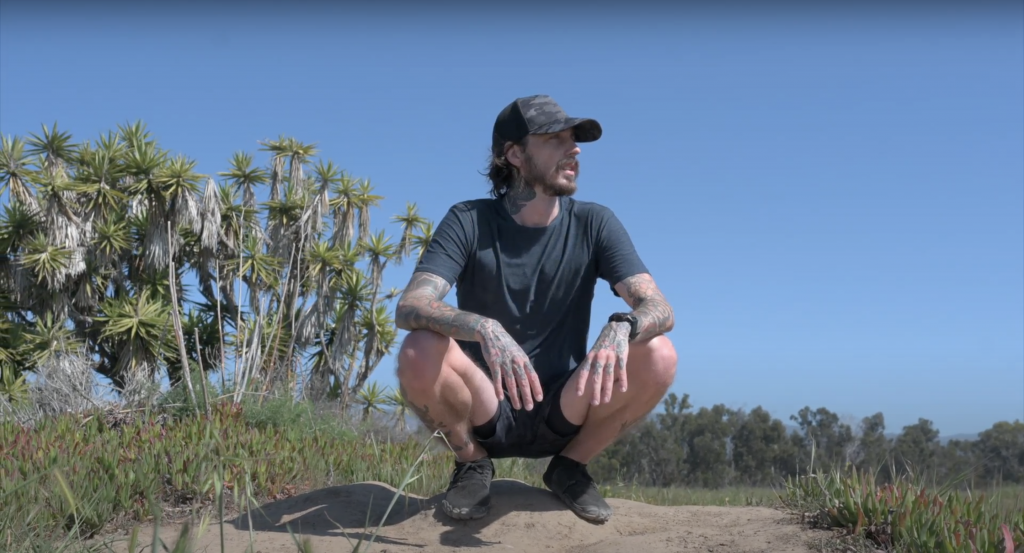
    When he got to high school he was captain of the team and broke a bunch of state records. He went on to compete in the division 1 swimming program at the University of Wyoming.

    But he says he had burned out on swimming at about age fifteen. He stayed in the sport because when you compete at that level your friends are all involved in the sport. And it was the sport that would give him a scholarship. Eventually he had to face the fact that he didn’t want to swim competitively any more. But he still loved the water so he decided to sell everything, leave the University of Wyoming, and go to California and become a professional surfer.

    He says he wasn’t a natural at surfing, but was making progress. He hadn’t been at it very long when a big wave knocked him off his board and crushed him to the bottom where he hit a rock and broke his back. 
    He went from being incredibly bulletproof and feeling invincible as an athlete and feeling like he could do whatever he wanted in the water to having that one moment break his back and his identity. It made standing for a minute or two a hell on earth for him, and that one moment launched him into living almost a full decade with a severe disability.

    He says he didn’t really surf for very long, but he definitely came to a place of enjoyment for the sport. Surfing allowed for competition, but it was free-form and flowing. It was a vehicle for expression that required skill and mastery without the analytical precision of swimming: the times, the splits, and the numbers in training and competition. He says that that first time he went surfing after giving up swimming he found deep joy, and he never missed swimming. He never looked back or regretted giving it up or thought about where he might have been had he kept at it. He was just fixated on that new chapter in his life that opened up, and unfortunately it was very short lived.

    Vinny’s official diagnosis was a multiple herniation of his T-12 vertebre. The fracture and the force of the impact displaced his lumbar spine 21 degrees to the left. So he basically developed lumbar scoliosis. He really was very fortunate that he didn’t have spinal cord damage. 

    At the time that happened, after he came out of shock he was left with no feeling in his left leg. He sought various medical views and some said he needed surgery. Some said just rehab, but he was going to require assistance to walk and that the best option wast maybe a wheelchair. 

    Vinny spent the next five years looking for alternatives that didn’t leave him immobilized for the rest of his life. He tried chiropractors, physiotherapy, yoga, and acupuncture. Nothing helped. 

    He finally found a “body worker,” that’s what he called himself. In his first session he was laying in a position the body worker was just telling him how to move how he wanted him to move and how to shift his body. He wasn’t even touching Vinny. He was only sitting in a chair beside him. So basically this re-educated him on how to move and how things should work. And after an hour of these annoyingly simple, disappointing exercises he told him to get up, and for the first time in 5 years he was able to stand up without a sharp stabbing pain in his lower back. Vinny was confused because he thought that when you have an intense problem you should need an intense solution to fix it. But these simple movements worked when nothing else had.
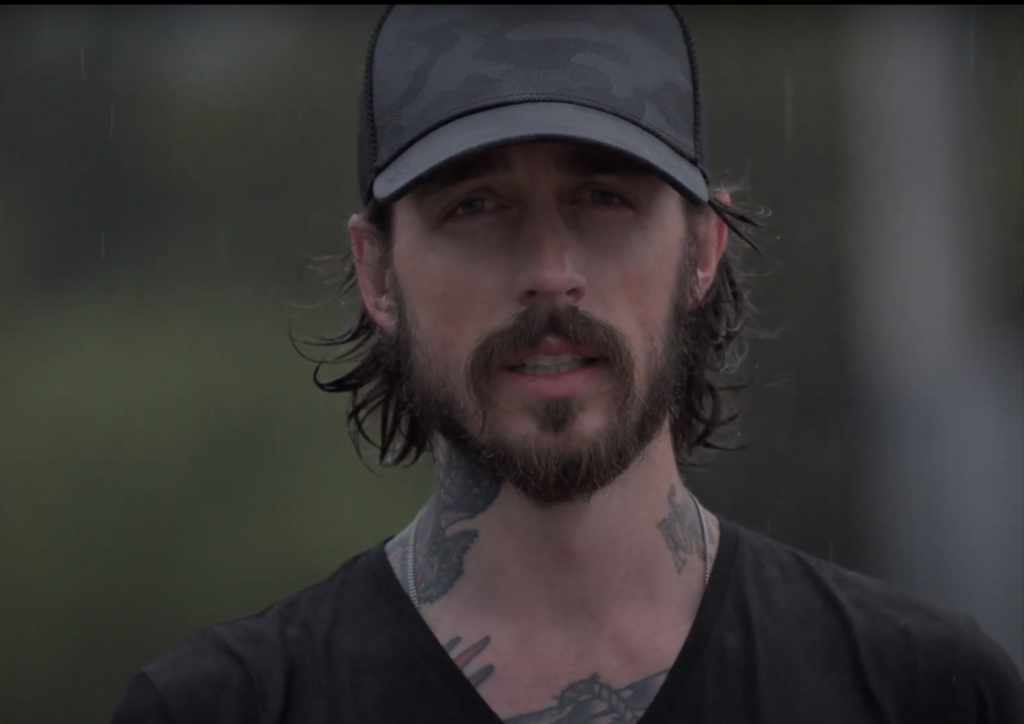
    Vinny continued working with his body worker and his body gradually healed. He then went on to learn the process and started the Pain Academy where he teaches others how to heal their bodies through movement. His program is a 52-week comprehensive course on how to move your body in a way that is natural and healing.

    He talks about how the body is incredibly brilliant at compensating, and without you having a formal education in mechanics your body is still going to find a way to rotate and re-align to compensate for pain. If you focus on correcting just that one movement it will cause an excess load and pain in a different part of your body. That’s why his program looks at the total body movement and doesn’t just focus on symptoms.
    Bridge Questions:

    Must-have gear: a Solomon backpack that has saved his life running on the trails, he says without it he wouldn’t be able to run as far as he is.

    Strangest thing he’s seen on the trails: a group of guys in full camo who ran away when they saw him.

    Word or phrase that defines his philosophy of life: What if?


    Connect with Vinny:
    Pain Academy

    Instagram

    Facebook

    YouTube

  • Work/Life Balance is a Myth!

    Work/Life Balance is a Myth!

    Speaking notes:

    How are you doing with your work/life balance?

    51% of workers say they have missed important life events because of work commitments.

    40% of employees say they use their personal devices for work purposes after business hours. 

    70% of employees will read their emails while watching television at home.

    60% of Americans say they have poor work-life balance mostly due to a lack of boundaries between work and home life.

    On average, employees take 26% of their work back home to complete during their personal time.

    Small business owners – work almost twice as much as employees.

    Work/life balance sounds like a big deal. Most need to do better.

    But I’m here to say that work/life balance is a myth!

    There is no such thing as work/life balance!

    I want to talk about the myth of work/life balance.

    I used to believe in work/life balance. And I believed I was terrible at it.

    I’ve been self-employed for almost 30 years.

    My wife and I are partners and we have no employees.

    As our business grew, we ended up working all the time.

    We ran for a lot of years on the edge of burnout.

    And we were saved by a time-share saleswoman.

    We went for a “free” weekend with some friends.

    Obligated to sit through a sales presentation.

    “We’re not going to buy! Right?”

    She asked, “What do you like to do on vacation.”

    Us: “We’re self-employed. We don’t take vacations.”

    She asked, “Do you think that’s healthy?”

    “I’m going to get a coffee. Do you want some?”

    We talked about how the time-share would force us to plan and take time off.

    We bought in. And it was a good decision.

    That was the step that led me to bust the myth of work/life balance.

    Think about this with me.

    There is no work/life balance.

    All you have is LIFE!

    Work is a part of life. It’s a big part of life. But it’s not separate from life.

    Part of the reason so many people feel out of balance is a mindset issue.

    If work is separate from life, it’s out of your control. You don’t manage it. You are the servant. It is the master.

    Worse for small business owners. Your business runs you instead of you running your business.

    If you keep thinking about work/life balance, the scales will always tip in favor of work/business.

    Make a mindset shift. You have your life.

    It’s up to you to manage your LIFE.

    Work and business is part of your life.

    But if you’re working all the time, you are a poor manager.

    The good news is that you don’t have to be stuck where you are.

    If LIFE isn’t working out like you want you can decide to change.

    For me, the big shift came when I realized that everything in my life was there because of my decisions.

    And I was responsible for those decisions.

    Yes, it was a hard truth to swallow. 

    But I also saw I could make different decisions.

    And I could head toward a life that had work and play and relationships and self-care.

  • Mindset for transformation through nature – Holly Worton.

    Mindset for transformation through nature – Holly Worton.

    Finding her athletic ability

    Holly Worton is a lover of nature, a runner, hiker, author, kickboxer, podcaster, and coach. And she is a storyteller. This week I’m honored to share her stories with you.

    When Holly was in school she thought she was going to be a traditional teacher, perhaps an English or Spanish teacher.  She says that she was never one of those people who knew from a young age what she wanted to be when she grew up.She did know that she liked to read, she liked to write, and she liked Spanish. But even after graduate school at UCLA and studying abroad in Mexico she didn’t have a clear plan for life.

    Holly also says that she wasn’t athletic in high school. In fact, she hated sports. She was always the one picked last for teams. She did well in school, but did poorly in sports. She had the belief that she wasn’t born with the “sports gene” and that she would always be terrible at athletics. She said that no teacher ever took her aside to tell her she could improve if she would only practice.

    It wasn’t until her early 20s that she started running and started to see that she could be athletic.

    There was a point where she gained a little weight. She always thought she was immune to weight gain because she had a fast metabolism and could always eat what she wanted. But her life became a little stressful and she put on a few extra pounds. She contacted a friend from high school who was in all the sports. Her friend told her to go buy a pair of running shoes and start running. Her friend advised her to start with the run/walk method and for a short period of time. Then she could gradually increase as she built up her endurance. 

    Holly found she enjoyed running. She had started running to lose weight, and found an added benefit of it reducing her stress. Her life was very stressful at that time, and running gave her time to herself as well as exercise. 

    When she started running she said to herself, “How about a marathon?” Runners typically start with a little less distance and work their way up, but she wanted to skip the rest of the distances to start with a marathon. She chose a marathon that was about six months from the day she started running to the day of the marathon. She found it amazing to be running with people on the street cheering her on. Her normal training was running alone on the road. But as the race when on she found herself to be the last runner on the course. And the course sweep vehicle was an ambulance. It was stressful and embarrassing for her as she walked and ran, and all the while the ambulance was right on her heels. Her mindset went into a downward spiral to a quit. 

    This experience led to her questioning her ability as a runner and shook her confidence. She ran occasionally on a treadmill at the gym, but she didn’t feel confident as a runner.

    She got involved in kickboxing, and that was her main source of exercise for years. But when the Covid shutdown happened she wasn’t able to attend class. She started running again because she decided she couldn’t just sit on the couch. She saw YouTube videos about ultramarathon running and thought, “This is amazing that people can do this!” So she signed up for her first race. 

    Holly started hiking and walking when she moved England. She discover a book about hiking and walking trails in England. And she began exploring. Then she moved to the countryside with a wealth of trails in every direction. So she started exploring and walking, and then started to hike some of the trails with longer distance like the national trails. And she did the Coast to Coast Trail this year. She likes to be constantly walking and hiking. She has always enjoyed being out in nature so hiking is something that rejuvenates her soul.

    She tells us that she loves reading books about other people on long distance hikes and when she doesn’t feel like spending a lot of time outdoors she tends to read more books about it and although it doesn’t have the same effect it gives her ideas for season planning and things like that but she really wants to contribute to that and wanted to share her experiences being outdoors to inspire other people to do the same so she loves getting feedback from readers. She tells us that she loves the fact that sharing her story inspires other long distanceers.

    She says it took her some trial and error when she went from day-hikes to longer distances. Longer distances require a bigger pack which is heavier. She discovered her training hadn’t fully prepared her for the extra weight. But she says that every backpacker, hiker, and runner have to go through this kind of learning process. 

    As she spent more time on the trails she found she wanted to learn more about how to manage being out in nature. She found a woodcraft school where she learned practical skills of ethnobotany and plant identification, wildlife tracking, and advance bushcraft. 

    Holly has a few long distance hikes in mind that she’d like to do. One of them is the Camino De Santiago. She’s still considering which route she’d like to travel.

    Holly’s podcast, Into the Woods with Holly Worton originally started as a business podcast almost 9 years ago. At the time she couldn’t find any business podcasts that talked about women’s stories. So she started one. She never thought it would still be going 9 years later, only now her podcast has changed to an outdoor podcast. But the underlying theme has always been personal growth and personal development through business.

    She tells us that thanks to all her personal growth she has a much broader vision of what she is capable of doing in all areas of her life.

    She offers personal coaching, and she also offers coaching for book writing and book publishing as well for athletics. She is certified in PSYCH-K® and as an NLP practitioner. Personal transformation is a part of her life and she enjoys helping others transform their lives.

    Bridge questions.

    What is your essential piece of gear: Solomon Advance 12.

    Strangest thing you’ve seen in a race: ”I was with a friend taking a walk and we were in the middle of the woods and we saw these two trays of food, they were almost like airline trays, we have different departments and different things, like two English breakfast trays, one was half eaten and one was not, right in the middle of the road, next to the trail.”

    What is your word or phrase that describes your philosophy of life: Just keep practicing and work on your mind to make it better.

    Connect with Holly:

    Website

    “Everything Page”

    Facebook

    Instagram

    Twitter

  • Cougars, Mantras, and Swearing – Shannon Mick

    Cougars, Mantras, and Swearing – Shannon Mick

    The mindset to keep going

    Shannon Mick is a returning guest. She was hear back in Episode 63 talking about her FKT that she calls “To Hell and Back.” She ran an out and back to a place called Hell’s Hollow. She encountered a cougar in the dark a few miles from her finish. 

    Shannon started running in 2010 as her husband inspired her to start running when they started dating. He was already a marathon runner, and once they started dating they discovered ultramarathons. She started ultramarathon running after they were married. It took her a few years to make the typical mistakes of the novice ultramarathon runner. For example, she had a stress fracture in her foot from overuse. She did plenty of research and ran her first 50-mile race in 2016.

    Her first 100 mile race did not go well. The organization was poor. Some of the aid stations ran out of water, and the little food they had was left in the sun for hours and either melted or spoiled.

    In her recent challenge, the Oil Creek 100, she faced tough conditions. There was rain before the race, and it was raining at the 5am start. The trails were slick with mud and had places with water standing on the trail. Because of the tough conditions there was a 69% drop rate, people who decided to call it quits.

    Shannon did her best to cope with the weather. She had layers, a winter jacket, and a North Face waterproof jacket. But she still came close to hypothermia when the temperature dropped in the night. The cold was a challenge to her mindset as well as the places where mud and water were almost knee-deep. 

    It was a tough road for her. What helped her was that she found a partner who was going at her pace so they were joking around and motivating each other. Shannon commented that she’s never dropped out of a race before. Her running partner said he hadn’t either. They decided they would keep going until they missed the cutoff and were pulled from the race.

    Shannon says it’s good to have someone help pull you through when running an ultramarathon. The conversation and shared suffering gives you the mental distraction to keep going. She also prepares her mental strategies for every race. She breaks the race up into sections and focuses on each as she comes to it. Ultramarathon runners refer to this as “running the mile you’re in.” If you start thinking about how far you have to go it saps your mental energy. She also uses positive self-talk. You need to be like your own cheerleader giving yourself encouragement and support.

    All of her running adventures opened doors for her to provide mental coaching for athletes, and she also counsels people in Mental Health.  Just as she works with mindset coaching she also works with people who struggle with anxiety, trauma and eating disorders. She says she believes that gives her a big advantage over other mindset coaches because she has that counseling experience.

    And she does a lot of mindfulness with athletes and teaches them strategies and breathing techniques so they can connect better with their body and they can transfer that to racing. She gives her clients mental strategies that they can use at home but also that they can transfer to their careers.

    Shannon has index cards ,and every time she thinks of something helpful that she knows works as a mindset tool she writes it on an index card. She uses these strategies for herself in her life and in running. So when she coaches athletes and ultra runners, she knows that she’s giving them solid strategies. Just like she trains her body for nutrition or hydration during her runs, in the same way she practices what she tells herself and what she thinks too.

    Bridge questions:

    What is your must-have gear? Her phone.

    Weirdest thing she saw running: a toolbox and an axe.

    Word or phrase that sums up her life philosophy: ”Finish stronger”.

    Instagram

    Coach website

    Youtube

    Twitter

  • Tough Mindset and Burnout

    Tough Mindset and Burnout

    I tell people I’m the ultramarathon mindset coach.

    I’m an ultramarathon runner.

    I’m a mindset coach.

    I help lawyers and business owners rescue themselves from burnout.

    A lot of people think that I developed an ultramarathon mindset from running ultramarathons.

    But that’s not the way it happened. 

    I became an ultramarathon runner because I had the mindset.

    Running an ultramarathon is hard.

    Marathon 26.2

    Define ultra … Most runners say 50K is the real definition of the shortest ultra.

    Only 4.8 miles more than a marathon.

    But marathon runners find out those miles take you into a whole different world.

    Yes, it’s harder physically.

    But it’s the mental challenge that makes it difficult.

    Average runner – 45 min to an hour longer

    Marathon runners talk about hitting the wall at around 19 or 10 miles.

    Dig deep & will themselves to go 6.2 more.

    And 4.8 more – that’s what makes an ultramarathon such a challenge.

    Then there’s 50 miles, 100K, 100 miles.

    You do need drive and mental toughness to run an ultramarathon.

    But mental toughness isn’t the same thing as having an ultramarathon mindset.

    When you have mental toughness your mind is driving your body like a jockey whipping a horse.

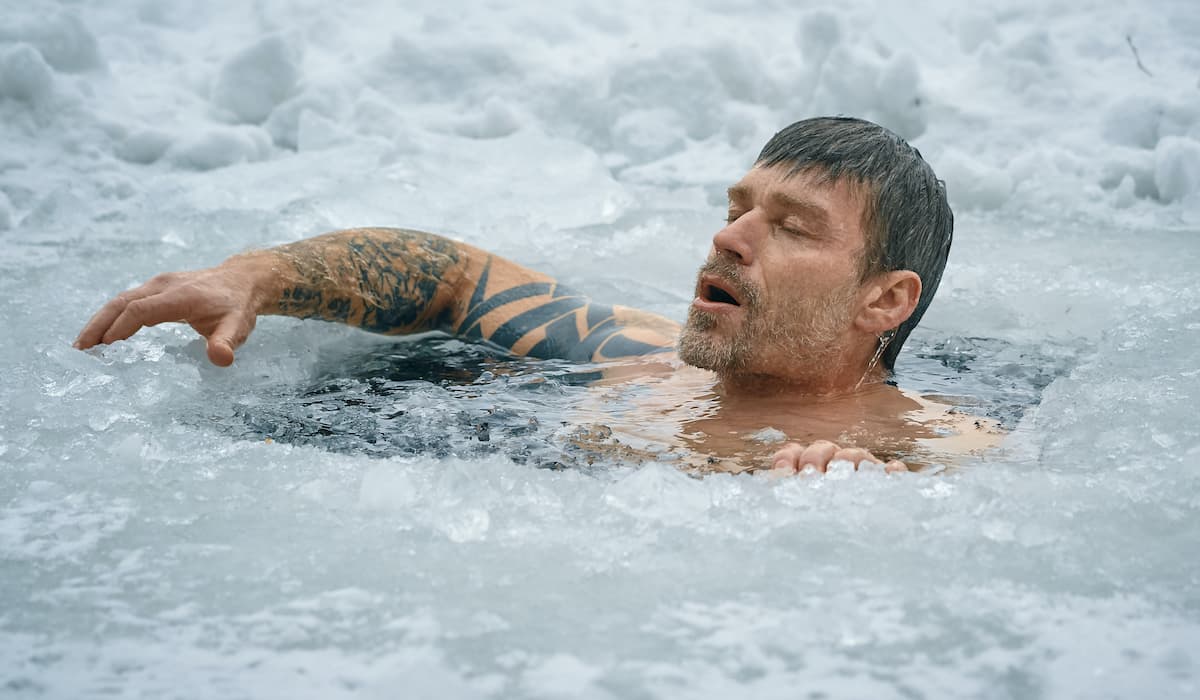
    Coaches say you can develop mental toughness by taking cold showers.

    “Get comfortable w/ being uncomfortable.”

    You can find plenty of people who use this approach. 

    Some do amazing things.

    But some of them border on abuse.

    Basis: identity comes from performance.

    “I feel like a winner because of what I can do.”

    Last Monday Mindset – manage thoughts and emotions . . . not control!

    Ultramarathon mindset – cooperation between mind and body.

    Managing energy, thoughts, and emotions for peak performance.

    It’s about going the distance. 

    It’s about planning for mile 73 before you even start the race.

    Basis: performance comes from my identity

    “I am an ultramarathon runner. So I run ultramarathons.”

    DFL or even DNF isn’t failure. 

    Ultramarathon mindset is for life, not just running.

    Mental toughness – eventually you burn out.

    Ultramarathon mindset – you manage energy, thoughts and emotions for the long haul.

    I learned the difference between mental toughness and having an ultramarathon mindset as a business owner first, long before I started running.

    I know what it feels like to be burned out as a business owner.

    So, as a coach, I talk about having an ultramarathon mindset for life. 

    Yes, running is a part of life, but when you have an ultramarathon mindset, you have confidence you can deal with “mile 73” or that difficult conversation you need to have with your client.

    It took me years of trial and error to learn how to do this.

    What I offer my clients is a way to avoid the trial and error and get on a quicker path to success.

    Free 25-min mindset reset

    Rescue yourself from burnout

    Photo by

    Vidar Nordli-Mathisen on Unsplash
  • 72-Hour World Record Mindset: Viktoria Brown.

    72-Hour World Record Mindset: Viktoria Brown.

    Becoming a triathlete and ultramarathon runner

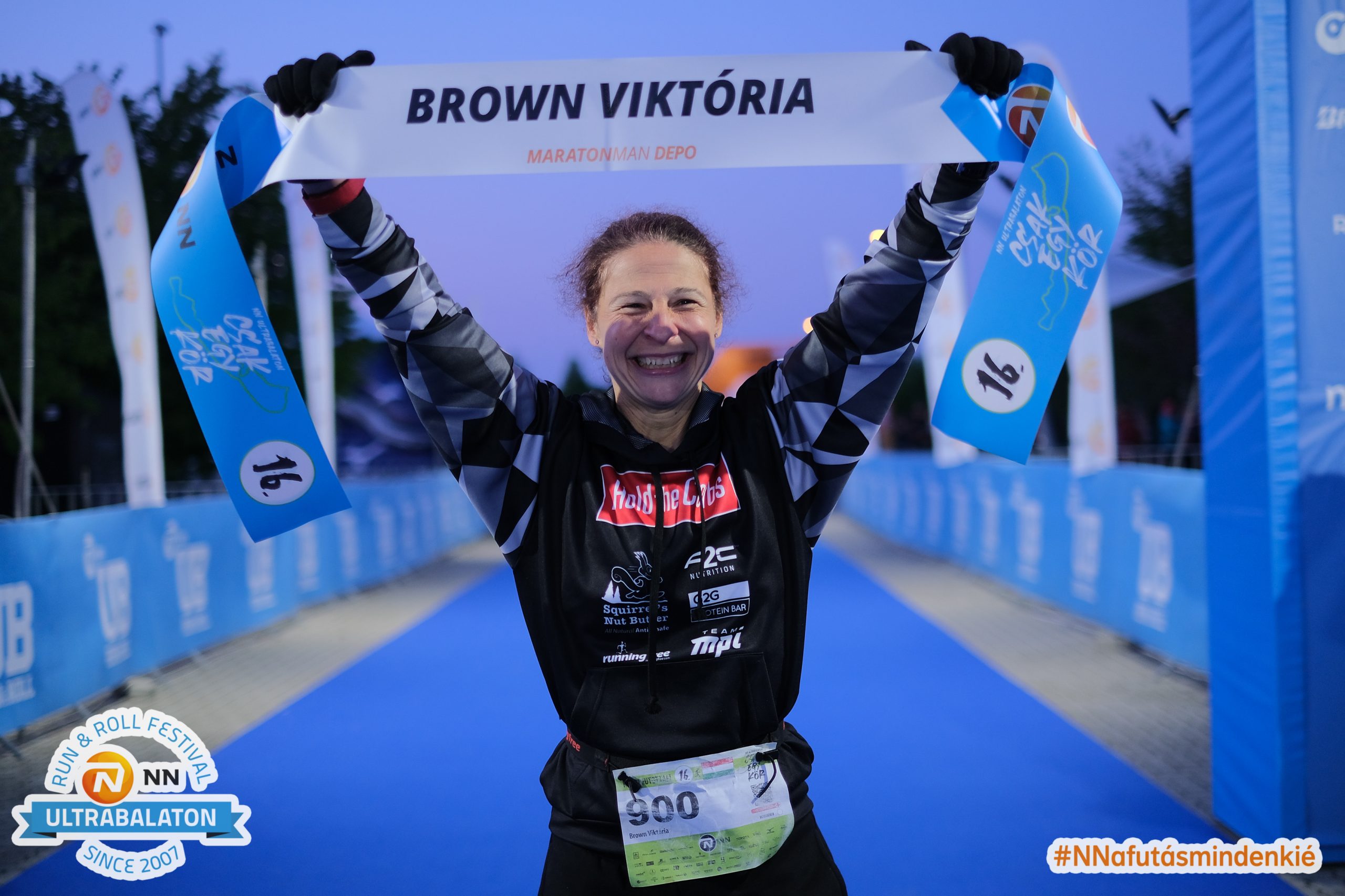
    Viktoria Brown’s motivation to start running was to lose weight. She is mom to three girls, and when the youngest was born she started running. She also started eating foods that were low in carbs and high in protein. She was happy with her results and continued as a casual runner. 

    She decided to start selling her low-carb baking mixes that she had originally made for herself. Her small business began to grow and now Hold the Carbs products can be found in stores in Canada, and she ships to customers in Canada and the US.

    When she was in school she didn’t like any kind of exercise. She preferred to sit inside with a book rather than running and playing. But she discovered a love for horseback riding at the age of 9. Horseback riding is an expensive sport, so she only went once a week.

    She decided that since she couldn’t be involved in horse riding as competition that she could still be connected to the sport as a reporter. So she started working at the Hungarian TV station, doing whatever they needed done. Her mother knew someone with a 5th-degree connection to the station, and Viktoria was invited to a tour. She convinced them to let her work for free, and she kept showing up and eventually she ended up as the commentator for the equestrian event for 1996 Olympic games. And her position connected her to the equestrian team and she was able to ride with occasionally.

    After she started running, her first race was a 10K, but she says Ironman triathlons were always in the back of her mind because she had friends who did them and she thought if they could she could too. So she started working on that, and later in 2015 she ran a half-marathon. And a year after she ran the 10K, she ran a marathon. 

    She then moved to triathlons and began working her way up in distance. She enjoyed the challenge and 2 ½ years later she completed her first Ironman. She saw that she was particularly good at longer distances. She placed higher in her age group in the longer distances. She started working with a coach and was able to place 7th in her age group in the half-Ironman distance.

    She changed coaches in 2019 and it was a breakout year for her. Races were canceled shortly after, but when she was able to start again she was contending for the podium rather than being a middle-of-the-pack runner and triathlete. The consistency of her training paid off. She traveled to Hungary and placed first female in a triathlon at the same distance as the Ironman.

    Then she ran her first ultra because everything was canceled. She saw this race when she ran a half-marathon. It was a 24-hour race and she ended up running 132 miles. And she’d never run more than a marathon before. She won the race outright (first overall for men and women). She broke the course record and became the first selection for the Canadian National 24-hour team. And she broke the 24-hour Canadian-soil record. 

    Viktoria went into the competition at the 6 Days in the Dome race in 2022 with the goal of setting a new world record. This event was held at the Pettit National Ice Center in Milwaukee, Wisconsin. She won the six day race with a distance of 457.4135 miles (736.135KM) which broke the 6-day record for Canadian women. On her way to winning the six day event, she set a new Canadian 48hr with a distance of 219.95 miles (353,991 meters) and the Canadian and GOMU World Record for 72 hours at a distance of 290.41 miles (467,366 meters).

    She still had 80 minutes left to run once she passed the women’s 6-day record. She decided she should try to get out and run more since she had only passed the record by a small margin. But the pain that her mind had kept at bay to meet her goal came on so strong that she had to concede and stop running.

    She says that the mindset part running ultramarathon distances is certainly a factor in performance. She says that she didn’t really feel the pain she was in until she’d met her goal of setting the record distance she was after.

    Bridge questions:

    Her fuel on the runs are a natural sports drink called Glyco-durance from F2C Nutrition that come in 4 flavors. Since she doesn’t usually eat in the first few hours and just drinks these drinks.

    The strangest thing she has seen was a huge glowing unicorn that was clearly a hallucination.

    The phrase that describes her life philosophy is that she likes to be in the presence of light and that she always chooses to be present over something that might come in the future.

    Instagram

    Website

    Facebook

  • The Paradox of Trying to “Just Breath”

    The Paradox of Trying to “Just Breath”

    Speaker Notes:

    Take a breath. Take a deep breath.

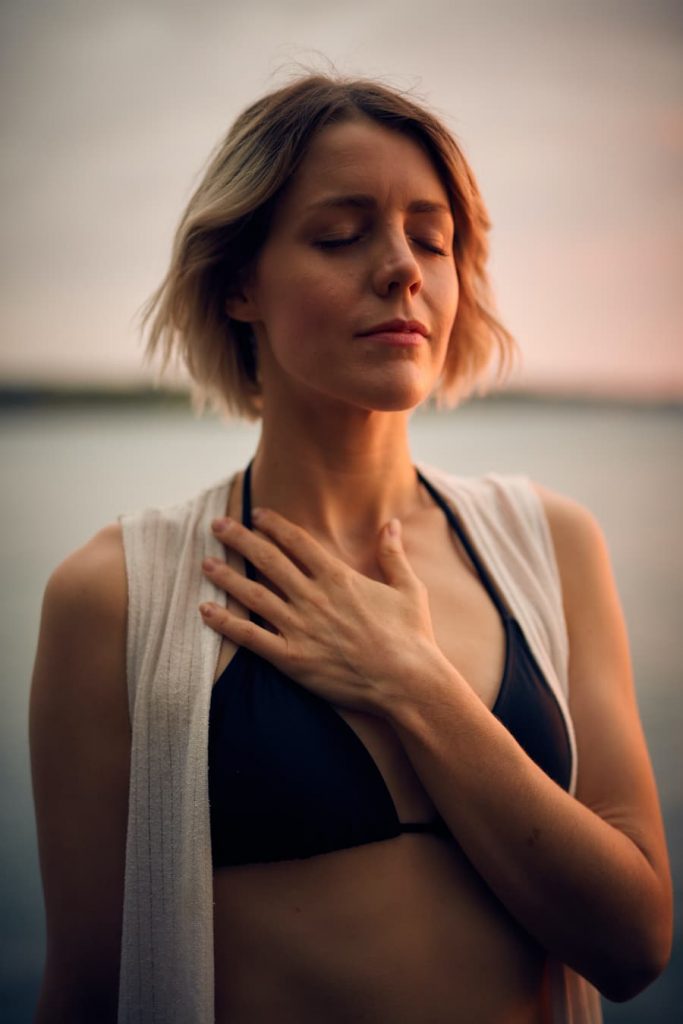
    Inhale deep! In through your nose. Out through your mouth.

    Again!

    Again!

    Do you feel calmer now?

    If you do, it’s only the placebo effect. You’ve been told this will calm you down . . . reduce stress.

    Reality – it has the opposite effect on your body.

    The mindset work I do w/ my clients is about mind AND body . . . manage thoughts AND emotions.

    And using your breath correctly is one of the best ways to manage how your emotions show up in your body.

    I think it’s a pretty safe bet to say you’ve been breathing all your life.

    We all have!

    And most of the time we don’t think about it. 

    If you’re a runner or in other exercise, you’ve had times when you feel like you couldn’t get enough.

    But do you ever stop to think about HOW you’re breathing?

    And whether there might be better ways to breathe? Or that you could change your athletic performance.

    Or that the advice to take deep breaths doesn’t do anything to calm you down?

    I did all my mindset work and started my coaching without learning how effective breathwork is.

    Now I’ve incorporated it into my coaching because I can help my clients get better and faster results.

    What I’ve learned about breathwork has changed the way I run and helped me be even more effective at managing my mindset.

    I can talk about breathing techniques for longer than most people want to listen.

    So I’ll give you the highlights:

    1. Most of us breath too fast
    2. We breathe too much volume
    3. Breathing through your mouth (in or out) reduces available O2

    I want to tell you about a technique that is easy and will give you great benefits.

    Resonant Breathing

    Breathing at a rate of 3 to 7 seconds for both inhalation and exhalation.

    Most common is 5.5 seconds = 5.5 breaths per minute.

    Benefits

    1. It gives you greater HRV, or heart rate variability. HRV is a measure of how much variance there is between heartbeats.

    The variations between heartbeats is a sign of health.

    If your heart beats like a metronome, with no variation in between beats, it’s a sign that your body is stressed.

    HRV has become one of the key markers of mood, stress adaptation, performance, and even overall health.

    1. Balances sympathetic & parasympathetic nervous system

    Sympathetic nervous system = gas pedal.

    Parasympathetic nervous system = brakes.

    How to:

    Sit comfortably.

    Align your posture

    Start off by exhaling from your belly. Pull your navel toward your spine.

    Then 5.5 seconds inhale and 5.5 seconds exhale.

    Don’t pause between inhale and exhale. 

    This will give you a rate of 5.5 breaths per minute.

    James Nestor (author of Breath): Breathing gives the same benefits of meditation for people who don’t like to meditate.

    Free audio (guitar) to pace your breathing.
    Free audio (piano) to pace your breathing.
  • Mindset Challenges for More Than Running – Ryan Steiner.

    Mindset Challenges for More Than Running – Ryan Steiner.

    Taking on big challenges and the mindset it takes to do them.

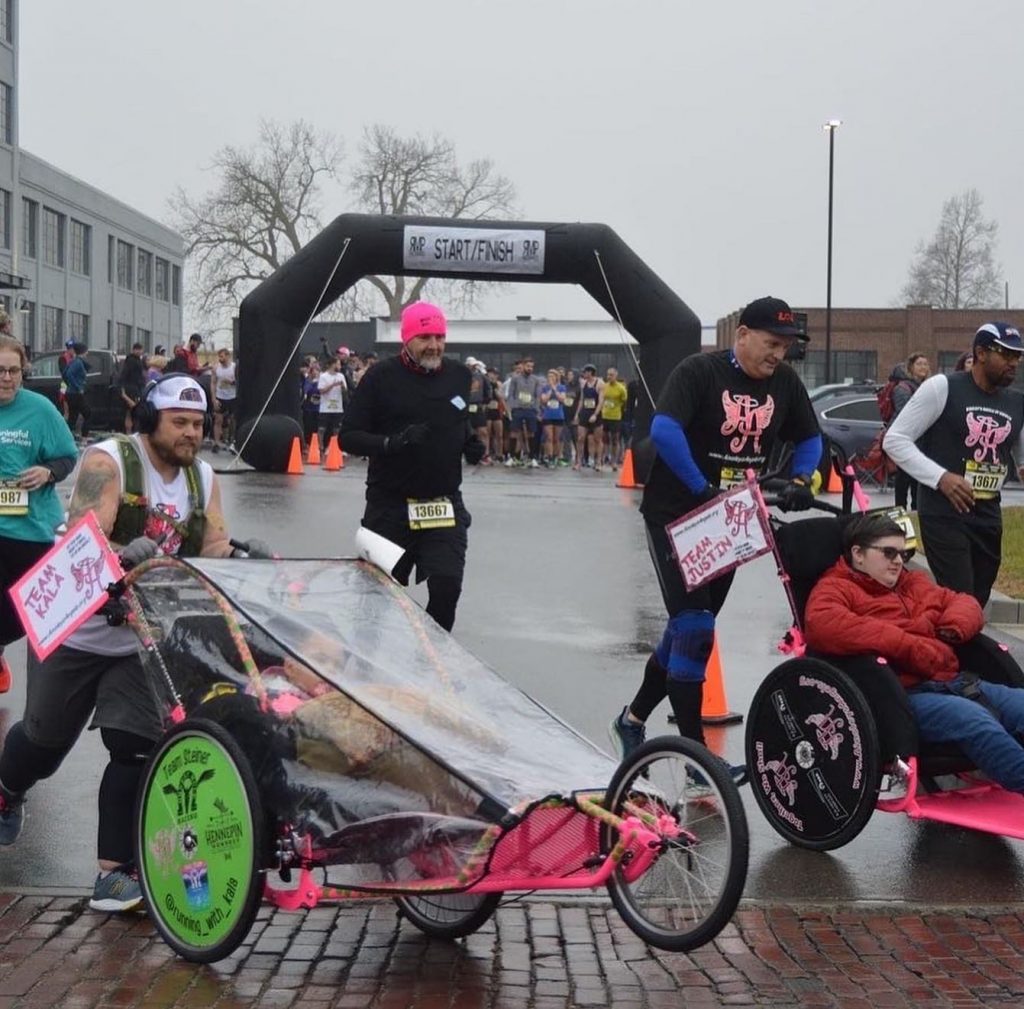
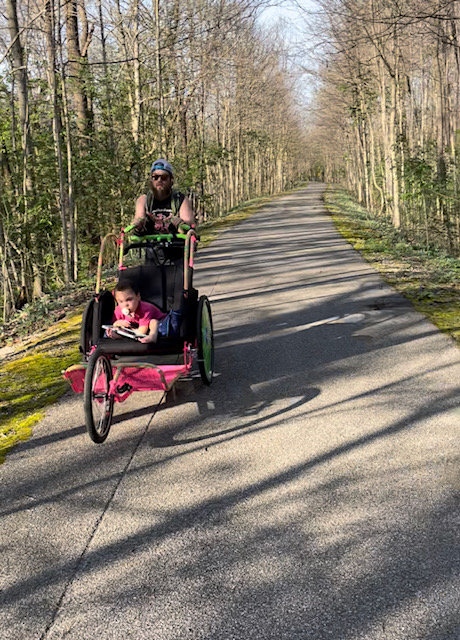
     Ryan Steiner says he is autistic and is obsessed with running. Before he became obsessed with running he was obsessed with food and weighed over 700 pounds.  Now he has dreams that he pursues daily and says that what he believes most defines him is that he is a dad of an autistic child. He says that since they both have autism he can show her the world and share things with her in a way that he can’t connect with other people. His daughter, Kala, is in a wheelchair so Ryan pushes her as he runs. They’ve run a 50K race together, and he hopes they can someday run a 100 mile race.

    His goal for next year is to run 100 miles, but he’s not sure yet if Kala is ready to run for 24 hours because it might be too long for her. She has a specialized wheelchair they call “The Chariot,”and it is specifically designed to run distance races with people with physical disabilities. When Kala was smaller, they used a jogging stroller. The Chariot is also a type of trailer for a bike so Ryan can vary his workouts.

    Ryan is a fan of the elliptical bike. It is like an elliptical exercise machine on bicycle wheels, but with a longer stride.  He says it simulates a slow motion run, so it works the same muscles you use when running, but without the impact of running. It doesn’t replace the need for actual running, but he likes it as a supplement to his running workouts.

    Ryan says he started out like Forrest Gump, but walking. And then he felt like he wanted to go faster. He also dedicated himself to losing weight. He did the Hennepin 50k race last year, and from the time he finished until February he reduced his mileage and his calories. He wanted to lose weight to see how much more he could improve his pace. He says he has to balance weight loss with race training because if he wants to lose a lot of weight in a quick period of time he has to watch how many calories he is counting and how many calories he is taking off so he can maintain recovery. 

    At the Hennepin 50K last October he pushed his daughter, Kala, the whole way. He says it was a brutal thing because the heat and the humidity were really bad and it sucked all the hydration out of his whole body and he got really bad cramps. He chose that race as his first 50k because it has an extremely generous cut off which is 21 hours because of the fact it runs in parallel with the 100 mile race. This was his first night race as well. The course is a cross between road and trail because the ground is like crushed limestone, and it’s a good surface to run on .

    Ryan has become very familiar with the trail running group associated with the Ornery Mule Races. He says that once he has a group of people he is socializing with it is easier for him than starting in a whole new group. His autism makes it more of a challenge to deal with new people and unfamiliar places. People tell him he should be his authentic self, but he says that if he was his authentic self he wouldn’t talk to people because he wants to be in his own world. So having people around him that are safe and can help him navigate those confusing things in a race he’s never been to before is really nice for him. So he likes being in the trail running community. Also, in new situations, he likes to have sunglasses on because then he doesn’t have to make eye contact and can look in other directions until he adapts to what is happening. He says he can fake it for short periods of time and people get the impression that he’s doing fine. Then they say things like ”Well, you don’t seem very autistic compared to people I know.” But it’s because he has practiced and forced himself to learn how to connect with others

     Ryan says that one of the things that helped him learn to push forward is that he learned to be consistent. And being able to connect with people, which allowed him to push through a lot of really tough training times. He loves running and he loves what running brings to his life. Sometimes he has to remind himself that he loves to run and push away the negative thoughts in his head that tell him he doesn’t want to go running because it’s too hot or whatever other excuse that pops us. He also has to balance the things he does with his daughter because there may be days when he is fine but she is not willing to connect.

    Ryan has a trainer, and she’s been great at taking his obsession with running and filling his head with all the things he needs to know about his body and helped him train using heart rate. Helping him to see how his body should feel at each of these different levels. He also does speed work and strength training. She had especially helped him focus his energy where it needs to be.

    He has also been a race announcer and has been on the live broadcast of the Kettle Moraine 100 mile race. He was nervous about doing this, but now has more confidence because of the podcasts he’s been on.

    Bridge questions:

    The fundamental piece for Ryan’s race is water, he says he can run without shoes without any problem but if he doesn’t have water he is finished.

    The strangest thing he’s encountered is someone seeing The Chariot and asking to buy ice cream.

    The phrase that defines his life philosophy is: real change only runs at the edge of your comfort zone.

    Instagram