Category: Podcast

Great conversations with runners and others who have an ultramarathon mindset.

  • Choose Your Thoughts – A Mindset Superpower

    Choose Your Thoughts – A Mindset Superpower

    Speaking Notes

    The best weapon against stress is our ability to choose one thought over another. ~William James

    The Creator gave us the complete, unchallengeable right of prerogative over the one thing, and only thing we own, our mind. ~Napoleon Hill

    Your ability to choose what thoughts you think is a superpower.

    When you run an ultramarathon, managing your thoughts is as important as the condition of your body.

    One thing is certain when you run an ultramarathon: things won’t go according to your plan.

    Something will happen you have to deal with. Out of your control. Or a mistake.

    Your thoughts and the story you tell yourself will either help you or hurt you.

    Choosing what thoughts you want to think is difficult on good days. But when your plans to to hell, that’s when you need this superpower.

    Brenda and I just got home from a great vacation in the Texas Hill Country.

    We toured wineries. We hiked. We read books and rested. We sat in the hot tub. It was a good vacation.

    The drive home is a little over 12 hours.

    We were 60 miles from home and the warning light came on and the engine lost power.

    We were at an exit ramp so I turned off the car and coasted.

    I was able to make it to a gas station parking lot.

    It was obvious that we weren’t going to drive any farther.

    We called a tow service to get us and our car home.

    This was not according to our plan!

    We were feeling good about the fun we had.

    We were thinking about what we had to do when we got home.

    Now we have to deal with a broken car that might need a new motor.

    This could have ruined all our good memories of our time in Texas.

    But I told Brenda how good it was that we broke down so close to home. 

    We were in a town with a tow service rather than a lonely highway in Oklahoma or Texas.

    We started talking about how we will manage with just one vehicle.

    We chose to think about how to handle this problem rather than curse the circumstances.

    You can’t control circumstances.

    You can manage one thing: your thoughts.

    You get to choose what you think about. You get to choose what you focus on.

    Ep 120 – Lauren Ammon – Train your mind like you train your body.

    Mile 73 isn’t the time to figure out how to choose your thoughts.

    When your car breaks down, is not the time to figure out how to choose your thoughts.

    Train your mind. Choose your mindset.

    That’s what I do as a mindset coach.

    You train. You practice. Just like training your body.

    Ultramindsetpodcast.run – free conversation.
  • Mindset to perform to your potential: Lauren Ammon

    Mindset to perform to your potential: Lauren Ammon

    Competitive drive will only get you so far.

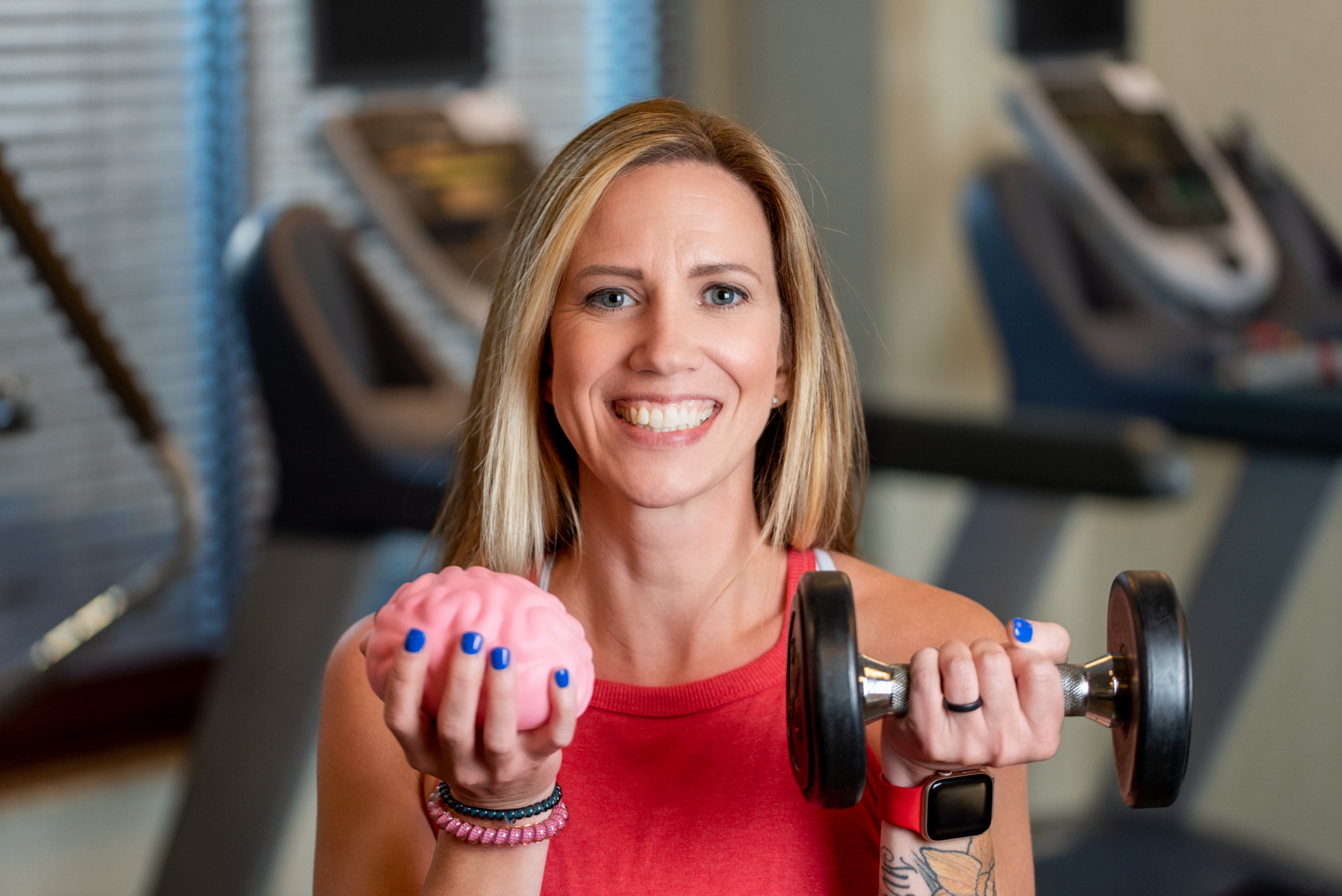
    Today’s Guest: Lauren Ammon

    Some people are born for music, others art. Lauren was born for sports. Her athletic career started at five when she swam her first race. Nearly 20 years later she retired as team captain from a D1 swimming program. This foundation as a successful student athlete set the tone for high achievement as an HR leader in the professional world. Though success and promotions kept coming her way, something was missing. 

    In November 2019, Lauren received her professional coaching certification from the Institute of Professional Excellence in Coaching (iPEC). She launched her own practice dedicated to leadership development and individual coaching. Despite quick success in this space, something was still missing. 

    She now specializes in working with current and former athletes and all ages and levels to master the mental part of the game and perform at their highest in all of life’s competitions. Being an athlete is much more than the number of wins and losses. Athletes win by showing up every day for themselves (and their teams) and working to grow and develop in the face of adversity. It’s about mastering their minds to face their most challenging moments and reaching their full potential physically and mentally.

    Lauren’s practice exists to show athletes they deserve an outlet to be heard, seen, and supported mentally and emotionally at the same level they are physically. Working with her to remove the mental blocks that keep athletes from performing at their peak, shows them their abilities and talents are rooted in what the sport allows them to accomplish and who they become vs. the awards they collect.

    Leading with high energy, grit, and unwavering commitment to what she’s set her mind on, Lauren’s spark is unique and infectious. She uses this distinctive combination to connect with athletes in a way that deepens their understanding and acceptance of exactly who they’re meant to be to perform at their best every single time. Her motto, “make it happen” drives her unabashed belief that athletes already have everything they need to succeed at whatever they want, it’s simply a matter of removing the mental clutter that blocks them from seeing their full potential. 

    Information:

    She has a long career as an athlete but started as an H5.

    She has two sisters who are swimmers and she started swimming when she was 6 years old.

    She always wanted to swim in college and earned a scholarship to Eastern Michigan University.

    She graduated as a high school state champion in Kentucky.

    She earned her master’s degree in Human Resources but it wasn’t really what she wanted so she went on to get her professional coaching certification from the number one program in the US.

    She started to have a harder road in swimming when she hit puberty and started to understand more things about being competitive and not just doing it for fun.

    At one point in her career she began to feel exhausted from the heavy emotions.

    At one point in her life, after retiring from swimming, she realized that there was also a place for people who wanted to help athletes with their mental health.

    Things we discussed:

    When at the 2020 Olympics Michael Phelps came and said that competing at this level is really overwhelming and that we just want someone to talk to, we just want someone to listen to us and allow us to be vulnerable. This comment brought her to tears.

    We talked about when she was on the team and at 16 years old she thought someone was holding her back from reaching her full potential and it was really her own mindset.

    The concept that energy attracts energy.

    Growing up with the fear of disappointing parents even though parents don’t push us.

    We talked about when she retired from swimming and the thoughts she had, how she felt she had to leave this stage of her life behind.

    Bridge questions:

    What is the biggest mistake athletes make? Believing that performance is tied to their identity.

    What is the strangest thing you have seen in your training or in your life? It was once when she was training with her sister and they passed by a car where there was a person and there was a really bad smell and they thought about calling 911 because they thought the person was dead but when they came back the person wasn’t there so they were alive.

    Word or phrase that sums up your philosophy of life: You are stronger than you think, you are braver than you give yourself credit for and you are worthy of achieving everything you want in this life.

    Linkedin

    Instagram

    Twitter

    Linktree

  • Speak Death or Speak Life – Choose Which One

    Speak Death or Speak Life – Choose Which One

    Speaking Notes

    Pro 18:21 

    21 Death and life are in the power of the tongue, And those who love it will eat its fruit.

    You may have heard the expression in English: you will eat your words.

    Meaning: You’re going to regret saying what you just said.

    Truth: What you say . . . the words you use, have power. Proverbs: Death or Life.

    Are you paying attention to what you say?

    Scientific studies have shown that women speak more than men.

    20K words vs. 7K words

    Study in UK that a protein (Foxp2) in the brain might be responsible for this.

    The amount of words isn’t what I want to talk about.

    We have to use words to function in the world.

    The quantity of our words doesn’t matter as much as the quality.

    Proverbs: Words have the power to carry death or to bring life.

    Clarification: This doesn’t apply to all our words.

    Paper or plastic?

    For dine in or carry out?

    Please pass the sale.

    And most business interactions are neutral as well. 

    Maybe the endless meetings will bore you to death.

    But when you’re talking about yourself or others, those are the words that have power.

    Talking about yourself:

    Pay attention to any words that come after I AM.

    You create and reinforce your identity by the words you say about yourself.

    For most people, their self-talk is negative.

    As a result, their I AM talk is negative too.

    I AM:

    Not good at math, working out, eating what I should.

    An introvert.

    Clumsy

    Such an idiot

    Getting old and can’t remember things.

    Feeling sick. I might have Covid.

    What you say about yourself will grow stronger.

    Talking about other people:

    Your words and thoughts about others have power.

    Jack Canfield (Chicken Soup for the Soul) demonstration

    Talking about problems:

    What you focus your mind and attention on will get stronger.

    We have a natural drive to tell other people about problems we’re facing.

    It feels like “sharing the load” will help us feel better.

    Reality – you’re making the problem bigger

    If you pay attention to how you feel after these conversations – you can feel that hope for something better has died a bit more.

    Solution: You have power over what you think and what you say.

    1. Keep in mind the power of your words
    2. Pay attention to the words you’re thinking
    3. Pay attention to the words you say
  • Go With the Flow – State Mindset ~ Alex Wisch

    Go With the Flow – State Mindset ~ Alex Wisch

    The mindset for peak performance

    Today’s Guest: Alex Wisch

    Alex is a competitive peak performance coach and mental health activist, he works on optimizing health, fitness and work productivity, he also works on overcoming mental barriers and creative strategies to achieve the impossible. He struggled with major depression for many years until he decided to take control of his situation and change his lifestyle. Using his personal experience he created Fitness for Mental Health to educate and improve mental health.

    Information:

    In high school he played a lot of sports, including martial arts.

    He participated in the men’s urbanathlon in New York where they had to climb 55 flights of stairs and overcome some obstacles and came in with the second best time.

    We talked about the state of mind that is the flow

    We talked about the fact that he had depression to the level that day-to-day functioning was very difficult for him.

    Advantages of the flow mentality.

    Group flow, how it works in a soccer team.

    Differences between flow state and meditation

    Trey’s rhythms, cognitive breaks.

    Techniques to control anxiety

    Things we discussed:

    In his biography, he mentions that he had a drive to succeed from an early age.

    In his first ultra he thought he was in last place and he was not. 

    We talked about perfectionism and where that came from.

    How he discovered the flow mentality.

    The hardest mile of the race: the second.

    Alex is training for the 24-hour vertical climbing world record.

    Bridge questions:

    The must-have piece of gear for your sport is shorts and the right sunglasses.

    The strangest thing he has ever seen in a training session or race was someone who violated safety protocols and put himself in a very dangerous situation.

    The word that defines his life philosophy is persistence.

    Donate to Alex’s 2022 Challenge

    Flanders Fields website

    Connect with Alex

    Linktree

    Instagram

    Twitter

    http://www.wischfit.com/

    http://www.alexwisch.com/

  • Stuck Because “I don’t deserve success!”

    Stuck Because “I don’t deserve success!”

    Speaking notes

    When you decide you want more from your life, you will face resistance.

    Your mind and body both work hard to keep you in your comfort zone.

    How do you know when you’re stuck?

    When you know what you want more for your life.

    When you know what you should do.

    But you can’t seem to do it. (Inner resistance)

    There are two beliefs that your subconscious uses like a kill switch to keep you stuck.

    Last week talked about first one: feeling powerless

    This week talk about second: “I don’t deserve it!”

    From the time you’re born until about age 6, your mind is in a state similar to hypnosis.

    This allows you to learn skills like crawling, walking, and talking very quickly.

    Your subconscious mind is absorbing massive amounts of information.

    But there is a downside to this.

    Quote from Dr. Bruce Lipton:

    By observing the behavioral patterns of people in their immediate environment—primarily parents, siblings, and relatives—children learn to distinguish acceptable and unacceptable social behaviors. It’s important to realize that perceptions acquired before the age of six become the fundamental subconscious programs that shape the character of an individual’s life.

    You form views about the world and your role in it based on the stories you tell yourself about what the people you live with say and do.

    You get a mixed bag. 

    Skills that teach you how to survive in the world and society.

    You form opinions about yourself and your worth as a person.

    This is your first tier of LIMITING BELIEFS

    “I don’t deserve to have what I want.”

    The second tier of LIMITING BELIEFS usually form as you become “socialized.”

    School: 

    Teachers – authority figures who judge your worth – grades & comments about your behavior.

    Coaches – authority figures who judge your physical abilities and ambition.

    Peers – judge everything about you and assign you a place in the “tribe.”

    The feedback you get from these sources blend with your first tier beliefs and you create beliefs about what you can and can’t have in life and who you are “supposed” to be.

    My limiting belief: 

    1. God only wanted you to have “just enough.”
    2. My duty as a Xan was to discover and follow God’s will.
    3. God’s will was a narrow path that didn’t allow for me to want something for myself.

    Stuck in my subconscious from first and second tier beliefs.

    If you grew up in church, you may be familiar

    How to get unstuck:

    1. Think different thoughts
    2. Link thoughts to emotions
    3. Create a picture of what you want . . . who you want to be

    Ultramindsetpodcast.run

  • Native Women Running – Verna Volker

    Native Women Running – Verna Volker

     Mindset to honor the past and change the future

    Today’s Guest: Verna Volker

    Verna was a second-grade teacher, but now she works full time at the organization she formed called Native Women Running. I met Verna at the Hawk 26.5/50/100 race where I volunteered. In this episode, we talk about the challenges she went through in the Hawk race. There was cold and rain. But she overcame the challenges because she always tries to be prepared for the worst. We talked about how the race brought her good experiences and how she is training her training for the next race. She told us that she likes races where she has a long time limit because otherwise, the pressure to go faster makes you likely to be careless and take a serious fall. She started running as a way to honor her best friend who passed away. But it wasn’t until she and her family moved to Minneapolis that she started running consistenly. She talked about the connection she feels with her deceased family members. She imagines them watching and cheering her on. It helps her to keep going in her races. Finding no representation in the trail running world for native women, she took it upon herself to give them visibility. That is her passion, to inspire native women to run and give them a place to be recognized.

    Information:

    • Verna’s trainer’s tips for her career.
    • About how Navajos grow up running but Verna’s family is the exception.
    • Verna’s mentality to keep running, running in honor of other people.
    • On running mantras and mental and spiritual motivation.
    • ”Slow and steady wins the race”.
    • Native women who run.

    Things we discussed:

    • Verna’s next race is the Javelena Jundred. She did the 100K last year so she is familiar with the course and the challenges she will face.
    • She ran in the desert and it was harder than she thought it would be.
    • The Ultra mentality and the feeling of accomplishment at the end of the races.
    • What it was like to start running for her, when she ran her first half marathon and her first marathon.
    • Representation of native women in the running world.
    • Sponsorships she has available.

    Bridge questions:

    What is your must-have gear? Her hydration pack.

    The strangest thing she’s seen when she’s been running is glowing eyes in the dark that she hasn’t been able to figure out what they are.

    The word that describes her life philosophy is Resilience.

    https://www.facebook.com/VerNezMom

    Instagram

    Native women running Instagram

    https://www.nativewomenrunning.com/

  • What Keeps you Stuck: Part 1

    What Keeps you Stuck: Part 1

    Speaking Notes:

    When you decide you want more from your life, you will face resistance.

    Your mind and body both work hard to keep you in your comfort zone.

    Talked about Lizard Brain – any change feels dangerous.

    Anything new or different = a possible threat that may kill you!

    Your Lizard Brain works together with your subconscious mind to bring resistance when you try to create a better life for yourself.

    There are two beliefs that your subconscious uses like a kill switch to keep you stuck.

    This week I’m going to talk about the most common belief your subconscious uses to keep you stuck. 

    I’ll talk about the other next week.

    The most common resistance you feel when you want to create something or make your life better: Powerlessness

    The feeling of being powerless comes in several different packages. 

    1. I can’t do it because THE MAN is holding me down.

    Some powerful force out there is working against you to keep you stuck.

    (Victim mindset)

    1. I’m not good enough. I don’t know enough. 

    I don’t have what it takes to be that kind of person.

    1. Comparison: I’ll never measure up to THEM.
    1. Circumstances: I never get a break. I’m unlucky.
    1. Self-image: I always find a way to screw up.

    Your mind will keep you stuck by making you feel like you don’t have the power to change.

    What do you do?

    The way you take back your power is by making a decision.

    Decide what you want.

    Decide you will do what you need to do to get what you want.

    >>> Attach a positive emotion to your decision.

  • Mindset for adventure – Erica Terblanche

    Mindset for adventure – Erica Terblanche

    What did they give you to sell out your dream?

    My conversation with Erica Terblanche for this episode started on a different note. I’d heard someone online ask this question: “What did they pay you to sell out your dream?”

    Most of us had a dream of what we wanted to do in life. But most of us took the “safe” option of a career that offered the best future for money and the lifestyle that we thought we wanted. 

    Erica followed the corporate path too. She had a successful career for 20 years. 

    And then she left the company to pursue her dream. She talks about the difficulty everyone faces when they make such a choice. A career gives you money, responsibilities, a certain lifestyle, and an identity. Leaving all this to pursue a dream feels risky, but it’s more of a psychological challenge. She says that you can’t learn about resilience when you’re sipping a drink on the beach.

    Erica approaches running as a psychological endevour and a lot of curiosity. She’s curious about what she can accomplish in running.

    She did a trail race in South Africa called the 13 Peaks Challenge. It’s 100km with about 6000 meters of ascent. She ran this on a Sunday and Monday. Then she ran the Comrades Marathon in the same week. She wanted to see what would happen if she ran them back-to-back.

    She experienced the pain in her legs earlier in the race than had happened in previous years. But she welcomes the pain when it comes. She looks at it like her growth-point. It is in adapting and managing the pain that causes growth. 

    She uses a technique called “tapping” that consists of “tapping” the meridian points of the body while repeating affirmations. She says this is an easy-to-learn way to manage pain in races. 

    We talked about the different strategies people use to keep a good mindset and keep pushing. She says her strategy is never ever give up and don’t die. Those are the first two prinicples of ultra running,  and they don’t necessarily go in that order.

    Erica says that now that she is entering the fourth chapter of her life she has begun to encounter some very logical changes, but certainly not physiological changes that suggest she should stop and hang up her distance running shoes. But quite the opposite and she is very excited about it. She doesn’t accept the narrative of society that you are “over the hill” when you are past 50.

    We talked about managing your thoughts about the risks trail runners take. She was in a race, running alone, near a wildlife refuge. She started thinking that she hoped the fences were strong, because she could end up facing a rhino, a lion, or something equally as dangerous. She almost immediately encountered a jackal. After an hour, there were 6 jackals tracking her. It was nerve-wracking, but she said most of us don’t think that the risk of death is greater whenever we drive our car on the road.

    Erica had a career as a land surveyer because she loved being out in nature. Then a big international consulting firm offered her 3 times her salary. She took the job and  moved to the city and started working long days and hanging out with friends at the pub after. Her life was work, eat, drink, sleep, repeat. 

    Then she saw the TV show of the EcoChallenge Fiji. She decided she wanted to do an adventure race. So she recruited some friends to join her and she did her first race. She fell in love with adventure racing. She put all her time, money, and energy into adventure racing. Within 5 years she competed in the Adventure Racing World Championships. This became her entry into endurance sports.

    Erica is taking on a new challenge to stretch her beliefs even more. She is doing the Swim to Robben Island, an 11K swim through the ocean where Great White sharks also swim. She says she has not been a good swimmer. But she is training both her body and mind for this challenge.

    We talked about aging and our expectations to keep doing endurance challenges to and past 100 years of age.

    We also talked about God and how our perception of what it means to have a relationship with God has changed over time. Both of us have seen the emptiness of religion and moved to a personal expereince with God in how we realte to him.

    Bridge questions:

    What is your essential piece of gear: Emergency blankets that have saved her life several times.

    Strangest thing you’ve seen when out running: the strangest thing she’s seen was someone who brought an entire film crew to his race to film him while he was running.

    The word or phrase that sums up your philosophy of life: Never ever give up. There’s always another chance.


    Instagram

    Thrive Guru website

    https://www.thrive-guru.com/

    Book: Run for the Love of Life