You know a story is coming next when you hear this introduction.
And you know the story will require you to suspend your disbelief in what is possible.
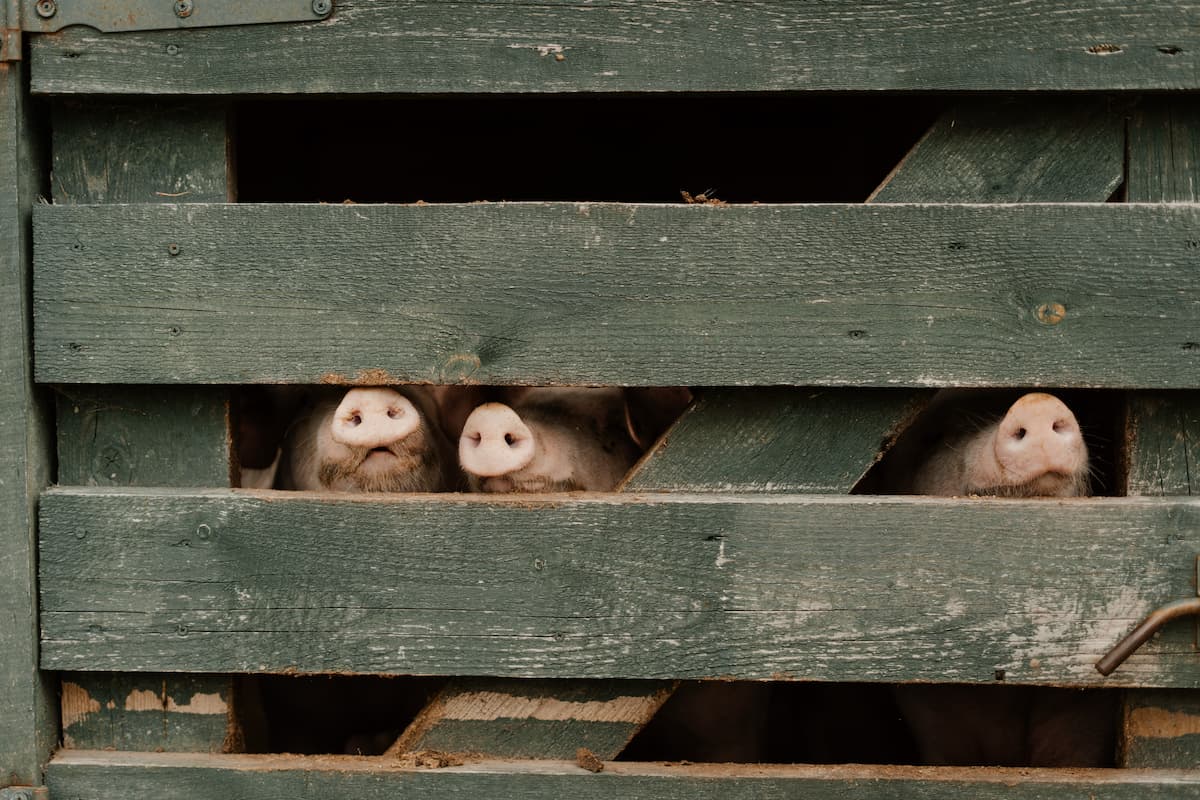
In the story of the Three Little Pigs you have to accept that pigs have money, build houses, and negotiate business deals with strangers on the road.
You also have to believe that wolves are polite enough to knock on your door before they eat you and that they huff and puff when you refuse to let them in.
But the lesson you were supposed to learn from this story isn’t what you thought.
Building a house out of bricks isn’t good enough.
You need to be able to adapt and improvise when the wolf uses the Santa Claus strategy and comes down the chimney.
This story illustrates the way our minds work.
We respond to “the real world” through stories.
And the people who want to use us for profit or power use stories to keep us trapped in their version of reality: a reality that serves them.
If we are going to be free and be successful, we have to learn how to tell ourselves a different story.
We have to learn to tell ourselves a story that makes us to be the best version of ourselves.
When we last heard from Shaun he was in transition from the military to civilian life.
He has since been hired by a Danish startup company that does temporary luggage storage for travelers.
Shaun stopped running for a while when he was in the transition to his new civilian career.
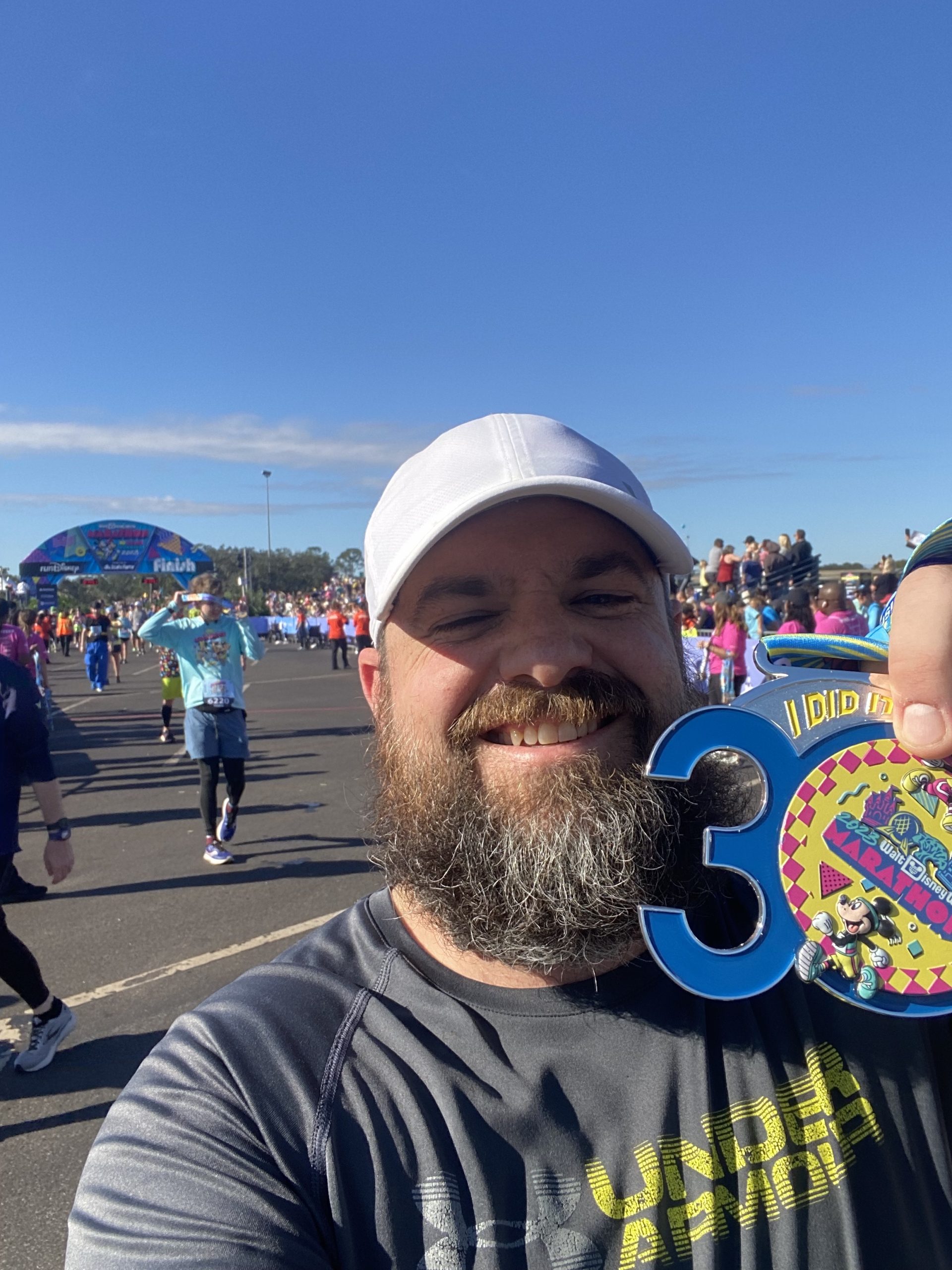
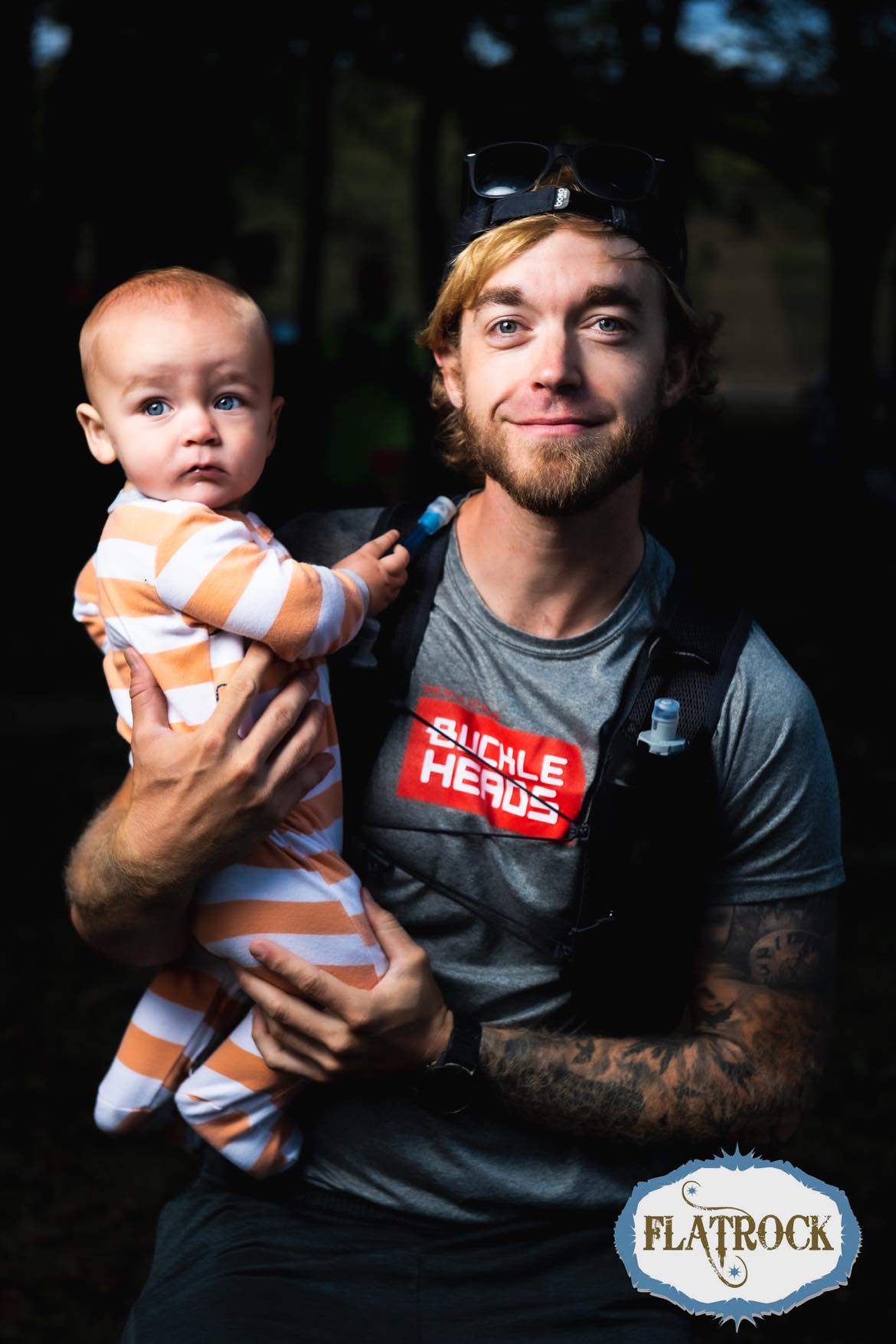
Then he started “running” his kids to preschool by pushing them there in a jogging stroller. Now he’s known as the “Running Dad.”
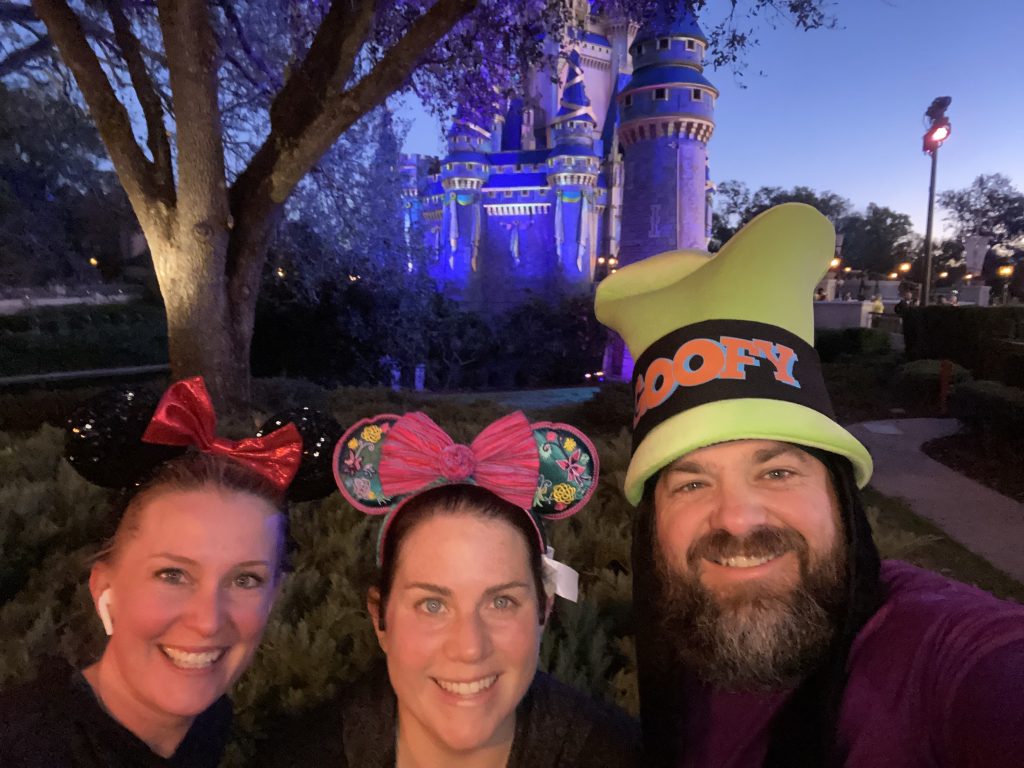
He recently finished the Dopey Challenge, one of the Disney races.
There are 4 distances over 4 days: 5K, 10K, Half-marathon, and Marathon.
It is a “fun” event in that thousands participate and run through the Disney parks. People stop to take selfies and slow down the rest of the runners.
He got in the lottery for the New York City half-marathon. His wife didn’t get in, and they had hoped to run together.
He has signed up for a 100K trail race in Central Florida. The race is in June and has minimal support. He is planning for how to train and prepare his gear.
We talked about how the trail ultramarathons seem to feel more like “true ultramarathons.” The road doesn’t have the same feeling.
Bridge Questions:
What food should be at every aid station?: Bacon!!
What is the strangest thing you’ve seen on a run?: He closed a sale with a new client via phone while running.
What is your word or phrase?: You can do hard things.
Devin has been running ultra marathon distances for three years.
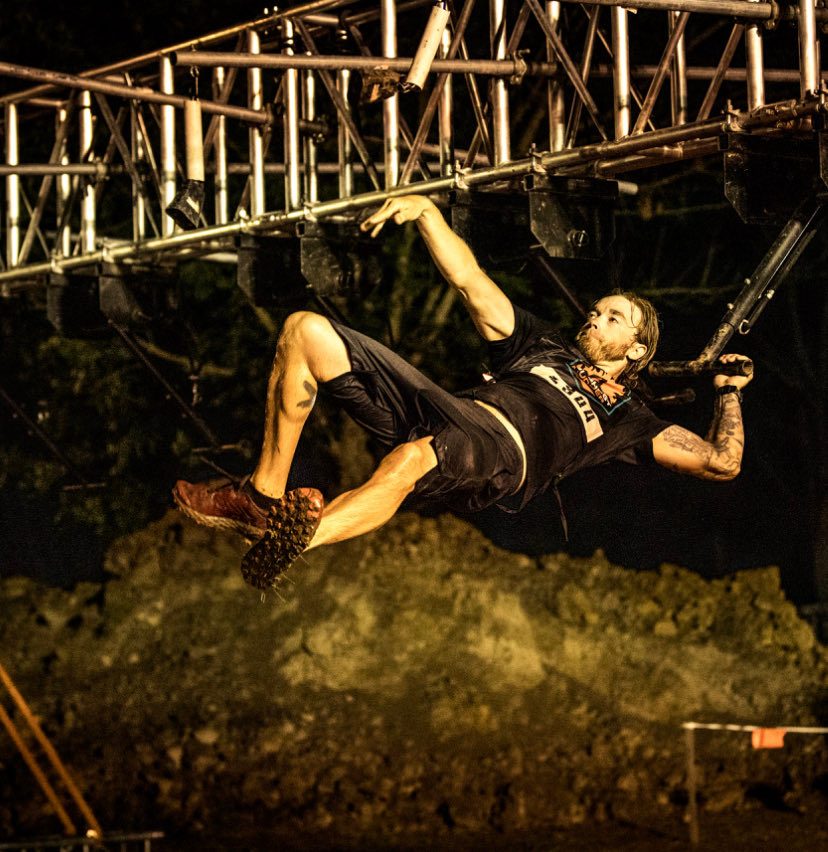
He ran obstacle races and ran the World’s Toughest Mudder last year.
He returned to Silverheels after failing to finish and in 2022 he achieved it.
Silverheels was the only 100 mile race he did in 2022.
Things we discussed:
Devin ran the World’s Toughtest Mudder again this year.
His goal was 75 miles and he reached his goal this time.
We talked about why he is back in the program and that when he was in 2021 there was a lot going on in his life.
Devin is part of a running group in Topeka, KS. He has convinced several of his friends to commit to ultramarathons.
He said that this year the World’s Toughest Mudder was harder because the weather was colder this year.
If you can’t complete an obstacle, you have to take a penalty. In one of the difficult obstacles the penalty was to ride a bouncy ball for a set distance.
The first half of the year Devin’s training consisted of a lot of running because he was focused on the Silverheels 100.
In his training he does kettlebell workouts, circuit training, lots of intervals.
He called his training plan the “Dad Plan.” He fits in his workouts whenever he can squeeze them in.
Desert running in the summer and Arctic running in the winter.
Today’s Guest: Ray Zehab
Information:
Ray grew up in Ohio.
He started running in his 30’s.
When he started doing sports his whole life changed.
He started running Ultras around the world.
Ray is the creator of Impossible to Possible, a foundation that does free expedition based learning programs for students.
Things we discussed:
He was not happy with the path his life was taking so he decided to change it.
He didn’t know what to do with his life, and his little brother was doing a lot of adventures that he found very inspiring so he decided to give it a try.
When he met the Ultra he thought it was crazy but he decided he would like to try it and he ended up winning that race and he couldn’t believe it.
He tells us that when he crossed the finish line of his first ultra he had figured out how to overcome his negative thoughts.
He saysthat learning is one of his favorite parts of his adventures.
We talk about the impact of remote education.
His next expedition is in the Arctic.
Ray is the Author of 2 books: Running for My Life, and Running to Extremes. He is working on his third book
Bridge questions:
Your most important piece of gear: I-phone.
Strangest thing you’ve ever seen: The petraglyphs in the Atacama Desert
Word or phrase that describes your philosophy of life: The most difficult challenge we face is 90% mental and the other 10% is all in our heads.
Jaqui is a Cricketer and in her childhood she played baseball.
Her father was a runner and that motivated her to run.
Jaqui works in a psychological clinic.
Jaqui is out of the social networks for a year and this is the end of the year for that.
For Jaqui meditation and running are very compatible.
Things we discussed:
In 2012 she ran her first marathon when she was struggling with losing her father.
She wanted to keep pushing herself and started trail running, hiking and Cricket adventures.
She went away for a weekend in the mountains and decided she wanted to write a book about her dad.
We talk about the current narrative of mental health.
We talk about how people think about depression and how women are free to talk about it and men are not.
Jaqui loves the idea of pushing your body to the point where your body wants to quit, but your mind doesn’t and that’s why she says Ultra’s are addictive.
She set out to hike the Bibbulmun Track in 28 days. This is a 1000K trail that usually requires 3 months to hike.
She ended up with a blister that got progressively worse. She ended up having to see medical help with an IV and antibiotics.
It took her a while after that experience to regain her love for hiking.
We talked about her reasons for taking a year break from social media.
She started meditating with a 12-week program. She found that it helped in running as well as staying at peace in life.
Bridge questions:
Her most important piece: Water bottle because she lives in Australia.
Strangest thing you’ve seen on the trail: In an ultra she started having hallucinations and thought the ski lift was some sort of alien spaceship.
Word that describes her philosophy of life: Adventure.