Author: Eric Deeter

  • Mindset of a Titan: Cliff Moitt.

    Mindset of a Titan: Cliff Moitt.

    The Spartan Death Race requires a strong mindset and body.

    Cliff Moitt’s Spartan journey started with a TV show in the 80s called ”The Battle of the Network Stars,” and the stars were going through these obstacles. When he saw that he realized that the body is meant to do something different, something epic. At the time he was running 5 and 10K races. When the movie “300” came out, he was impressed by the Spartan culture and toughness. One day he was checking Facebook and a friend asked him if he had seen the Spartan race so he clicked and he couldn’t believe it. He says it was like a steroid version of the “Battle of the Network Stars.” So he signed up and entered the race. He noticed at the top was something called the Death Race and he thought he could do it so he did a search and realized it was something special. You couldn’t just sign up.
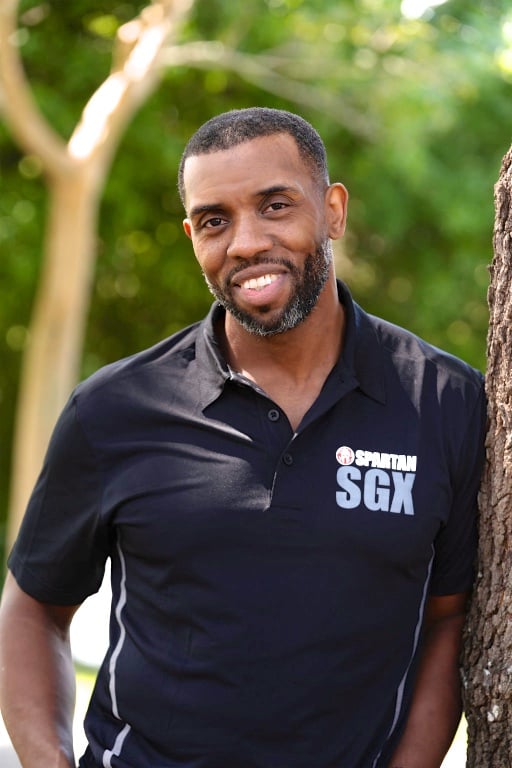
    This was in 2014 and he was doing ruck events, carrying a heavy backpack in competition with other runners. He had some injuries in his ankles that sidelined him for a few years. But the Spartan Death Race was on his bucket list. Then the race was postponed a few years in 2020. Now, he is turning 50 and he is entered and will run it the week this episode is released.

    First he had to ask his wife’s permission because she is a fundamental part of his team. She asked him why he wanted to do it but she supported him even though she was worried because the name of the race had the word ”death” in it. When he started training he realized that his age was starting to show, it was hard to move as well as before, he had to take more breaks, he had to stretch and do yoga and many other things so he decided he had to play smart and understand what his body needs versus what his body wants.

    Cliff says that running is a sport that could be done alone because they do it alone, although you can train in a team and have a team when you go out to race you do it alone and sometimes it’s hard to invite people into your world. He loves running because he is responsible for everything he does and there is no one to blame so it is always a learning experience for him.

    He tells us that the Spartan race is interesting because it has levels. He likes the idea of adventure racing, but the challenge with these races is that they are very expensive. He says that what Spratan wanted with this one is to create an event similar to adventure racing that could get someone off the couch and get them moving. He says it’s not about who comes in first or second or third or fourth or fifth, it’s about finishing. 

    The levels of Spartan events are the Sprint which is 3 to 5 miles. the Super which is 8 to 10 miles, the Beast which can be 13 to 15 miles and it depends on the course because it’s different all over the world. Then you have the Utra which is over 26 so it can be 26 to 20 miles. Then you have the Hurricane Series which is based on hours so you have a 4 hour or a 12 hour or a 24 hour and then the Death Race which is completely different.

    This race is going to put you in an awkward position so you’re only left with the option of learning about yourself. Cliff says that’s what it comes down to In the Death Race you can get the email the day before that tells you the time it starts and when you get there. They only give you a range of starting times in advance. The first challenge is a puzzle. If you can’t solve the puzzle, you are finished before you even start. 

    One year there was a challeng where they had a 700 pound tire that had to walk 26 miles through the woods. Another year where they had to go through the mountains barefoot. Another year where they had to cut wood for hours. And there was a portable toilet they had to carry through the woods for miles. The challenges vary every year.

    The race lasts about 72 hours so you need 3 days of food with you. He always carries a sleeping bag, extra clothes, his 3 days of food, life jacket in case they do something in the water and this year they told him to bring a power tool. With this instruction they told him to choose wisely.

    Cliff’s physical training plan is immense. He has been a fitness trainer for almost 30 years so he writes a program based on what people can’t think of. He confessed that he doesn’t lift weights because that doesn’t mimic what he is going to do in the Spartan races. The first thing for him is running. And for him burpees are the best exercise because it combines various movements and exercises, He does push-ups and focuses on understanding why he does what he does and what his body needs to do to perform on that particular run. so his training consists of running a lot, walking a lot with a heavy backpack, and a lot of calisthenics. Sometimes he wakes up at night to train and tries to get uncomfortable himself so his body remembers that he has been there before.

    For the mental part Cliff says that there are things that a person must first understand about themselves in order to understand how to run their race. In the beginning he would run with music or listen to a podcast or something and just go down the road and have fun but now he doesn’t do that. Now he listens to his feet, or he goes along counting with the alphabet and numbers like ”A1, B2, C3, D4” and if he makes a mistake he starts over.
    Bridge Questions:

    Cliff’s running essentials are shoes and a water bladder.

    The strangest thing he has seen when running is a kind of bear and when it got closer it looked like a giant turtle and it was some kind of strange animal that he still doesn’t know what it was.

    His phrase or philosophy of life: Inner peace.

    Connect with Cliff:

    Facebook

    Instagram

  • A Mindset to Risk Failure

    A Mindset to Risk Failure

    Speaker notes

    What would you attempt if you knew you could not fail?

    Life coaches & motivational speakers often ask this hypothetical question.

    The idea is to get you to look at your life and discover those epic dreams you have for yourself that you’re afraid to go after.

    You’ve probably heard this question before. 

    Have you thought about an answer yet? What challenge would you take on if you knew you couldn’t fail?

    Intro:

    Star Trek 7: Generations 1994

    Captain Kirk stuck in alternate dimension.

    Scene: Riding a horse and jumps over a gully.

    Captain Picard (also stuck in alternate dimension)

    Kirk: “I’ve jumped over that gully 50 times. Scared the hell out of me every time . . . except this one.”

    Conclusion: None of this is real.

    The question: What would you attempt if you knew you couldn’t fail.

    Think about this question for a minute.

    What would you attempt if you knew you could not fail?

    I want you to notice something here. I asked you to think about the question. I didn’t ask you to come up with an answer to the question.

    The way our minds work – answer the question.

    Questions bypass critical thinking.

    Hook for salespeople: “Quick question . . .”

    You feel compelled to give an answer.

    So when a coach or motivational speaker asks: What would you attempt if you knew you couldn’t fail? –you don’t step back and ask, “Is this even a valid question?”

    If you question the question you’ll realize that the risk of failure has to be there if you want to feel the joy of success.

    And the bigger the risk of failure, the better you’ll feel about your success.

    Imagine how you would feel if you got the results of the “could not fail” scenario. 

    A few people will be satisfied. (Runners cutting the course or riding in cars.)

    The appeal of ultramarathons is the fact they are hard. They require the best you’ve got and have a high risk of failure.

    So I want you to forget about the “no failure question.”

    Here is a question that will get you started:

    What would you be willing to attempt that would require you to dig deeper inside yourself than ever before and offers some amount of risk that you could fail anyway?

    Barkley Marathons – started in 1986

    100 mile trail race – designed to be almost impossible.

    Only 15 people have finished.

    Hundreds apply every year to run.

    Lazarus Lake: Something in us that craves an almost impossible challenge.

    So how will you answer this question?

    What would you be willing to attempt that would require you to dig deeper inside yourself than ever before and offers some amount of risk that you could fail anyway?

    I talk about living an epic life.

    This is what I’m talking about.

    You have more strength inside yourself than you ever imagined.

    You can do more than you ever thought possible.

    But you will never reach that potential if you’re answering the question, “What is possible if I know I can’t fail.”

    What will you attempt that will demand your absolute best.

    May not be running or endurance sports. Maybe it’s being the kind of dad or mom you never had. Maybe it’s starting your own business. Maybe doing volunteer work. Running for office.

    I believe you’ll know what it is when you consider the question: 

    What epic thing is inside you that is worth the risk of failure?

  • Ironman Nutrition Coach – Dana Eshelman

    Ironman Nutrition Coach – Dana Eshelman

    The mindset for fueling for Ironman

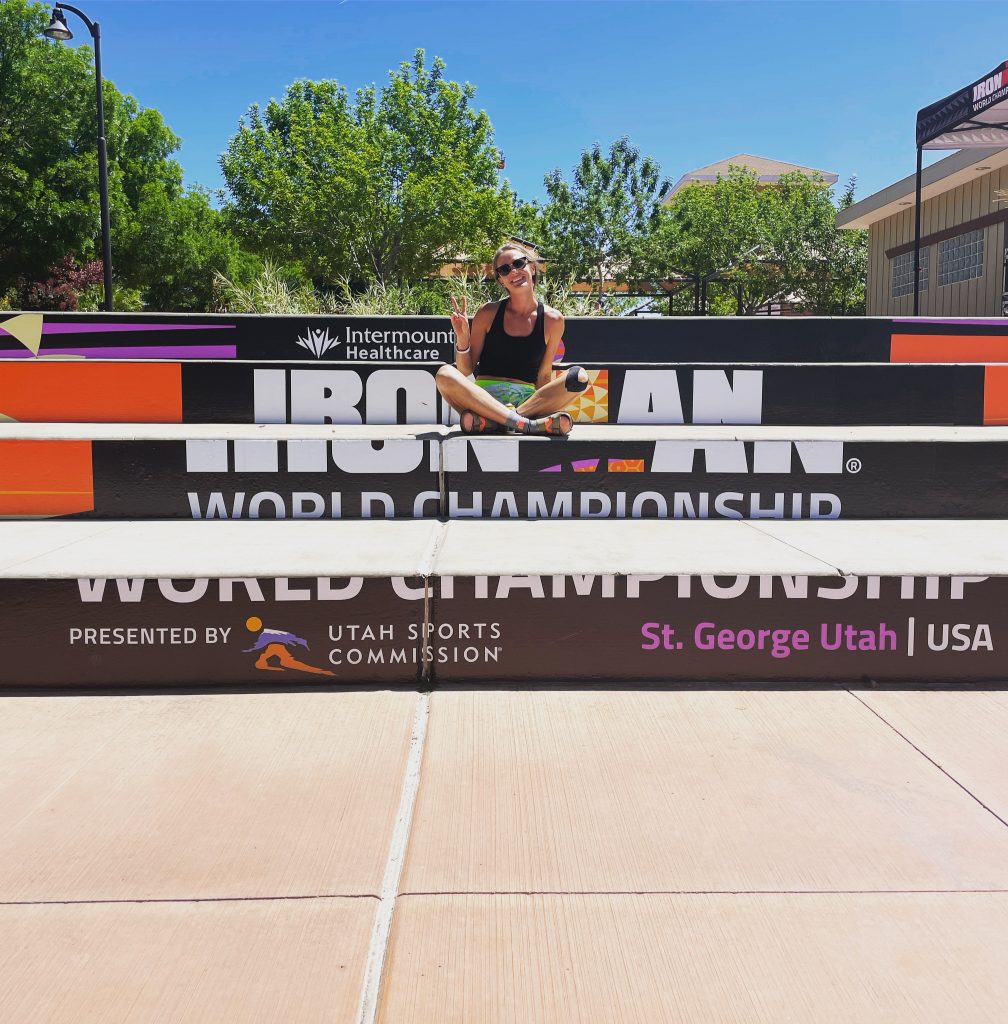
    Dana Eshelman was living in Colorado when we recorded her previous episode. Dana is a nutrition coach working with endurance athletes. She was looking to complete a full Ironman when we last spoke. She decided to enter the St. George Ironman in Utah. She knew it would be hot when the race was held so she decided to move to Arizona to train and be a little closer to family.

    Even though the climate was warmer, she still did some of her training sessions on a stationary bike. In her workouts, she focuses on quality over quantity. Her coach wanted to make sure she was hitting certain zones at certain times, basically to simulate a longer session. The stationary bike also had the advantage of a power meter to help Dana get the best from her workout. She is also very conscious of time and where she spends her training and what is going to serve her mentally and physically. 

    Dana says the treadmill is a great tool if you want to improve your pace and your legs have to understand what it feels like to move for a given distance. But there is a difference in resistance between running on a treadmill and running on the road.

    She mentioned that training for a long endurance event is like having a part-time job. It takes time for the training, but also the attention to plan for how to fit it into work and the rest of life. She said it felt like her second job was eating. She was often hungry and had to make sure she was maintaining her nutrition.

    She had some mental challenges in her training as well. She got an injury and it persisted through her training. She worried that she wouldn’t be able to finish the race because she wasn’t able to run for more than two hours without pain. She sought the help of a chiropractor and physical therapist. She was able to recover. And she learned that she had to understand and trust the process for healing and recovery.

    Dana says that for anyone who doesn’t get paid to do sports it’s a challenge to recover because all recreational or group athletes have a job outside of their training. It makes recovery a challenge. What she does to help her recovery is to make bed time non-negotiable.  And then another big part of her recovery is the integration of stretching and yoga.

    She talks a lot about how we tend to be a carb-phobic society. She says that actually carbs are important in high performance training blocks. So when she increased her training she realized that her body needed carbs and she needed to find a balance with her protein and eating food with lots of color. Her training sessions usually start at 4am so she would wake up earlier to make sure she had something before heading out the door, toast with peanut butter, or she also needed small energy bites, which are like peanut butter and honey. And she always added protein powder as she is an athlete who struggles with her appetite after workouts.

    She had a long history of disordered eating so she doesn’t count her calories and is quite economical with the amounts of calories she is eating but over the years she has gotten in tune with her body and understood what is called intuitive eating and what her body is asking for at any given moment.

    Dana usually eats 6 to 8 times a day and she plans her nutrition by the month.  She makes adjustments when she does special workouts because if it is hot you naturally lose more sodium and use a little more carbohydrates. When cycling she can’t eat solid food. She usually eats honey sandwiches on the bike, usually with some salt every hour and also has liquid nutrition.

    There is no one-size-fits-all nutrition plan, she says. You have to use some trial and error on training runs to find what works best for you. It’s important to find out what kind of food your body tolerates and uses efficiently. She says it’s good to have a backup plan in case you find that your original plan isn’t working that day.

    The strangest thing she has seen in a race is having to pee on the bikes, which is something in the triathlon world and is a skill you have to master.

    And her phrase or life philosophy is to run the race you’re in and focus on being present in the moment.

    Connect with Dana:

    Instagram

    Facebook

  • Success Mindset: Don’t Stop!

    Success Mindset: Don’t Stop!

    Speaker’s Notes

    When I was 27 years old, I was a runner. I’d been married for a few years and started putting on weight. I decided I could become a runner and still eat whatever I wanted.

    It worked. I lost weight. Then I decided that since I was a runner I should set a goal to run a marathon.

    But after I reached my goal, I quit running. For 30 years, I quit. 

    I learned a lesson about success! Don’t quit.

    If you’ve been listening for the past few weeks, I’ve been talking about 3 steps to success.

    Step 1: Decide what you want. Decide to get what you want.

    Step 2: Start

    Step 3: Don’t stop

    GIF embed code:

    <div class=”tenor-gif-embed” data-postid=”19488754″ data-share-method=”host” data-aspect-ratio=”1.77778″ data-width=”100%”><a href=”https://tenor.com/view/third-base-ball-baseball-coach-gif-19488754″>Third Base GIF</a>from <a href=”https://tenor.com/search/third-gifs”>Third GIFs</a></div> <script type=”text/javascript” async src=”https://tenor.com/embed.js”></script>

    This is a framework of what I do as a coach.

    When you decide you’re going to make a change in your life . . . be the best version of yourself . . . live an epic life, you have to take these 3 steps.

    And your mind (and body) will resist you.

    Some resistance in every step. But one will be like kryptonite and drain your power and energy.

    My kryptonite was quitting.

    I trained and got in shape and ran a marathon. I was a runner. But I checked that off my list and quit.

    I gained back all the weight I’d lost and more.

    But running wasn’t the only thing I quit. I have a long history of setting goals, getting started, and quitting.

    I’m sure there are those who find this same pattern.

    You have a creative mind. New ideas and possibilities are always bubbling up. And it’s easy to get started.

    But then you come to what I call the “messy middle.” 

    Ultrarmarathon terms – after 60 miles.

    The excitement is gone. Your motivation has evaporated. Your plan is off the rails. You wonder why you ever thought this would be fun.

    Entrepreneurs & artists – new ideas and possibilities keep bubbling up. “Shiny Object Syndrome.”

    So how do you have success with this step (Don’t Stop) if you’re a quitter?

    In step one and you have to lay the groundwork for success in step 3.

    MMM: Powerful Decisions – When you make that decision to get what you want . . . decide you will keep going until the finish.

    For 15 years I set a goal to lose 30 pounds. 

    Finally – I will weigh under 200 on Dec. 31

    Step 2 is to start. 

    Even starting in the wrong direction is better than waiting.

    Do something to act on your decision for what you want.

    Step 3 

    Make a plan on next steps. (Don’t have to figure it all out yet.)

    Make a plan for framework that will get you through the messy middle.

    Plenty of tools to help you develop a strong mindset. 

    Mindset is what gets you through step 3: Don’t Stop.

    Mindset is the story you tell yourself.

    If your story goes like:

    I don’t deserve it.

    I’m not good enough. 

    Good things never last.

    I always end up losing.

    I can’t stay focused.

    It’s too hard to change.

    All of these make it more difficult to keep going.

    And often you’re unaware of the story you’re telling yourself.

    You only see and feel the results when you start and then eventually stop.

    My role as a coach is to help you fix your story. First I help you see it. Then I help you change it.

  • Fighting Fires and Running Utramarathons – Martha Schoppe

    Fighting Fires and Running Utramarathons – Martha Schoppe

    A mindset for taking on challenges

    Martha Schoppe didn’t set out to be a smokejumper. She focused on the sciences in college and worked afterwards in a wilderness therapy program in the western US. She was surrounded by people who loved outdoor adventure: mountain bikers, rock climbers, and hikers. She adopted the outdoor lifestyle and the seasonal work that comes with it.

    In the process, she took a job with the Forest Service working on wilderness trails. Over the winter, avalanches and rock-slides would block the wilderness trails. She and her team were responsible for clearing the boulders and cutting the trees that blocked the trails. The wilderness areas don’t allow for any power tools. All the wood cutting is done with hand saws. In the course of her trail work, she got her qualifications to work on fire lines to fight wildfires. But it took five years before she had a chance to put her firefighter skills to the test.

    After a few years on the fire crew she was chosen for a hotshot crew. This 21 member crew traveled around the country to where help was needed to contain wildfires. After a few years more, she got her certification to be a smokejumper. 

    She never liked running when she was younger, but it was part of her firefighter training. She picked up a copy of the book Born to Run and was intrigued by the “run smooth, run light, run easy” philosophy of the Tarahumara people. She decided she wanted to figure out how to run better. She followed the gradual progression of shorter to ever longer distances. While working in Ouray, CO, she saw the Hardrock 100 runners. She was intrigued and started thinking about what was possible.

    Summer races are out of the question for Martha because fighting wildfires keeps her fully occupied. She also needs several weeks for her lungs to fully recover from all the dust and smoke she deals with in her work. So she looks at the winter races as her racing season. One of her challenges was a 100 mile race in Alaska. In addition to the cold and dark, she had to pull her gear on a sled. 

    She found that the mindset for running ultramarathons set her up very well for success as a smokejumper. The ability to be flexible and adapt to changes in weather conditions, terrain, and to keep moving through the night is key to both. And, after parachuting in to deal with a fire, she often has to hike out with all 135 pounds of gear and tools. 

    Martha doesn’t foresee any change in her love for working and playing in the wilderness. She’s going to keep doing what she loves.

  • Mindset for Success – Start!

    Mindset for Success – Start!

    Speaking Notes

    Once you decide what you want and you decide that you’re going to do what it takes to get what you want, you need to take the next step immediately!

    Most people think the next step is to make a plan for how you’re going to get what you want! This is WRONG!

    Oh, don’t misunderstand! You need a plan. But now is not the time for planning. Planning at this point will slow you down at best. At worst, it will completely derail you.

    Raise your hand if you’re like me and have notebooks in a drawer with amazing plans for stuff you never did!

    Now is not the time to plan! It’s time for action.

    The number one most important thing you can do when you decide what you want and that you will do what it takes to get what you want is to START!

    You don’t have to know how you’re going to do it.

    You don’t have to know how to overcome the obstacles you’ll face.

    You don’t have to go research Google and YouTube. 

    You do have to start! Take the first intentional step toward your goal.

    It doesn’t even matter if you’re headed in the right direction!

    What matters is that you start immediately.

    You see, your mind will begin to fight against you if you wait too long to start.

    Your mind and your body love to stay in the comfort zone.

    In fact, there is a part of your brain that will send a fear alert anytime you try something new.

    You know hard it is to change a habit that you don’t want any more.

    Even if you’re doing something you know is not good for you – smoking, overeating, drinking too much–your brain and body conspire to keep you from changing.

    And the longer you spend planning and getting your ducks in a row the less likely you are to start.

    When you make a strong decision, your mind knows that trying to stop you head-on won’t work. So your mind tries to sidetrack you.

    “Make a plan. Design your logo. Hire a branding consultant. Print business cards. Get more education.”

    And it feels like you’re working to get to your goal. But you’re actually spinning your wheels.

    It’s important to immediately take a small step toward your goal.

    Example:

    Sept. 2017 I decided to run a 50 mile trail race the next September.

    The next day I went out and ran a mile on a trail.

    Old street shoes. Not even good running shoes.

    Hadn’t run in 30 years.

    Never run on trails before.

    No idea how to train.

    But I knew I had to start. I knew I would figure out how to get it done.

    That decision changed my life. I met hundreds of amazing people. And I started this podcast where I get to talk about how an ultramarathon mindset can help you get out of your rut and moving toward an epic life.

    None of this would have happened if I didn’t start. 

    So once you decide what you want, START. Don’t wait. Get moving. Once you’re moving you can adjust your direction. Once you’re moving you can figure out the next step and the next. But you have to start moving.

    That’s the most important thing you can do once you decide what you want.

    If you’re feeling resistance to figuring out what you want or getting started, go to ultramindsetpodcast.run and book a free 25 min mindset reset consultation. I will help you get started to your epic life.

  • Digital Nomad Mindset – Iveta Zaklasnikova

    Digital Nomad Mindset – Iveta Zaklasnikova

    Not satisfied with a typical career path

    Iveta Zaklaskinova is from a small country called Czech Republic. She calls herself a digital nomad. She is a coach and consultant for health coaches and therapists. She works extensively with her clients in the area of developing their mindset for success. She created her coaching business so she can work anywhere in the world. This gave her the freedom to follow her dream to do more than just visit a country as a tourist. She gets to experience the culture and flavor of the places she goes.

    Iveta’s path to become a world-traveler began when she was 16 years old.She went to a summer job in a factory where her mother had been working for 15 years. She saw the women who worked there doing the same thing over and over again. The women appeared to be tired as the routine wore them down. She decided to study business and took a job in London when she graduated, working in sales and marketing. She soon found that the corporate structure didn’t suit her restless spirit either. She wanted the freedom to travel and see the world. 

    She had several coaches and was working on her mindset and getting past her limiting beliefs. She decided that she wanted to become a coach, so quit her job and enrolled in one of the top coaching schools in London. She didn’t know how she was going to pay for it, but she trusted that things would work out if she made the decision and took action. After graduation, she started her business and began her life as a digital nomad.

    She had a lot of fears when she started her business. She was 27 years old and had thoughts like “who would trust me?” “who will believe me?” I’m too young to start a business.” She also felt self-conscious in that English is her second language. How would people respond to her strong accent when she created videos on social media. Now she coaches 22-year-olds who say they are too young and lack confidence. And she coaches 55-year-olds who say they are too old to be on social media. The limiting beliefs are the same for those on both ends of the age spectrum.

    Iveta still works on her mindset, not only on continuing to develop her marketing and sales skills but also on making sure of personal things like her mental outlook. Almost every day she sits in a cafe, orders a cappuccino and picks up her journal and works on whatever fear comes up, works on her mind, her energy, writes down what she is grateful for, what she wants and works on her alter ego. Every day she tries to look at where she wants to be and works from that place. She is always looking for the next coach to learn from a mindset or business perspective and always invests in herself.

    Iveta began to dive deep into quantum physics and learning how mindset and energy work together to create success. Her clients often tell her that the program is amazing but the energy work she does is simply transformational because she works from the perspective of energy and from where we want to be.

    For people who want to get started to create a different life than what they have, Iveta says that the biggest resistance you’re going to get is from family saying don’t do it. They will say that you should take the safe place and finish school, get a job and settle down. This resistance doesn’t always come from a negative place. People close to us give us advice because they love us. They just want you to be safe.

    Iveta says that most people put victim limits on themselves, saying they don’t have time, energy or money. Most of the time these excuses are a cover for fear and self-doubt.

    What is the phrase or word that sums up her philosophy of life?

     Always make decisions from where you want to be. 


    Connect with Iveta:

    https://www.ivetazaklasnikova.com/

    https://www.facebook.com/ivetazakla/

    https://www.linkedin.com/in/ivetazaklasnikova/

    https://www.instagram.com/ivetazaklasnikova/

  • Memorial Day Mindset

    Memorial Day Mindset

    Speaking notes

    Today is Memorial Day in the US.

    National holiday – start of summer. First long weekend w/ warm weather.

    Most of my life I haven’t thought about why we celebrate.

    As a kid, we occasionally went to put flowers on graves. 

    But these last few years I’ve been trying to look at our national holidays and at least spend a few minutes thinking about the reasons they were created.

    This Monday Morning Mindset I want to talk about Memorial Day.

    Memorial Day was originally called Decoration Day. It’s a day of remembrance for those who have died serving in the US military.

    Memorial Day was borne out of the Civil War (which ended in 1865) and a desire to honor our dead. On the 5th of May in 1868, General John Logan who was the national commander of the Grand Army of the republic, officially proclaimed it in his General Order No. 11

    “The 30th of May, 1868, is designated for the purpose of strewing with flowers, or otherwise decorating the graves of comrades who died in defense of their country during the late rebellion, and whose bodies now lie in almost every city, village and hamlet churchyard in the land.” 

    On the first Decoration Day, 5,000 participants decorated the graves of 20,000 Union and Confederate soldiers buried at Arlington Cemetery.

    Long history from that first Decoration Day to today. 

    But I noticed something about this first one that is significant.

    They decorated the graves of both Union and Confederate soldiers.

    The Civil War often had members of the same family fighting on different sides.

    General Logan set up Decoration Day to remember the sacrifices on both sides as a way to help the nation heal and move forward.

    So take a moment today to remember the men and women who gave their lives in service to this country. 

    And I think it’s important to not only remember the past but look to the future as well.


    It’s important to remember the sacrifices and struggles of the past: as a nation and for yourself as a person.

    But also look ahead to create a better future.

    I talk about personal growth . . . epic life.
    The reason I want to be my best–help you be your best–is to make the best future for all of us.

    Remember the past. Think about the struggle and sacrifice that got us to this point. Look to the future.
    We should not be defined by our past, but by our future.

    And the future is determined by who you decide to be.