Author: Eric Deeter

  • OCR and Ultramarathons – Jenny Overstreet

    OCR and Ultramarathons – Jenny Overstreet

    A mindset for competition

    Jenny Overstreet  is not one of the runners who grew up running. She played soccer would do a 5K here and there. Or she would do intervals, but she always said that she hated running. 
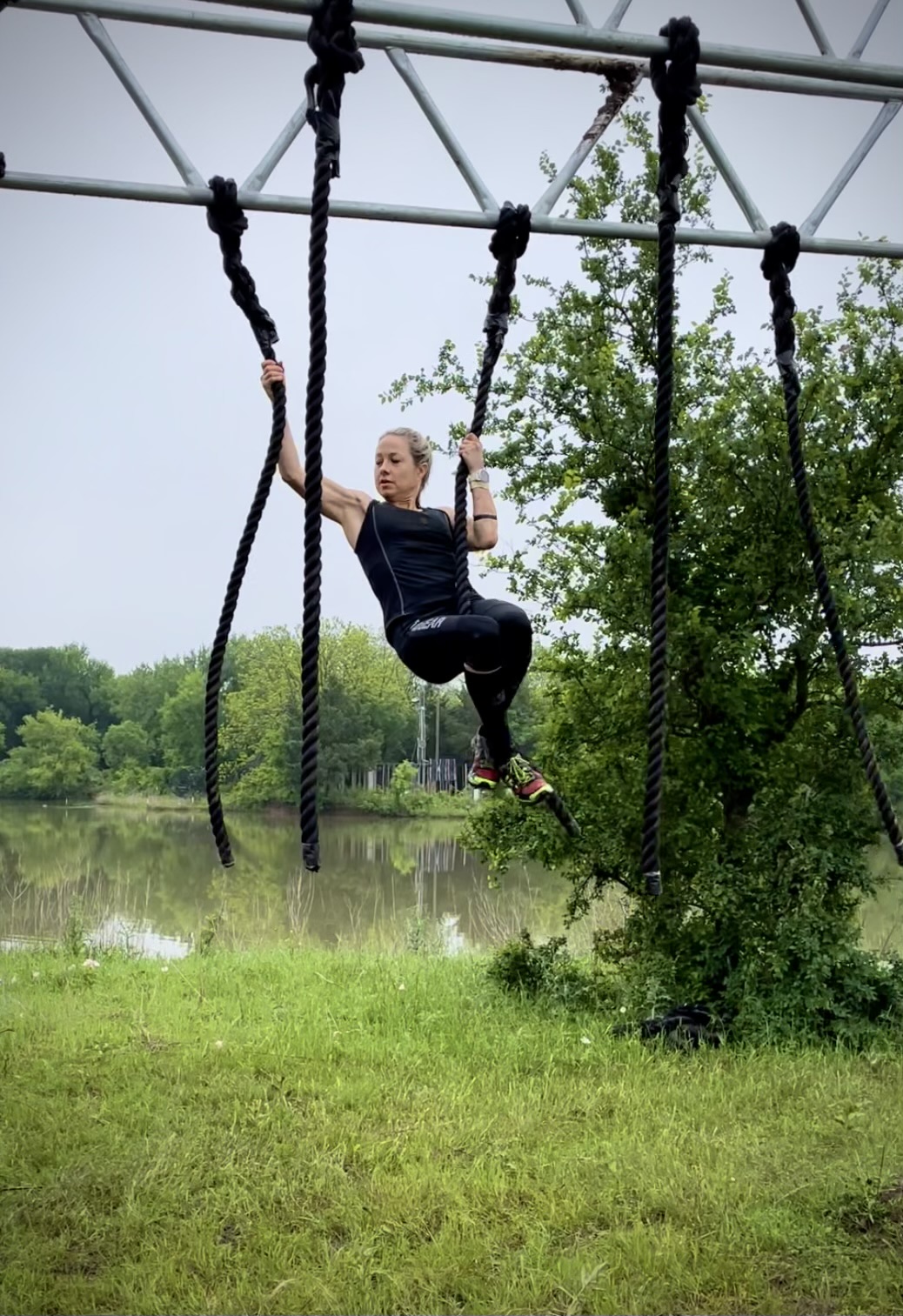
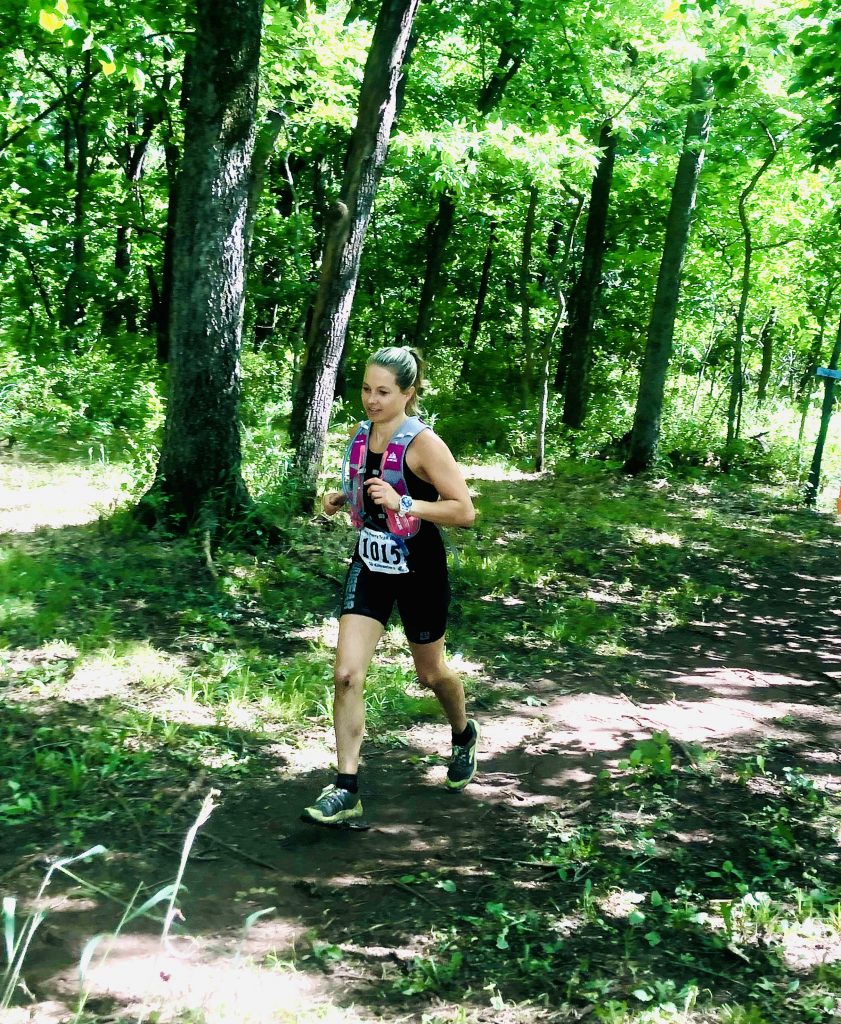
    But she started doing obstacle course racing (OCR) and training more seriously for that sport, with a little bit of running. But when races were canceled for a year she didn’t have a specific race to train for so she started running in the woods. And she fell in love with the feeling of running trails. She gradually started adding more miles and after a while started thinking that she would try a 50K.

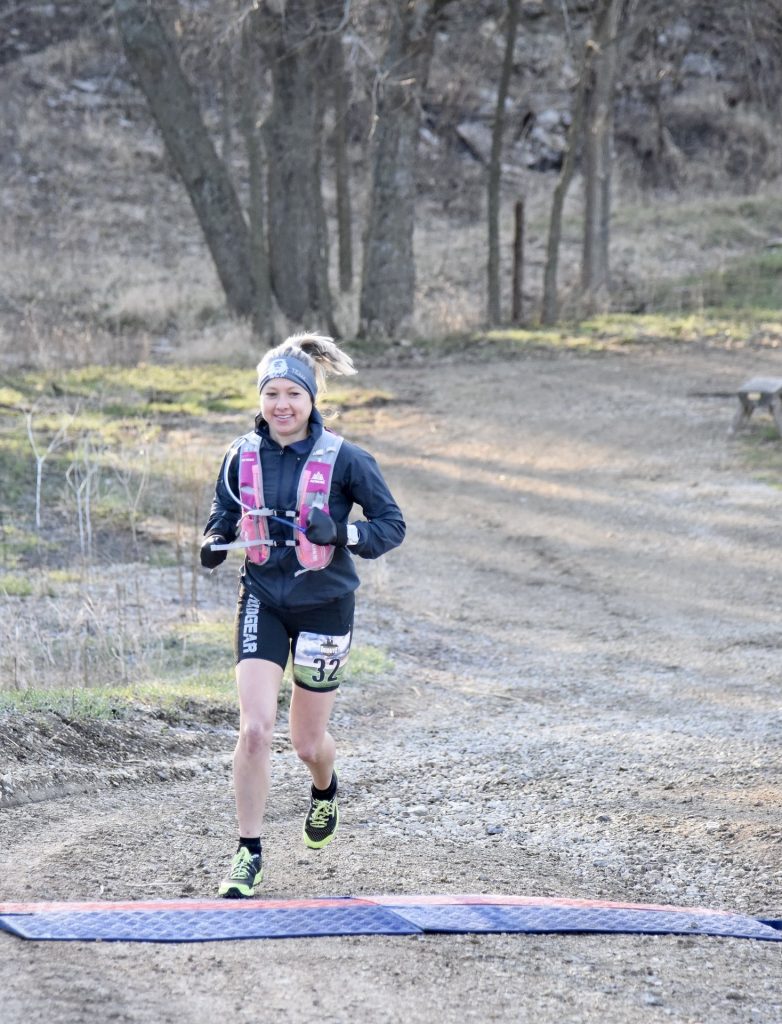
    She got connected to the trail running community and was aware of a 50K race in the Kansas City area. But her first race was in Arkansas in January 2021 a 50 K called David’s Trail Endurance Run.  She said it’s a beautiful trail, and some of it is very easy and runnable and some of it is not runnable at all. It’s very drastic in different parts, but it’s a lot of fun for her.

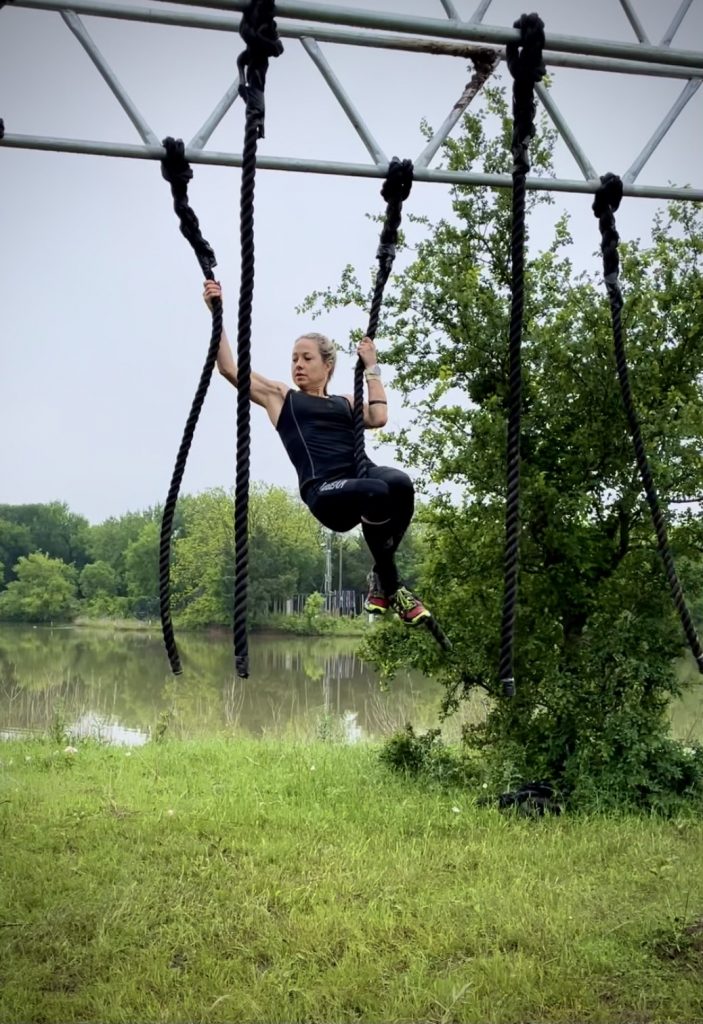
    She started obstacle racing in 2018. She is a personal trainer and one of her bootcamp classes wanted something to train for so all of them signed up for a local even, the Kansas City Timber Challenge. They enjoyed the event and signed up for a couple of more races. Jenny saw the elite racers who started the course first and began to wonder if she could be competitive. She entered a local competition and placed 10th, enough to qualify her for the North American Championships. So she decided to start training specifically for OCR.
    For Jenny, every race is a little different, but mainly it’s a running sport so she runs a lot for training. You also need upper body strength so she also does indoor climbing workouts. 

    He also likes to train in the woods but it’s very different, he’s done some short ones like 5K, 10K and stuff like that but it’s usually to have help with speed work and to force himself to do it, he usually runs in the woods to have some rocks to jump over the trails.

    Although Jenny would love to do some big name races there aren’t many local ones, the closest ones are usually Chicago or Dallas so she prefers to go to trail races which are a beautiful place.

    She is quite competitive, and this season her idea is to increase her distance because the furthest she has done so far is 50 miles. She is confident she can do a 100K, but when she thinks about 100 miles and the idea of running through the night it kind of thing scares her a little bit. She likes to be prepared, and she likes to train very well for what she does so she thinks it might happen someday but she doesn’t know exactly when.

    His biggest goal for now is to go to the world championships for OCR that are in Vermont. She would like to make it a priority this year to experience it. It’s in the mountains which she finds very fun and also being around people speaking other languages and competing but at the same time helping each other. Tough mudder is also something that is on her list, and she is trying to figure out if she can make one of those fit into her season this year so she can qualify. She loves strength training, enjoys doing deadlifts, leg movements, single leg squats and the like.

    Although soccer was her main sport in the beginning she also did some extreme sports like skateboarding, which is another male dominated sport. She is grateful to have that experience and thinks it contributed to the talent in what she does now.
    Bridge questions

    The must-have piece of running gear for her is a pair of shoes that are her favorite and the most comfortable she has worn so far. They are called VJ, and she thinks they are from a European country. 

    The strangest thing she has seen while running is a snake coiled in a tree. She tripped and fell and then saw the snake about two feet from her face.

    Her philosophy is that life is short and you should be willing to take chances and try new things.


  • Addicted to Feeling Bad

    Addicted to Feeling Bad

    Speaker Notes

    Do you ever find yourself thinking the same thoughts over and over?

    It’s like your brain is on autopilot. 

    You might not even remember what triggered it, but you end up feeling stressed out and depressed.

    Because it seems like these autopilot thoughts always tend to be negative.

    The truth is that these thoughts you have are an addiction.

    Yes. You can become addicted to thinking negative thoughts!

    Has this ever happened to you?

    You’re having a good day . . . at least an OK day. Nothing is wrong. It’s just a normal day. 

    Then something triggers a memory. You remember something that made you mad – argument, getting put down, jerk of a driver cut you off . . . took your parking space.

    Memory could be from last week or last decade.

    All the same emotions come back and you’re pissed off all over again.

    If this happens to you, it could be an addiction. Yes, you can be addicted to negative thoughts.

    It starts with how your brain works.

    Every thought you think produces a corresponding chemical reaction in your body – an emotion – tied to that thought. 

    Your body then sends those chemicals back to your brain to reinforce the thought you’re thinking.

    This happens in a fraction of a second. 

    Then you replay the thought again and create a loop of thought and neurochemicals in your body.

    Example:

    Someone cuts you off in traffic or takes your parking spot. 

    Thought: “What an asshole.” (jerk)

    Emotion: Anger.

    Chemical: Adrenaline – fight or flight. (Also other chemicals) 

    Replay: Experience the scene and emotion and chemicals all over again. – several loops.

    Once this happens, your day often goes downhill. Everything falls apart and it feels like everyone and everything is working to piss you off and ruin your day.

    You have hundreds of these thought/emotion/ neurochemical loops happen every day, and your brain stores them in memory.

    And your body can’t tell the difference between the original event and the memory.

    You can recall this event years or decades later and experience the same emotions and neurochemical response.

    These loops of thoughts and emotions form patterns of thinking. And these patterns create a neurochemical state in your body. 

    Your body adapts to this state as “normal.” Whether it’s healthy or not.

    Memory file folder: Things that piss me off.

    News

    Traffic

    Politics on Facebook

    Clueless people who don’t agree with me.

    Your body adapts to the chemicals associated with all the things that annoy you.

    Perpetual stress response. 

    When you’re having a series of good days, the stress chemicals drop in your body.

    Your body registers it as “abnormal” and will conspire with your subconscious mind to make you think about that jerk who took your parking space last summer.

    Your brain doesn’t know the difference between a memory and the original event, so it produces all those stress chemicals and your body gets back to what it thinks is “normal.”

    Positive thinking, affirmations, and keeping a gratitude journal are all good ideas, but they don’t really help when your body is chemically addicted to stress and chaos.

    Solution: Manage thoughts AND emotions to create new loops & neurochemical state in your body.

    Mindset coaching I do is for both thoughts and emotions. 

    That’s why I talk about body awareness and the mind/body connection. Emotions are felt in your body because of the neurochemical response to your thoughts.

    And ultramarathon running is an example of how your mind and body have to work together.

    Quote: Running is 90% mental and the other half is physical.

    In an ultramarathon it’s your thoughts and emotions that get you across the finish line.

    Your body will try to convince your mind that it can’t go on. When you push through that resistance, an hour later you feel like you can run forever.

    You have to learn to manage both the lows and the highs.

    You can manage your thoughts and emotions, but there has to be a link between your mind and your body.

    Positive thinking, by itself, isn’t enough to get you through either an ultramarathon or those automatic negative thoughts your body is addicted to.

    If you want to run far or learn how to get unstuck from all those automatic thought-loops that drag you down, I can help you. I offer a free 25 minute mindset reset.

    Ultramindsetpodcast.run – schedule a time.

  • World-Record Mindset for Ultramarathons – Zach Bitter

    World-Record Mindset for Ultramarathons – Zach Bitter

    Setting the world record for 100 miles

    Zach Bitter started running when he was in middle school. He tried several different sports and gravitated towards running track and cross country. His parents didn’t push him to any particular sport, they only encouraged him to be active and involved in something. He continued running through high school and college. In college he began to increase his training mileage and found that his favorite training was the long run.

    He hadn’t planned to run as a college athlete. He qualified for the state track meet in high school, but he didn’t receive any track scholarship offers. He went to University of Wisconsin Stevens Point. They had a track program, but didn’t offer scholarships. He walked on to the team, and it was that training that made him become curious about the “why” behind the workouts. It was this sense of curiosity that that served him well when he later started running ultramarathons because ultra running requires an awareness of what works and what doesn’t work.

    Zach started a career as a teacher after college. He also had a chance to coach track for Jr. High and High School. This gave him the opportunity to take some of the things he had learned in his own training as a runner and see how they worked for others. He was able to take his knowledge and see how to adjust it for different athletes based on their strengths and weaknesses.

    He had success running ultramarathons, and that opened up some opportunities with sponsors. And he had some friends ask him if he would coach them for 50-mile races and ultramarathons. He started taking on individual clients to the point where he felt like he had to make a decision. If he wanted to be 100% as a teacher, he was going to have to step away from working as a personal coach. If he wanted to be 100% as a personal coach, he would have to step away from teaching. He decided to step into his career as an ultra runner and coach. He could always go back to teaching. The window of time to be competitive as a runner was much shorter than what he could have as a teacher.

    After college he stepped away from speed work. He knew he wanted to run, but he wanted to do longer races than the traditional 5K, 10K that are so common. He eventually settled on the 100 mile as the distance he likes to train for and compete in. He spent his time building up his volume of running miles. He did a few marathons more as training runs. Then he discovered ultramarathons. He found a race that was nearby that was 50 miles. He did several more 50 mile races before he settled into the 100 mile distances.

    At the time, the sport of ultra running was heavy with races out west and focused more on trail running.  So he thought he might have to become a trail runner. But he still did most of his training on roads. And he found several ultramarathons that were held on roads. He did well enough to be invited to the Desert Solstice Track Invitational, an invitation-only event for elite runners. He competed in the 12 hour timed event in 2013. He was told at mile 90 that he was on pace for the world record 12 hour time. Up to that point he had been feeling that he couldn’t go any faster. But after hearing he was on pace for the world record he was able to run 3 or 4 minutes faster per lap. Reflecting on this after the race, he realized the mental work you have to have for this kind of event. 

    His approach to the mental side of the sport has evolved over time. You don’t end up doing ultramarathons if you’re not willing to put some hard mental work into it. He mixes up running a few trail races in order to keep his mental focus fresh on the track and roads. He also focuses on keeping a positive and somewhat meditative state and so he minimizes everything else. This way he can run and focus on some intimate aspects of the race where he just has to think about one step at a time and be in tune with what his body is saying.

    He prepares physically for that specific environment and what he’s going to need on race day. He also has the opportunity to practice things that are a little harder to practice, like nutrition and hydration. He realized that there is a lot of added value if you also use those more specific training sessions to visualize, because if you let your mind go into a negative spiral it can be very easy to lose your confidence and find yourself constantly trying to fight negative self-talk.

    Talking about nutrition, Zach looks at how much food he can tolerate during races, and then if it’s going to be enough to defend muscle glycogen. What he likes to do with his athletes is that any push they make has to be sustainable.  

    He has a podcast called “Human Performance Outliers” and he interviews people who have done amazing things. He started on this in 2017 because it was always something he thought was fun. 

    Zach first ran in the Desert Solstice in 2013 and he wanted to go back and break the 100 mile world record. It took him almost 6 years to get there and in that process he learned what motivated him. The world record now is 10 hours and 51 minutes, and he believes he can beat it. He’s preparing for a race that will be a fast 100 mile race in June.

    When asked what is the most overrated exercise for runners he said he was going to get in trouble because he thinks it is the HIIT sessions.

    Connect with Zach:

    https://zachbitter.com/

    https://www.instagram.com/zachbitter/


  • You Need an Ultramarathon Mindset

    You Need an Ultramarathon Mindset

    Speaker notes

    I say this in almost every episode of this podcast. And if you’ve been listening for a while, you may have an idea of what I mean by an ultramarathon mindset. 

    But I have a lot of new listeners (welcome)! I want to talk about what I mean by an ultramarathon mindset and how it applies to running and life.

    So what is an ultramarathon mindset?

    Mindset – the story you tell yourself about yourself.

    Ultramarathon – anything over 26.2 miles. Usually starts at 50K. Then 50 miles, 100K, 100 miles, and more.

    Ultramarathon mindset is the story you tell yourself about the epic stuff you dream about doing.

    Most of us dream about being a hero. Doing something big and epic. “Changing the world.”

    Time wears us down. That dream fades. But usually it remains lurking in a corner of your soul.

    Wherever you are in life, it’s not too late to be epic!

    Maybe your original dream is past – you won’t be able to be a rodeo clown.

    But having an epic life is when you show up as the best version of yourself.

    You are happening to life. Life is not happening to you.

    So what is the mindset you need for success in running and in life?

    1. Distance over speed.

    The difference between a marathon and a 50K is huge for most people.

    The extra 5 miles doesn’t seem like much, but it takes a whole different strategy.

    Marathon runners focus on managing their time.

    1. Endurance is your focus.

    You have to manage your energy in an ultramarathon.

    You manage your energy by managing your thoughts and emotions.

    It takes a strong connection between your mind and body to do this.

    1. Fueling and Hydration are critical.

    You need to eat the right foods in the right amounts at the right time.

    You need to drink enough water and electrolytes in the right amounts and at the right times.

    These are three parts of having an ultramarathon mindset. There are more. But I try to keep these episodes to about 10 minutes.

    How does this mindset apply to life?

    Distance over speed – keep the goal in mind.

    Life is hectic. “On the run.” 

    Get caught up in the frantic pace of life, and forget your vision, mission, purpose.

    Focus on endurance and don’t let the urgent distract you from the important.

    Fuel and hydration

    You need to keep your body nourished and healthy.

    You need to keep your mind nourished and healthy.

    Fill your body w/ donuts and fast food- health will suffer.

    Fill your mind w/ fear and chaos- health will suffer.

    Physical and mental health are bound together. What happens to one affects both.

    What is the result of having an ultramarathon mindset?

    It’s you making time to train your mind and body for epic goals.

    Run 50/100/200. Write a book. Travel. Start a business.

    Living an epic life is showing up as the best version of yourself.

    It’s you happening to life. Not life happening to you.

    No one benefits from you playing small. And you have more inside you than you can imagine. 

    Your family, friends, and all the rest of us will be better because you dare to go be epic. 

    I’d love to help you get started. I offer a free 25 minute mindset reset call. Go to ultramindsetpodcast.run and schedule a time.

  • Mountains, Music, Ultramarathons – Dave Brimhall

    Mountains, Music, Ultramarathons – Dave Brimhall

    Mindset focus in music and in ultramarathons.

    Dave Brimhall grew up in Montana but ended up in Kansas City. He and his wife came to Kansas City to work with the Kansas City Symphony. He played professionally as part of the orchestra.

    He started in junior high school, with a small team of athletes, and he was the guy who ran the mile. In college he ran as a way to balance the effects of sitting in a chair for hours on end, playing an instrument. And, like most runners, he enjoyed the benefits and started running more.

    Road running was Dave’s starting point, but when he was near age 30 he discovered trail running. Trail running became more mainstream when the book Born to Run was published. 

    He goes back to Montana with his family in the summer and is able to run on mountain trails. He hung a huge map of the area on the wall of his in-law’s garage. When he runs on a new trail, he marks his route on the map with a red marker. He also uses the map to plan his adventures as well as look for the places he can filter water from the streams. 

    He doesn’t worry about keeping a certain pace or watching the stats of his runs. He takes time to appreciate the beauty of the mountains and the joy of being there. He’s not driven by data, but he does keep on track with his training. And he mixes his training about 50/50 between roads and trails.

    His first ultramarathon was after he moved to Kansas and did the Brew to Brew run. It’s a 45 mile race from Boulevard Brewery in Kansas City to the Free State Brewery in Lawrence, KS.

    After that he settled on the 50K distances and ran several races a year for a few years. His first 100 mile race was the Prairie Spirit 100, a rails-to-trails course. The rails-to-trails races have the trade-off between flat (easier to run) and flat (repetitive motion for hours on end). It’s also mind-numbing. He also ran the Hawk 100 in Lawrence, KS, twice. He has some goal-races he’d like to do in the mountains.

    His mindset focus he does comes from a musician’s angle, because in an orchestra they have a common mission to play beautifully. Dave says that every race is an opportunity to practice your mindset. Dave talks about music and says he believes that musicians’ awareness is heightened. Research shows that musicians trigger a lot of brain functions, that there are a lot of processes going on, that it’s not just one brain center, but the whole brain lights up right.

    Dave says physical therapists are runners’ friends. He believes that from their perspective, they can help people be more proactive and not wait until something in their body breaks. He enjoys having someone come in with questions about the right ways to train. He favors strength training, but he says that often runners don’t understand the load they put on their body.

    Dave is a big fan of weighted vests, he has a 15# one, he says that if you are going to put something on your back you have to be a little careful that it balances well.

    His must-have gear is a good hat since he doesn’t like the sun in his eyes.

    The weirdest things he has seen along the trails are some animals that scared him a little and people wearing strange costumes.

    His philosophy of life is to have an open mind. We all have judgments, but try to step back and have open-minded conversations with other people.


    Link to show notes for nutritionist Dana Eshelman

    Connect with Dave:

    https://www.instagram.com/montanadave/

  • In The Land of The Blind

    In The Land of The Blind

    Speaker notes:

    Have you heard the saying: In the land of the blind, the one-eyed man is king?

    The idea is that skills and abilities will give you power and influence in the world. If you can see what others don’t see, you’ll be the leader.

    Sounds obvious. Of course the one-eyed man is king!

    Problem – this is not true. In the land of the blind, the one-eyed man is not king.

    It’s another of those sayings that sound like  wisdom but are BS.

    In the land of the blind, the one-eyed man is not king. 

    In the land of the blind, the one-eyed man is a Heretic!

    Think about the way our world works.

    If everyone is blind, they have systems and customs for how to live. 

    When the one-eyed man talks about all the things he can see, will they believe him?

    They won’t believe him. He will be a Heretic.

    I want to help you become a Heretic!

    If you’re willing to become a Heretic, you will be different from the Crowd.

    The Crowd (average people) believe “Truth” about the world and how it works.

    They believe and defend this “Truth.”

    Contradictions to the “Truth” are explained away, ignored, or shut down and censored.

    The Crowd

    • Accepts and believes the “Truth”
    • Trusts the “experts”
    • Boundaries = safety. Ramparts & walls. “Here there be dragons.”

    The Crowd is content and complacent.

    Let me live in my comfort zone!

    The Heretic

    • Sees contradictions. Not satisfied with “status quo explanations”
    • Questions the “experts”
    • Boundaries = a threat. 

    The Heretic is curious and critical.

    Let me be free!

    The Crowd says, “This is the way it is.”

    The Heretic asks, “Why?”

    The Crowd says, “Follow the science.”

    The Heretic says, “Science is about theories and asking questions. Not blind faith.”

    The Crowd says, “We have to squash any ideas we don’t agree with.”

    The Heretic says, “I want the freedom to judge for myself whether ideas are true or not.”

    When you decide to change your life, the biggest challenge will be the Crowd you hang out with – family and friends.

    When you decide to change your life, you become a threat . . . a Heretic.

    Crabs in a bucket. 

    When you change, it forces the Crowd to ask questions about themselves and the “Truth” they follow. 

    Makes them feel insecure.

    But, if you want to be the best version of yourself, you have to become a Heretic.

    It’s best to start slowly.

    Develop curiosity and critical thinking.

    Ask questions:

    What do I believe about myself?

    Are those things true?

    How well are these beliefs working for me?

    What could I be if I believed differently?

    How to become a Heretic: 3 steps

    1. Set your anchor.
    2. Let your curiosity out.
    3. Free your mind.

    Set your anchor: Your unshakable truths.

    Curiosity: The quality of your life is a direct reflection of the quality of your questions.

    Free your mind: break past the boundaries of your limiting beliefs. Be free to be the best version of yourself.

    If you’d like to talk about strategies for taking these steps, I’ll be glad to help. Schedule a free 25 minute call and I can help you get started.

  • Spirituality of Ultramarathons – Miriam Diaz- Gilbert

    Spirituality of Ultramarathons – Miriam Diaz- Gilbert

    What do monks and ultramarathon runners have in common?

    Miriam Diaz-Gilbert has been running ultras since 2005 when she ran the JFK 50. Before that she ran many half marathons, marathons and 5K’s. She has been running since 1989. She’s also likes to do rock climbing, indoor climbing,

    Miriam was a theology and religious studies professor, working on her doctoral degree. She finished her classes, and when she finished her dissertation, the university closed. She wasn’t able to finish her degree, but she did publish her dissertation in an academic journal. The title “The Ascetic Life of the Ultrarunner.”

    She experienced “hitting the wall” in her first marathon. She ran out of gas at mile 19. She stopped dead in her tracks and she said to herself “What the hell? ” Then she started thinking “Wait a second, I’ve already finished 19 miles. What’s left? 7 more? What’s the big deal?” So she kept going, and it was a great experience.

    She did 9 marathons before her first 50 mile ultramarathon.  that was in 2005 and she was watching 60 minutes where Dean Karnazes and Pam Reed were talking about ultramarathons.  She had never heard of ultramarathons before. She remembers hearing how they trained, what they ate, their mentality, and she thought that was just what she needed. She felt like she wanted a bigger challenge.

    Miriam really enjoys the ultras because she likes to go the long and uncrowded running. She found that marathons are not so enjoyable because they are so crowded that everyone looks like sardines and she listens to everyone stressing out about their pace and not enjoying the run. When she finished her marathons she felt that she still had a lot of energy even though she was going slow. She’s grateful that she found ultramarathons.

    For Miriam running is a spiritual experience, and when she started to learn more about the life of the early Christian ascetics she realized that some of the physical effects of running ultras are similar to the Christian ascetic practices.  The early Christian ascetics as well as those in other religions have done the same thing as they renounced the world and undergo voluntary suffering of the body. Ultrarunners do the same when we sign up for 100 mile races. We know that suffering awaits us.

    She never imagined she would be a runner because when she was much younger, in school, she was always told she was too tall. She was a mediocre athlete when she played all sports, basketball, softball and field field hockey. She started running in college and found she enjoyed this simple physical act of movement through running. She was about 20 years old when she started running recreationally. She met her husband in college, and cycling is his sport. Together, they’ve stayed active all their lives.

    Miriam had a serious health scare after a surgery went sideways. It was supposed to be an outpatient procedure, but problems arose that compounded into months-long treatment. To fight infection, Miriam was given Cipro, the atomic bomb of antibiotics. She found later that this drug is banned in Europe and Australia but used often in the US. She was unable to dress herself for 8 months because of Cipro poisoning. Her research, after the fact, found that this is a black-box drug that is not to be given to athletes. Her doctors were surprised that sepsis had not set in. They attributed her resilience to the fact that she was in such good physical condition. Three days before her surgery, she had placed 3rd, female, in a 24-hour ultramarathon.

    She is training right now for the Dawn to Dusk to Dawn 24 hour track ultra. She is hoping for no rain this year because in 2019 it rained for 11 hours. In August she has a 12-hour Loopy Loop ultra, running in a park. And she’s registered for the Hainesport 24 Hour Endurance run. 

    Links:

    https://www.miriamdiazgilbert.com/

    https://www.linkedin.com/in/miriamdiazgilbert/

    https://www.instagram.com/ultramiriam/

  • Plan for mile 73

    Plan for mile 73

    Speaker’s notes

    Talking with running friends about distance we like to run.

    “50 miles is too short. The race doesn’t really get interesting until you’ve gone 60 miles.”

    I found the same thing when I first ran 50 miles.

    I was proud I’d met my goal. It took effort and mindset to keep going.

    Next morning I went to cheer for friend in the 100.

    He was at mile 87. I looked at his face and said, “I never got to experience that level running 50 miles.”

    The next year I signed up for the 100.

    My wife asked me “Why?”

    I didn’t have an answer right away. All I knew was that something was burning in my gut that I needed to do this.

    I finally came up with, “I need to know if I have what it takes to run that far.”

    My friend is right. It doesn’t get interesting until you’ve run 60 miles.

    My observation: Halfway through the race isn’t mile 50. It’s mile 73!

    You have to have a plan and a mindset for mile 73.

    This came to me when I heard that KU was in the final 4 again this year.

    I haven’t followed college basketball for the past 6 years.

    But I flashed on a memory from back in the 90s when Roy Williams was coaching KU. 

    Typical game – KU build a big lead in first half. Second half they’d relax and end up losing or, if they won, only by a hair.

    Recording this before the game. Don’t know how they played this time.

    This memory got me thinking about the mindset for performance – ultramarathons.

    First 50 miles isn’t the challenge. Yes, you need a plan/strategy.

    But the true test comes at 73 miles.

    The mindset you need at 73 miles is totally different from what you need at 50 miles.

    At 73 miles:

    You’re running in the dark.

    Your feet hurt.

    Your legs hurt.

    You’re chafing in places you never expected to.

    Something unexpected has happened.

    You don’t want to eat what you need to.

    Your mind is telling you why all of the above will be over if you quit.

    What often happens at mile 50 is you get a “confidence cushion.”

    You’ve pushed through a few challenges. But you’re doing well. Maybe even ahead of your goal pace.

    Like KU – go into half-time w/ a comfortable lead.

    Confidence cushion makes your mindset relax.

    1. Lose focus
    2. Forget the fundamentals

    Remember: Mile 73 is the halfway point.

    Ultramarathon mindset is for life

    Same happens when you set goals.

    Weight loss for example.

    Lose 10 pounds or more.

    Lose focus.

    Social pressure, or decide to reward yourself.

    Once, twice, three times

    Gain 5 pounds back.

    Lose focus.

    Neglect the fundamentals.

    The strategy for mile 73 and beyond.

    1. Plan to finish

    Set your mind on reaching the outcome you want. Remember your halfway point isn’t mile 50.

    1. Adapt to changes and challenges

    Every race is different. You can’t plan for every contingency. Adapt, improvise, and keep moving forward.

    1. Focus on the fundamentals.

    Ultra: manage fuel, hydration, and energy. Run the mile you are in. Keep moving forward.

    This strategy works for any goal you have, in running or in life.

    Life is not a sprint, it’s not even a marathon. Life is an ultramarathon.

    And you need an ultramarathon mindset to succeed. 

    As an ultramarathon mindset coach, I work to help you develop these strategies to get you on your way to whatever EPIC THING you want to achieve. 

    Running 100 mile, writing a book, starting a business, doing stand-up comedy.

    What is the thing that makes your soul come alive. That’s your EPIC THING.

    Contact me at ultramindsetpodcast.run for a free 25 minute “mindset reset” consultation. I will help you with the biggest obstacle you feel is blocking you.