Category: Podcast

Great conversations with runners and others who have an ultramarathon mindset.

  • Spirituality of Ultramarathons – Miriam Diaz- Gilbert

    Spirituality of Ultramarathons – Miriam Diaz- Gilbert

    What do monks and ultramarathon runners have in common?

    Miriam Diaz-Gilbert has been running ultras since 2005 when she ran the JFK 50. Before that she ran many half marathons, marathons and 5K’s. She has been running since 1989. She’s also likes to do rock climbing, indoor climbing,

    Miriam was a theology and religious studies professor, working on her doctoral degree. She finished her classes, and when she finished her dissertation, the university closed. She wasn’t able to finish her degree, but she did publish her dissertation in an academic journal. The title “The Ascetic Life of the Ultrarunner.”

    She experienced “hitting the wall” in her first marathon. She ran out of gas at mile 19. She stopped dead in her tracks and she said to herself “What the hell? ” Then she started thinking “Wait a second, I’ve already finished 19 miles. What’s left? 7 more? What’s the big deal?” So she kept going, and it was a great experience.

    She did 9 marathons before her first 50 mile ultramarathon.  that was in 2005 and she was watching 60 minutes where Dean Karnazes and Pam Reed were talking about ultramarathons.  She had never heard of ultramarathons before. She remembers hearing how they trained, what they ate, their mentality, and she thought that was just what she needed. She felt like she wanted a bigger challenge.
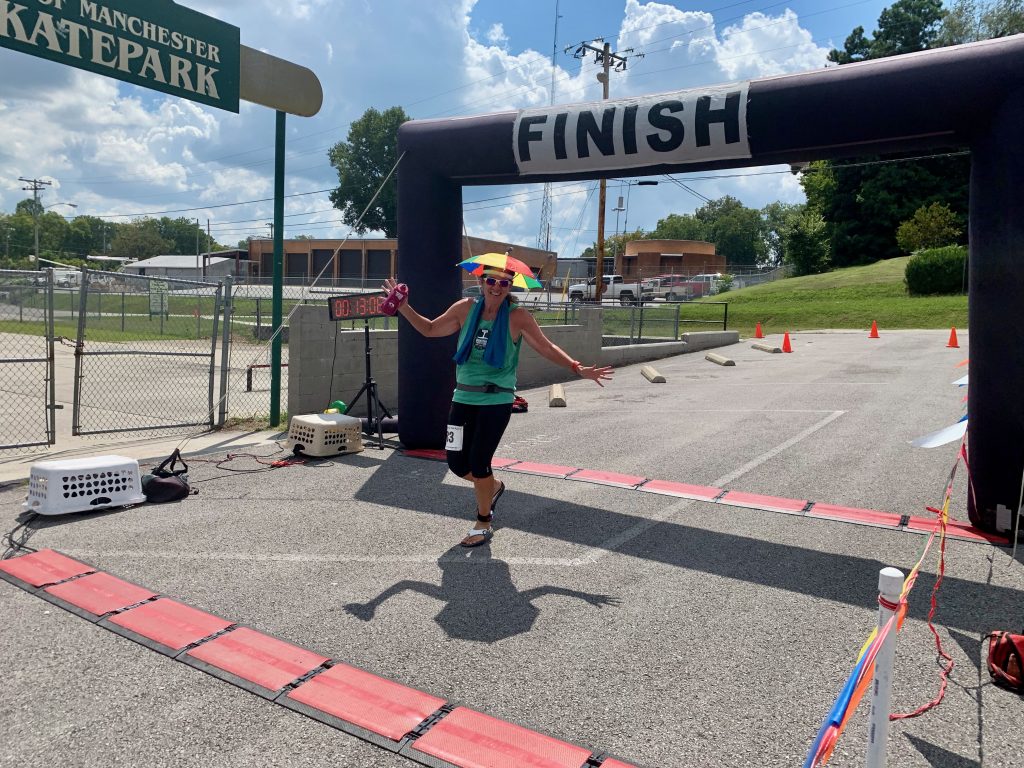
    Miriam really enjoys the ultras because she likes to go the long and uncrowded running. She found that marathons are not so enjoyable because they are so crowded that everyone looks like sardines and she listens to everyone stressing out about their pace and not enjoying the run. When she finished her marathons she felt that she still had a lot of energy even though she was going slow. She’s grateful that she found ultramarathons.

    For Miriam running is a spiritual experience, and when she started to learn more about the life of the early Christian ascetics she realized that some of the physical effects of running ultras are similar to the Christian ascetic practices.  The early Christian ascetics as well as those in other religions have done the same thing as they renounced the world and undergo voluntary suffering of the body. Ultrarunners do the same when we sign up for 100 mile races. We know that suffering awaits us.

    She never imagined she would be a runner because when she was much younger, in school, she was always told she was too tall. She was a mediocre athlete when she played all sports, basketball, softball and field field hockey. She started running in college and found she enjoyed this simple physical act of movement through running. She was about 20 years old when she started running recreationally. She met her husband in college, and cycling is his sport. Together, they’ve stayed active all their lives.

    Miriam had a serious health scare after a surgery went sideways. It was supposed to be an outpatient procedure, but problems arose that compounded into months-long treatment. To fight infection, Miriam was given Cipro, the atomic bomb of antibiotics. She found later that this drug is banned in Europe and Australia but used often in the US. She was unable to dress herself for 8 months because of Cipro poisoning. Her research, after the fact, found that this is a black-box drug that is not to be given to athletes. Her doctors were surprised that sepsis had not set in. They attributed her resilience to the fact that she was in such good physical condition. Three days before her surgery, she had placed 3rd, female, in a 24-hour ultramarathon.
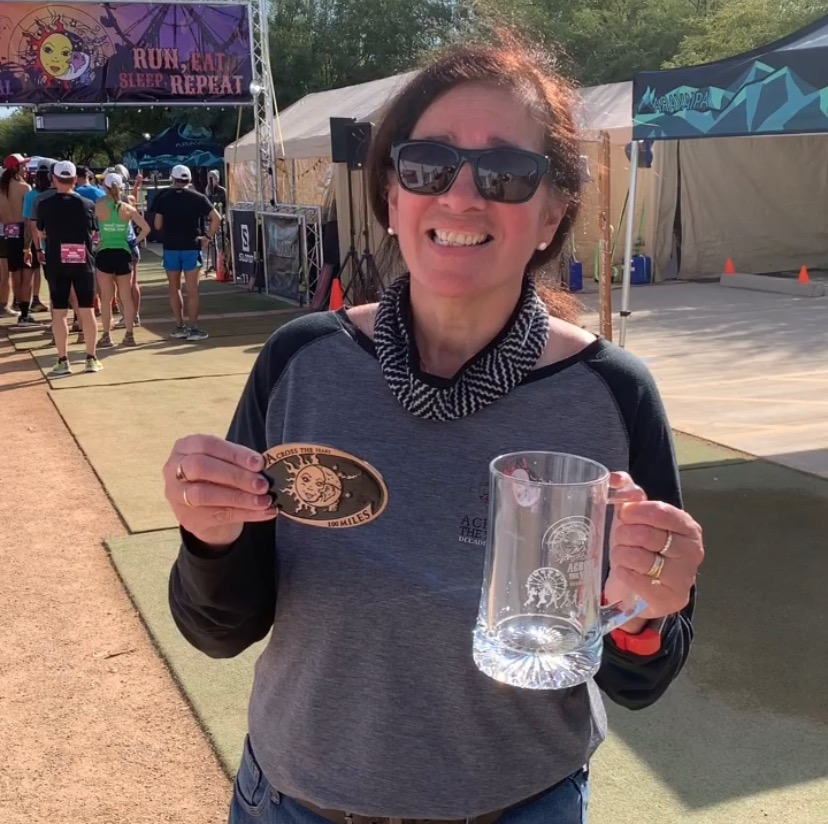
    She is training right now for the Dawn to Dusk to Dawn 24 hour track ultra. She is hoping for no rain this year because in 2019 it rained for 11 hours. In August she has a 12-hour Loopy Loop ultra, running in a park. And she’s registered for the Hainesport 24 Hour Endurance run. 

    Links:

    https://www.miriamdiazgilbert.com/

    https://www.linkedin.com/in/miriamdiazgilbert/

    https://www.instagram.com/ultramiriam/

  • Plan for mile 73

    Plan for mile 73

    Speaker’s notes

    Talking with running friends about distance we like to run.

    “50 miles is too short. The race doesn’t really get interesting until you’ve gone 60 miles.”

    I found the same thing when I first ran 50 miles.

    I was proud I’d met my goal. It took effort and mindset to keep going.

    Next morning I went to cheer for friend in the 100.

    He was at mile 87. I looked at his face and said, “I never got to experience that level running 50 miles.”

    The next year I signed up for the 100.

    My wife asked me “Why?”

    I didn’t have an answer right away. All I knew was that something was burning in my gut that I needed to do this.

    I finally came up with, “I need to know if I have what it takes to run that far.”

    My friend is right. It doesn’t get interesting until you’ve run 60 miles.

    My observation: Halfway through the race isn’t mile 50. It’s mile 73!

    You have to have a plan and a mindset for mile 73.

    This came to me when I heard that KU was in the final 4 again this year.

    I haven’t followed college basketball for the past 6 years.

    But I flashed on a memory from back in the 90s when Roy Williams was coaching KU. 

    Typical game – KU build a big lead in first half. Second half they’d relax and end up losing or, if they won, only by a hair.

    Recording this before the game. Don’t know how they played this time.

    This memory got me thinking about the mindset for performance – ultramarathons.

    First 50 miles isn’t the challenge. Yes, you need a plan/strategy.

    But the true test comes at 73 miles.

    The mindset you need at 73 miles is totally different from what you need at 50 miles.

    At 73 miles:

    You’re running in the dark.

    Your feet hurt.

    Your legs hurt.

    You’re chafing in places you never expected to.

    Something unexpected has happened.

    You don’t want to eat what you need to.

    Your mind is telling you why all of the above will be over if you quit.

    What often happens at mile 50 is you get a “confidence cushion.”

    You’ve pushed through a few challenges. But you’re doing well. Maybe even ahead of your goal pace.

    Like KU – go into half-time w/ a comfortable lead.

    Confidence cushion makes your mindset relax.

    1. Lose focus
    2. Forget the fundamentals

    Remember: Mile 73 is the halfway point.

    Ultramarathon mindset is for life

    Same happens when you set goals.

    Weight loss for example.

    Lose 10 pounds or more.

    Lose focus.

    Social pressure, or decide to reward yourself.

    Once, twice, three times

    Gain 5 pounds back.

    Lose focus.

    Neglect the fundamentals.

    The strategy for mile 73 and beyond.

    1. Plan to finish

    Set your mind on reaching the outcome you want. Remember your halfway point isn’t mile 50.

    1. Adapt to changes and challenges

    Every race is different. You can’t plan for every contingency. Adapt, improvise, and keep moving forward.

    1. Focus on the fundamentals.

    Ultra: manage fuel, hydration, and energy. Run the mile you are in. Keep moving forward.

    This strategy works for any goal you have, in running or in life.

    Life is not a sprint, it’s not even a marathon. Life is an ultramarathon.

    And you need an ultramarathon mindset to succeed. 

    As an ultramarathon mindset coach, I work to help you develop these strategies to get you on your way to whatever EPIC THING you want to achieve. 

    Running 100 mile, writing a book, starting a business, doing stand-up comedy.

    What is the thing that makes your soul come alive. That’s your EPIC THING.

    Contact me at ultramindsetpodcast.run for a free 25 minute “mindset reset” consultation. I will help you with the biggest obstacle you feel is blocking you.

  • Mental Performance Scholar – Andrew Gardner

    Mental Performance Scholar – Andrew Gardner

    Mindset for setting goals and achieving them

    Andrew Gardner is a scholar of mental performance. He is a clinical psychologist and his area of expertise and interest is thinking skills, he evaluates people’s cognition as a clinical neuropsychologist. His particular area of research is helping athletes who are suffering from or at risk of concussion from playing “collision sports.” He has worked with many elite athletes and at the community and grassroots level in injury prevention, injury assessment and a research program that consists of analyzing retired players and the possible long term consequences of a career in contact and collision sports. 

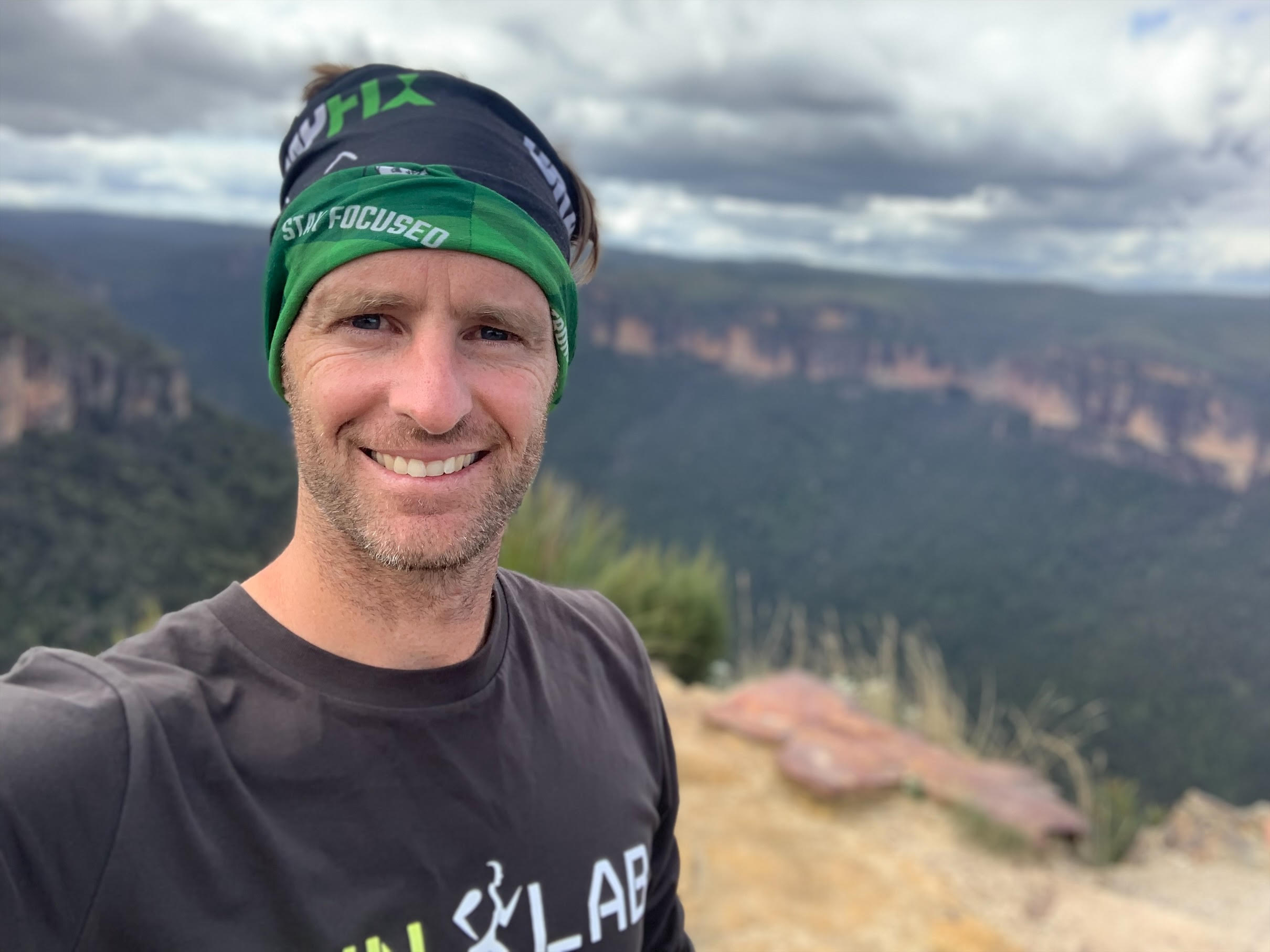
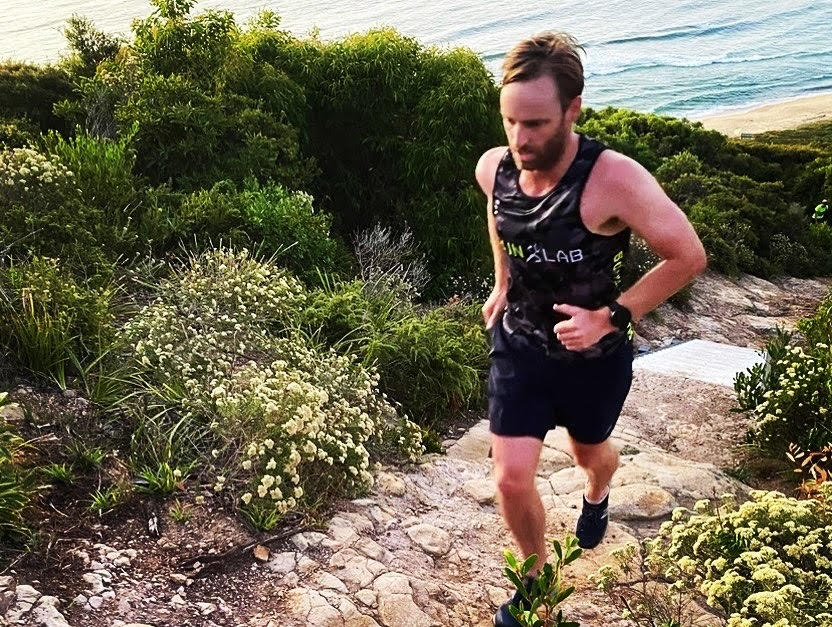
    This year he will be running one of the toughest trail marathons in Australia, 45 kilometers in the Blue Mountains in Sydney. He plans to be competitive, but he will keep in mind that his race at the Boston Marathon comes shortly after this, and that is his A-race for this year.

    He says that as a lot of people know, running is huge for mental health. It’s yourself being active that creates the endorphins kicking inside the brain. The reward system from these endorphins can be a huge boost to help keep people from falling into depression.

    Andrew was always involved in running, but he never took it that seriously. When he was forced to be working from home, he began to take it more seriously, making time to go run. He joined a local running club  and it was actually when he started working from home and had a little bit more time to be able to get out and run, and he joined a local running club. The club gave him structure and a systematic training schedule.

    The head coach and founder is an elite level runner who won the Tarawara ultramarathon in New Zealand. He broke the course record by 45 minutes. He also had qualified for the Olympics for the marathon to represent Australia. The club is structured like the school system, in 10-week terms. They focus on different training objectives within each term: strength, hills, speed.  Andrew is the mental performance coach for the club.

    One of the things he coaches the members on is self-image. What you believe to be true, your mind will deliver to you. If you believe you are a slow runner and that you can’t run as fast as the other runners in the race, you won’t perform well. He teaches strategies for how to grow self-image and how to keep self-image from shrinking.

    He also teaches about goals and structures. It’s not enough to have a single goal, like running a sub-3hr marathon. You also have to have goals for the training blocks you need to get you to your main goal. And you have to put structures in place to support these goals. He calls these “process goals.” They support the “outcome goal” or the main goal you set. He points out that the process goals you have control over. The outcome goal is less certain because there are other factors that can impact that outcome. Ultramarathon runners are familiar with these unexpected challenges on race day!

    In the club they also work a lot on motivation and key strategies to stay motivated. Andrew says that one of the most important things he learned is that life is really a game of strategy. It’s not about talent. If you have the right strategy, you can achieve anything you want. They talk about the fear of failure, and the strategies for not worrying about what people think of you. They focus on learning from the outcome.

    Andrew says it’s important to learn how to get rid of bad thoughts, get back to the present moment and move forward. He teaches mental imagery to help accomplish this state.He says that, if you can make these images, the brain can’t distinguish between what’s real and what’s imagination. 

    If someone is having difficulty creating those mental images, he recommends looking in your memory bank to a time when you executed really well. Go back there and rehearse what happened and imagine yourself doing it again and getting stronger. Once you experience the feelings, sights, smells, and experiences of that moment, shift your image in your imagination into your future and see your success.

    Andrew ran in the UTA Australia, a 100K trail race, but unfortunately his leg slipped to the side and he almost fell. He tweaked a muscle and nursed it for a few more kilometers before deciding to drop. He woke up the next day feeling fine. So two weeks later he went with some friends and ran a 100K course to finish what he had started.

    He says that we can’t regret what happened, that the way to process it should be to learn from the lessons. In that race he could have done himself a lot of damage if he followed the 45 k that was left. For him before going into a race you have to ask yourself what could potentially happen and know if you have a strategy to get there. That’s what they talk about in his club. They plan all the possible scenarios that could happen and what would be the decisions they would make as a result. For example Andrew says that  if he gets injured in the Boston Marathon he’s going to finish that race no matter what. That is his main goal race for the year and he will finish.

    The Boston Marathon has a charity and the fundraiser Andrew has chosen goes to the Spaulding Rehabilitation Hospital which is based in Charlestown, right in the heart of the city of Boston.

    Andrew loves trials, he loves exploring new things. When he began running, he ran parkruns on the weekends and ran a few miles as fast as he could a few days a week. Most of Andrew’s runs now are long and slow, and then he has a couple of interval sessions. He prefers to make sure of distance and endurance over speed.


    Connect with Andrew:

    Instagram: https://www.instagram.com/the_ultra_mentality/

    Instagram: https://www.instagram.com/runlabhq/

    Boston Marathon charity: Spaulding Rehabilitation Hospital

    Andrew Gardner’s bio: https://www.newcastle.edu.au/profile/andrew-gardner

  • As a Man Thinketh

    As a Man Thinketh

    Speaker Notes

    Probably heard quote: As a man thinketh, so is he.

    From Bible – Prov. 23:7

    Usually misquoted . . . like I just did.

    When this Bible verse is misquoted, it leads people to conclusions and beliefs that have the feel of sound wisdom, but are, in truth, weak and ineffective. 

    As a man thinketh, so is he.

    Motivational speakers say it. Self-help gurus say it. Mindset coaches say it.

    The common theme – your intellect . . . your thoughts regulate who you are and what kind of life you have.

    This idea is not false. 

    But it isn’t totally true.

    It is a misquote of a true statement that is in the Bible.

    Before I get to the actual quote that is Prov. 23:7 I want to talk about the common use of this statement: As a man thinketh, so is he.

    We think that who we are is what we think. (sounds confusing)

    Clearer – The thoughts we think make us who we are.

    I blame Rene Descartes for this.

    Philosopher looking for truth beyond shadow of doubt.

    He came up with: I think, therefore, I am.

    Descartes and his cronies changed the world. College – Western Civ. – influence thru history up to now.

    One result – the idea that your intellect and ability to think is what makes you who you are. I think, therefore I am. Turns into My thoughts (my intellect) determine who I am.

    Education system: Teach you how to think. (Teach what to think.)

    Smartest people are rewarded. Average or below – future is not so bright.

    Change your life? – change your thoughts.

    Books: Think and Grow Rich. Power of Positive Thinking. & scads more

    Motivational speakers. Self-help gurus. Mindset coaches. 

    Change your thoughts – change your life.

    Idea is not false.

    But not completely true.

    Eric, you’re a mindset coach! What are you saying? That what you think doesn’t matter??

    Answer: what Prov. 27:3 really says.

    As a man thinketh in his heart, so is he.

    There is a difference between thinking in your head and thinking in your heart.

    The Hebrew word is better translated as soul rather than heart.

    Who you are doesn’t come from your intellect (conscious thoughts).

    Who you are comes from your soul . . . your conscious thoughts are only one third of your soul.

    Your emotions and your will (drive, determination) make up the rest of your soul.

    Soul = mind

    Focus on conscious thoughts to change your life – you’re outnumbered.

    Unless your emotions and will (subconscious) are on board, you are stuck.

    Positive affirmations, gratitude journals, writing goals, are like trying to steer a yacht by holding an oar in the water.

    If you want to transform your life, your soul must be aligned with your goals. What you think in your heart and soul – that is who you are.

    Good news – Those thoughts are not set in stone. You choose the thoughts you think in your heart.

    But you will never change your life if you only rely on the thoughts in your head.

    As a mindset coach, I help my clients do this and become the person they want to be. 

    If I can help you, message me here.

  • Going After Adventure – Jacob Deeter

    Going After Adventure – Jacob Deeter

    Setting a goal and the mindset to reach it

    Jacob Deeter has always been active. He was involved in sports during high school and enjoys being outdoors. In the past few years, as he finished up his schooling to become a physical therapist, he started hiking and backpacking.

    During the winter break of 2020, just before Christmas, he and his fiance set out on a 6-day backpacking trip in the Great Smoky Mountains National Park. They ended up hiking 104 miles. They had to deal with freezing temperatures, 48 creek crossings, surviving with wet clothes and gear after falling in the creek, and hiking in frozen shoes for the remainder of the trip.

    At the start of 2021, Jacob set a goal to hike and backpack 500 miles over the course of the year. His clinical rotation would take him to several cities across the country. He was able to hike and backpack in Redwood National Park, Iowa, Illinois, Kansas, California, Georgia, and Colorado.

    During his time in Atlanta, he decided to hike the part of the Appalachian Trail that was in the state of Georgia. He planned his weekends to drive to the trail and hike out and back. He discovered there are private shuttle services available that will drop you off at one end of the trail and pick you up at the other. It’s like Uber or Lyft, but for hikers and backpackers. Jacob took advantage of a shuttle service for his last hike on his last section to finish his goal. 

    One of the differences between the trails in the Eastern Appalachian Mountains and the Rocky Mountains is that there are no switchbacks. The Appalachian Trail goes straight up the hills and then straight back down. The trail is at a lower elevation, but the effort is harder because the climb is steeper.

    Jacon says he probably carries 25 to 30 pounds in his backpack if he goes for a full week. He carries a hammock if backpacking alone. But he takes a tent when he and Andrea go together because they can split the weight between the two backpacks.

    The hike that took him over his 500 mile goal was his rim to rim hike of the Grand Canyon with Andrea. They went in December, so the weather was perfect. Jacob didn’t think the route was as hard as some of the other places he backpacked during the year. On the drive out they also stopped and hiked at Arches National Park in Utah.

    Jacob carries in his backpack an inflatable air mattress, an insulated bag of pillows, a cooking system with a stove and a pot and fuel, and a drip for filtered coffee, he always carries with him a water filter and after that the essentials. If it’s icy and snowy, he carries micro-tips or snowshoes. If it’s a longer trip, he can carry trekking poles. As he likes to take pictures he always carries his cell phone and always carries a battery pack with his phone that also helps with navigation and other things, but he also has a small mini tripod that he carries with him so he can set it up or take pictures at night. The food they eat is mostly things like freeze-dried food, tuna packets and things that can be put in a tortilla. They usually consume 3500 calories.

    Looking for new ways to stay in shape and find challenges, Jacob decided to practice climbing. He found a climbing gym and would go work out there for two or three hours after his shift at the clinic. So far his climbing has been mostly on inside walls, but he would like to do more outdoor climbing in the future. 

    This year he is hiking less since he is now working as a PT in one location. But he and Andrea have plans to take some weekends to find adventure out on the trails. He has a goal for both of them to hike the John Muir Trail sometime in the next three or four years. 

    The strangest thing he ever saw out on the trail was finding the wreckage of a plane on the side of a mountain when he was in Georgia.

    The phrase that defines his philosophy of life is ”it doesn’t matter how hard it is to take a step, because after you take it, it’s already behind you”.


    Connect with Jacob:

    Instagram: @jacob.deeter

  • Monday Mindset: Two Power Words & How to Use Them

    Monday Mindset: Two Power Words & How to Use Them

    Speaker notes

    Your mindset determines who you are and what kind of life you have.

    If you feel stuck or trapped in a ho-hum life, it’s because of your mindset.

    Mindset: The story you tell yourself . . . about yourself.

    When you tell a story, the words matter.
    You can use words that make you the hero of the story or you can use words that make you the victim.

    Power word 1: Only

    Only is a diminishing word. It minimizes whatever you apply it to and makes it appear and feel less significant or less important. 

    Negative: I’m only ____________.

    Only 23. Only HS grad. Only a______ (title/job/role).

    You diminish your ability and your value to yourself and others.

    Used as an excuse for why you can’t . . .  excuse for mediocrity.
    I’m only ___________, so I can’t be awesome . . . a winner . . . successful.

    Positive: It’s only ___________.

    Make something feel easier – Only a short distance. Only a few minutes. Only a little thing to do.

    Example: Run 100 miles. Mind is overwhelmed. Only have to run to next aid station (5 or 6 miles).

    Power word 2: Yet

    Possibility word

    Negative effects of Yet
    Turn the positive into a negative. 

    Whatever is going on in my life that is good (or even just OK) won’t last.

    Hasn’t happened yet . . . but you expect it to.

    Had the flu yet. Lost my job. My car hasn’t quit running.  (Runners) Knees haven’t gone bad.

    Often followed by KNOCK ON WOOD.
    Why knock on wood? Folklore belief that spirits lived in trees. Knocking on wood distracts them from making what you said come upon you.

    But how about this? Stop speaking curses over your life!

    When you look into your future and expect the worst and speak it out loud, your mind is listening.
    The words you say reflect your thoughts. Not only conscious, but unconscious. And your unconscious thoughts have the power to create your present reality and your future.

    Positive effects of Yet
    Turn around the negative. 

    Not yet.
    Whatever my situation is right now is going to change in the future.

    You’re just not good at _____.

    I don’t know how to___.

    I can’t ____.

    Use the word YET when someone tries to pull you down or put limiting beliefs on you.

    Use the word YET to turn around your negative self talk.

    Use the word YET to keep discouragement away when you’re learning something new.

    Words make up the story that is your mindset.
    Your mindset is the story you tell yourself about yourself.

    Change the words you use and you change the story, and you change your mindset, and you change your life.

    Bonus power word:

    If vs. When

    When you have a goal or project you’re working on, be careful to use when instead of if.

    If I can get my business going, I can quit my soul-sucking job.

    If I can lose weight, I’ll have clothes that fit better.

    If my body heals, I’ll be able to run again.

    Practice:

    Your self-talk.

    Conversation Jiu-Jitsu

    Your self-talk:

    Pay attention to the words coming out of your mouth and going on inside your head. Notice when you hit these power words and notice if you’re using them to help you or hurt you.

    Conversational Ju-Jitsu:

    People will say things to you and about you that can infect your mindset like a virus. Pay attention, and use these power words to reverse their negative words.

  • Testing the Limits: Dave Daniel

    Testing the Limits: Dave Daniel

    A mindset to keep moving forward

    Dave lives in Charlotte, NC,  and has a small roofing company. When he started the company he did everything himself and it was very physically demanding work, then as the company grew he started doing more office work and became very sedentary and had bad eating habits. He gained weight and in the early 2020’s he realized that what he was doing was not really the life he wanted, so he started to change his eating patterns. He started exercising consistently and got in good shape. 

    He decided to take a backpacking course with Chad Wright, a former Navy Seal and ultramarathon runner. He had always wanted to go backpacking, but didn’t know how to do it and it seemed like a good way to get into it. While there, he met several ultramarathon runners. He heard them talk about ultras, and he’d never heard of anyone running those distances. These ultra runners gave him pointers and helped him as they all hiked some tough mountain trails.

    When he got back home, the idea of running took hold. He didn’t think he was ready for an ultramarathon, so he decided to do a marathon. The only race he had done was a 5K about ten years earlier. He couldn’t find a marathon to enter so decided to go out and run 26.2 miles on his own. 

    He was going to do it at the track at the high school right outside his house, but they ended up closing it because of the covid. So he went to the park, down the road from his house, and they had some nice trails through the woods. He found a 1.1 mile loop and just ran it. It took him 9.5 hours to do that marathon, and he couldn’t walk for 2 days afterwards. He was exhausted, butt showed him what he could do.

    He was very active on Instagram because and posted his story on Instagram. His running buddies gave him a ton of encouragement along the way, and one of them, once he finished, told him that if he could do that they needed another person to join their group on a hike through Atlanta. It was 40 miles up and down mountains. 

    Dave drove to Atlanta and slept in a hotel for the night and met everyone in the morning at Stone Mountain at 4:30 am. He joined a group of about 37 people. The hike took about 15 hours. The camaraderie was great and Dave says that since you are walking for hours next to a lot of people you really take the time to get to know them. At some points they had to cheer each other on when they finally got to the last push up the mountain. The energy was high and Dave ended up again with the idea he could do even more.

    A group met for lunch the next day, and one of the guys he met told him that he had signed up for an ultramarathon coming up in a few weeks. They invited him to join them if he was crazy enough. It was the 100 mile race called the Georgia Jewel. It had 14000 feet of elevation and they give you 36 hours to do. Dave did the calculations based on his 40 mile backpack hike and thought he could do that so he signed up.

    His training for the ultra was a couple of 3 mile runs and some mountain biking. He had no experience in the world of ultras. He didn’t even know what an aid station was. He says it was a mess. He had no idea what he was doing. He remembers they started running at 4 o’clock on Friday at a moderate pace and after the first aid station he came to a long, steep climb on stone steps. He told his running buddy to go on ahead because he couldn’t keep pace on the steps. On the way back, he was so tired he was afraid he would fall off the steep steps going down. The course sweepers caught up to him and helped him to the next aid station. He wasn’t able to finish. But he did 72 miles and 10,000 feet of climbing. He says that he found his limit.

    Dave says he’s stubborn and he doesn’t like to be defeated. He found his limit, but he wanted to see if he could change it because if he could change that he could change anything else in his life.

    At that race he met a woman, and, as they were talking, he told her that he needed to find a 100 mile race that was flat and no elevation gain. He wanted to get the distance first and then work on getting the elevation. She told him about the Long Haul 100 in Tampa, and he completed his first 100 mile race there. He was helped by the camaraderie and encouragement of the trail running community there. He sprained his ankle at about mile 60 and had to do some walking, but he finished in just under 30 hours.

    In January 2021 and in February he did the calendar challenge where you must run a mile by the date on the calendar. So on February 1 you run a mile, February second you run 2 miles and so on and so forth. He ended up running 411 miles in February. The last 4 days he was running a marathon every day, and he did it even though that last week was exhausting. But he chose something hard to do which made him feel amazing afterwards.

    Tough Mudder and Ragnar

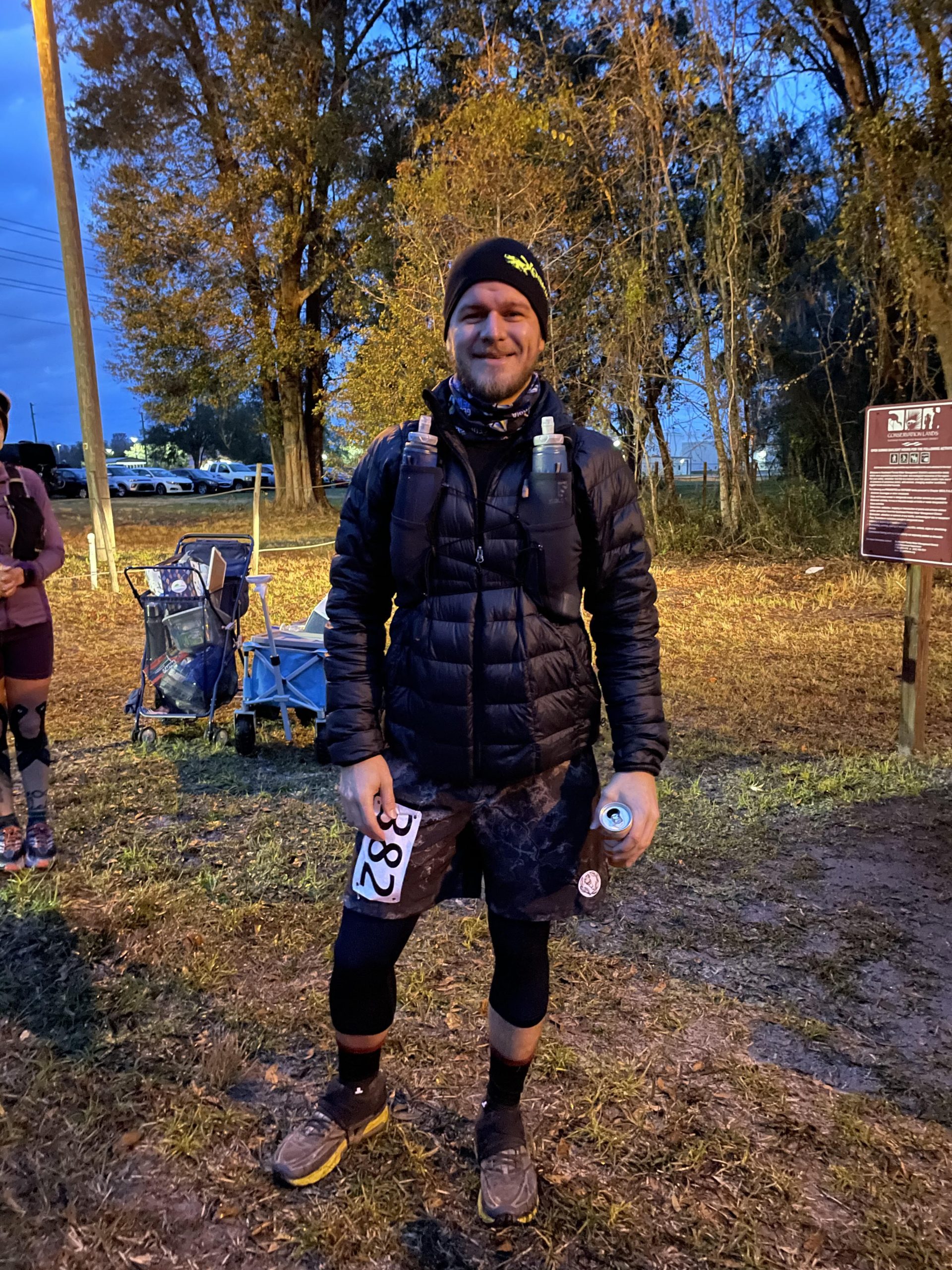
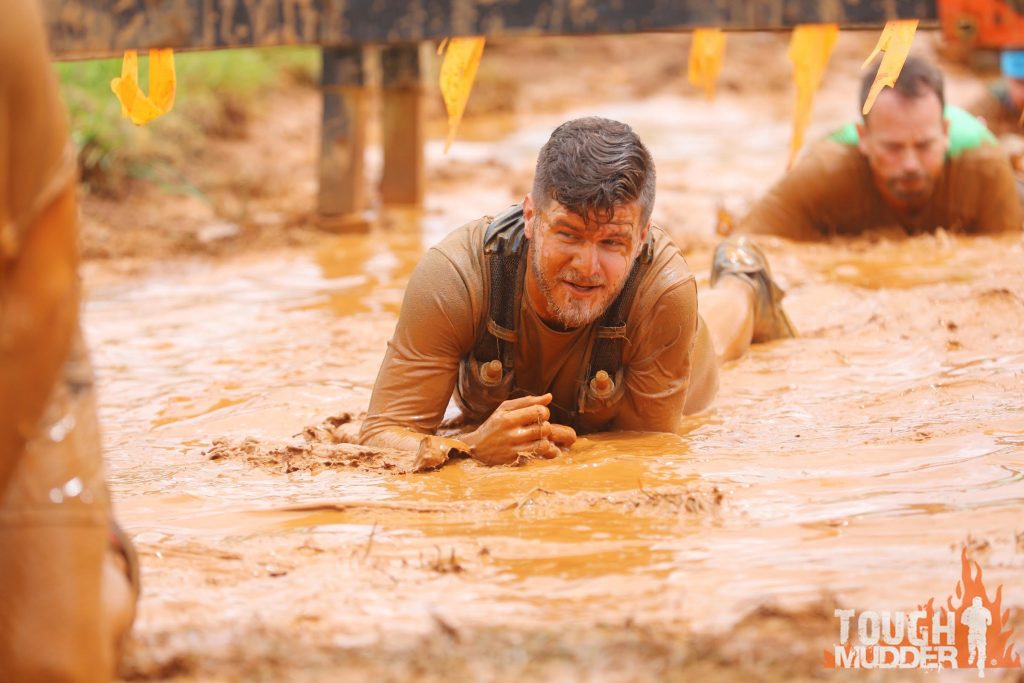
    Dave says tough mudder races have always been on his list and he decided to run one to test himself. It was a fun event because it was an adventure, and one of his friends who lives in Atlanta ended up running and doing it with him. so they had a great time together. They did it in 6 or 7 hours hours.  

    He and his friend did a Ragnar race the week after. It was a relay race, and they had 6 people on their team so they each only ran about 18 miles.

    He decided he was doing well so looked at the 1.1 mile loop of the last-man-standing race called the Midstate Mile and decided to enter. He thought to himself, “How hard can it be?” But the course took its toll. You have to be at the starting line every 20 minutes. And Dave couldn’t keep the pace. He had enough strength to continue, but ran out of time. He missed the start and was counted DNF. But everyone who was out of the race stayed to support the runners left in the race. 

    This year Dave will not be racing, he realized the lack of training he had when he first went to the last-man-standing race. He had plantar fasciitis last year right after that race and realized some rookie mistakes he was making. He had to take a break for a while, but ran the Tennessee mile at the same course in December, he did well but still has a lot of work to do before he can compete in the last-man-standing.

    Dave is working to make distance goals this year, and they will be modest. His routine now is to do strength training a couple of times a week with running at a good heart rate the other 5 days. He says that strength training is developing stabilizer muscles he didn’t realize existed several years ago. He’s also working to adjust his diet to bring in the right amount of calories so he doesn’t become exhausted due to calorie deficit.

    Bridge Questions:

    One thing Dave should always have for running is a pair of socks.

    The weirdest thing he’s seen when he’s been running is a possum that ran right under his feet and stopped.  

    The phrase that sums up his philosophy of life is “I chose this.”

    Where you are in life is the result of choices you made. And if you want to change your life, make different choices.


    Connect with Dave:

    Instagram

  • Monday Mindset: Ask Better Questions!

    Monday Mindset: Ask Better Questions!

    Your questions shape your mindset

    Tony Robbins: “The quality of your life is a direct reflection of the quality of the questions you are asking yourself

    If you want a better life, you need to ask better questions.

    You may ask, “How do I tell the difference between a good question and a bad one?” 

    First: Get away from the idea of good and bad. Instead – helpful vs. unhelpful.

    What kind of questions do you need to ask to improve your life?

    How can you use them?

    These are examples of helpful questions.

    First: How do questions influence the quality of your life?

    Your mind is designed to answer questions. 

    The instant you hear or think of a question, your mind jumps to attention like a dog hearing a food wrapper. 

    Sales people know this: “Quick question . . .”

    So, the quality of questions you ask will set your mind to work to find an answer. 

    10 words starting sentences for questions

    Who

    What

    Why

    Where

    When

    How

    If

    Is

    Can / may

    Will

    Today talk about 4 – two helpful & two unhelpful

    Unhelpful: Why & When

    Why did this happen?

    Why don’t they treat me better?

    Why can’t I lose weight?

    Why do I feel like people are judging me?

    Why did I: Buy this POS car? Take this job? Get in this relationship? Agree to help my friends move?

    Why questions are the most unhelpful questions you can ever ask.

    1. Often the answer is out of reach . . . unknowable. 
    2. Knowing the answer doesn’t matter.
    3. Answer reinforces your failure

    When questions put you in a dependent position. You’re waiting for something to happen.

    When will life get back to normal?

    When will my boss decide to give me a raise?

    When will my parents ever realize I’m an adult now?

    “When” is focused on the future.

    “When” questions mean that you’re hoping or expecting something to happen that is out of your control.

    Hope is not a strategy. 

    If you’re asking questions that begin with when, you are in a passive position waiting for other people, the government, or fate to do something to make your life better.

    Why and when are unhelpful questions when you’re looking for an epic life.

    Two powerful questions,  if you know how to use them. 

    What & How.

    I said at beginning:

    What kind of questions will improve the quality of my life?

    How do I use them?

    What and how questions set your mind on a course to find solutions. 

    And the better you craft your questions, the better solutions you’ll find.

    Practice refining your questions to make them better.

    What questions

    What kind of questions will improve my life?

    What do I need to do to improve the quality of my questions?

    What do I want for my life and what questions will I need to ask to get there?

    What do I need to do next?

    How questions

    How can I use questions to improve my life?

    How can I find ways to apply questions to make my life better?

    How can I set up a system to help me pay attention to the quality of my questions and learn how to ask better questions?

    The quality of your life comes from the quality of the questions you ask. 

    How do you ask better questions?

    Pay attention to whether the questions you’re asking are helpful or unhelpful. 

    Assignment: Pay attention to your questions. Practice asking better ones.

    Start with this one: What can I do to remind myself to ask better questions?