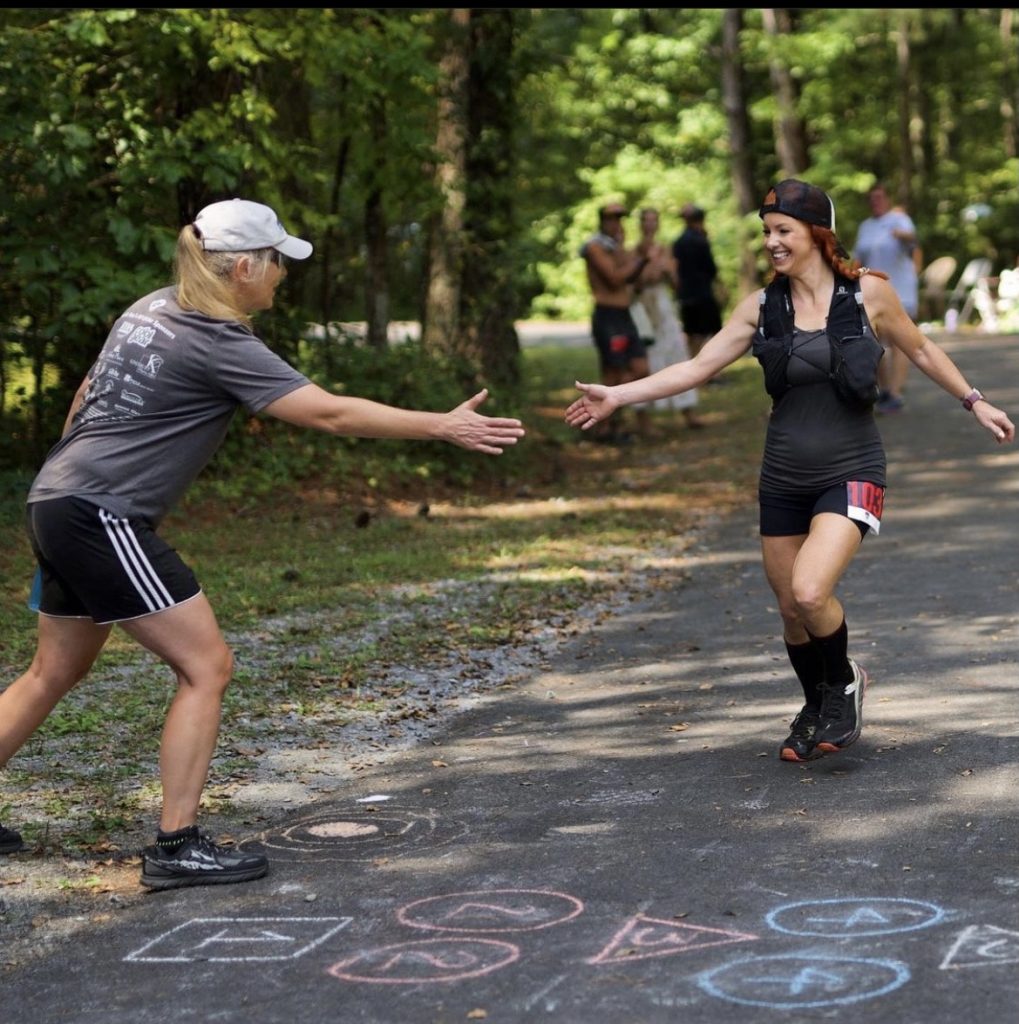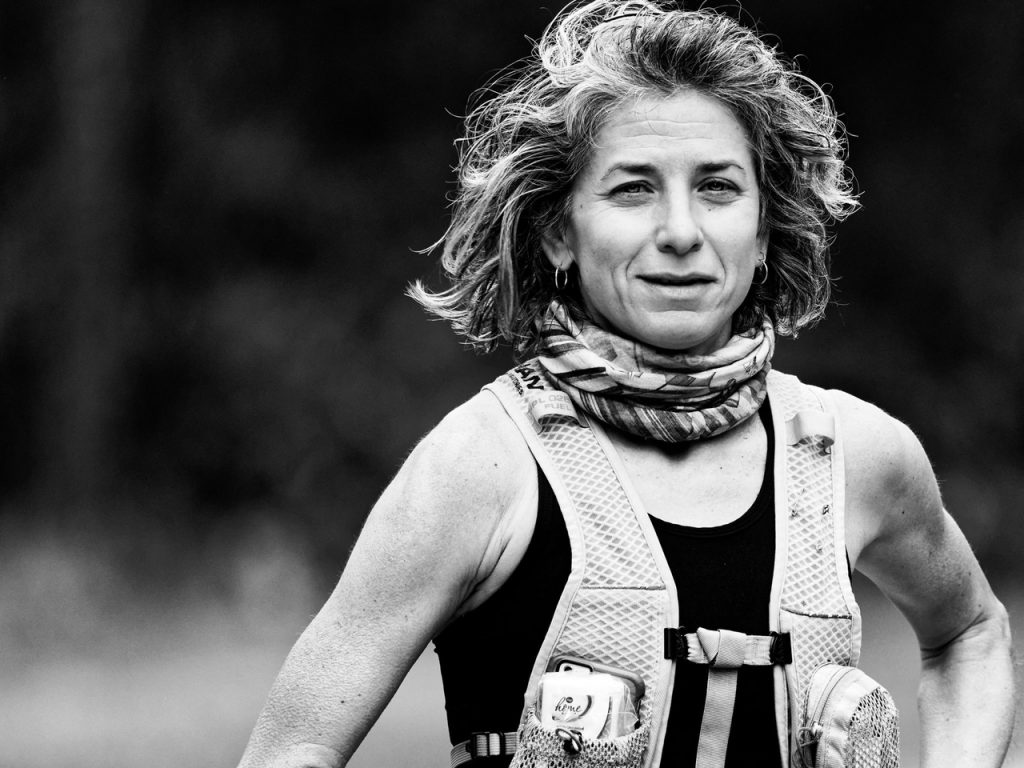
Category: Podcast

Great conversations with runners and others who have an ultramarathon mindset.

  • A Lifetime Ultramarathon Mindset: Pam Chapman-Markle

    A Lifetime Ultramarathon Mindset: Pam Chapman-Markle

    Determination to not quit

    Pam Chapman-Markle says she made fitness a priority after beating cancer at a young age and having kids. She had gained some weight, but kept active doing aerobics and teaching aerobics. She started running in her 40s because she was going through pre-menopause and her bone density started to decrease. She had the beginning stages of osteoporosis. Her doctor told her she needed more calcium in her bones and told her to start running. He said the load that running puts on the bones would cause them to grab and store the calcium as long as she kept a healthy diet. Running reversed the osteoporosis.  
    Pam raised her 3 daughters on her own. She was divorced when her youngest was 6 months old. She worked as a nurse in anesthesia. She ran to maintain her health, but she didn’t like running. She ran about 20 miles a week. After her daughters went off to college, Pam had empty nest syndrome and felt depressed. 

    The movie The Bucket List gave her the idea to look for adventure, so she had the great idea to learn to surf when she was 54 years old. One of the surgeons she talked to said she needed to do a marathon, and Pam told him she didn’t like running with people. He said, “No, an ultramarathon: 50 miles.” She decided to run a 50 mile ultramarathon and cross it off her bucket list. He suggested the Rocky Racoon. She was still running only on streets and only 20 or 30 miles a week. The 50 mile race was full when she went to register, so she entered the 100. She finished, but she injured herself. She couldn’t run for 4 months.
    Rather than checking ultramarathons off her bucket list, she decided she wanted to learn more about what her body was capable of doing and how to get better at running long distances. She trained for and entered the Keys 100 in Florida the following year. She likes running in the heat, and improved her overall time by more than three hours. She was dating a man (now her husband) who crewed her for the race. He told her, after she finished, that she had a talent for running. Her pace was steady for the entire 100 miles. He told her she should try another. He looked at the age group stats and said that with training she could be competitive.

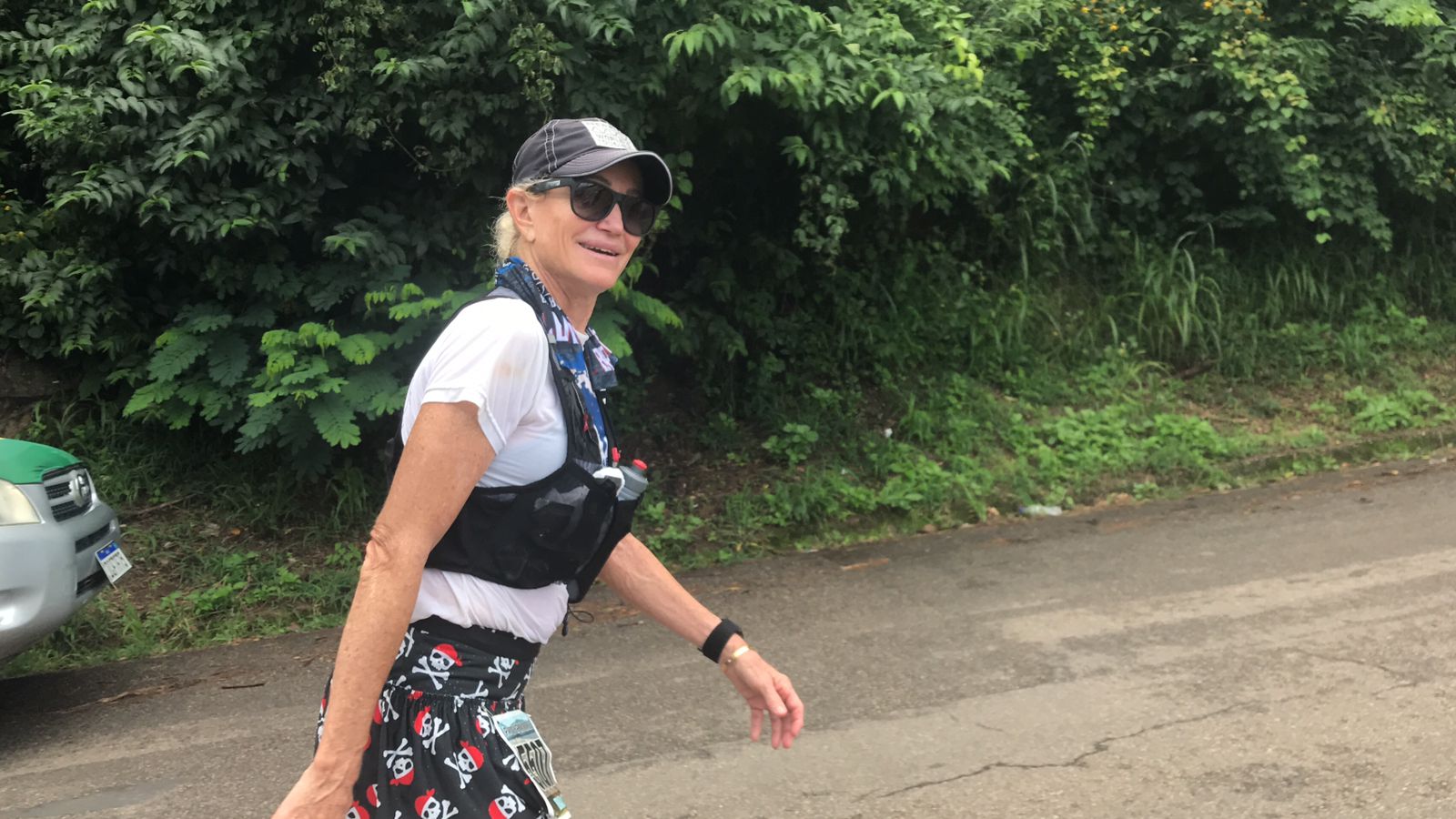
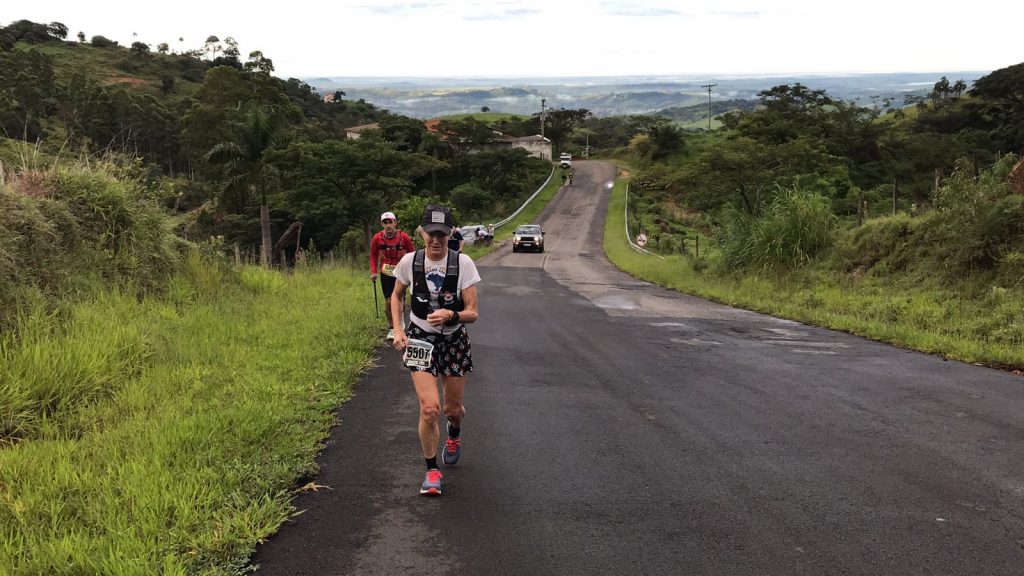
    She entered the Brazil 135, a trail race along the Caminho da Fe’, or Path of Faith, a pilgrimage route. The race was limited to only 50 entrants. She and her husband arrived and found the other entrants had support teams in multiple cars and pacers. Neither she nor her husband spoke Portuguese, and they saw the looks of doubt in the eyes of the other teams. Not only did she finish the race, she did it in under 48 hours.

    That race led her to running the Badwater 135. She did well in this race as well, and has run it four times and is going back again this year to take back her course record for the over 60 female. 

    She went back to the Brazil 135 again this year, but the race was over a different and more difficult route. The race directors tried to keep runners from going through the small villages because of the fear of Covid. This time, she had a pacer, and her husband knew what to expect for crewing her. But she still believes she can do better and will probably return to run the route again.
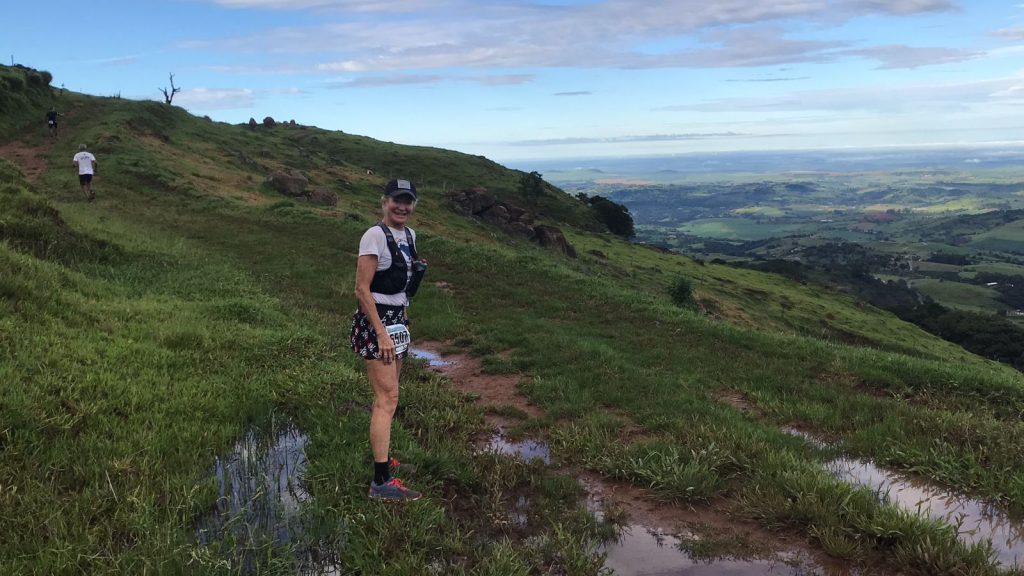
    Pam was on the end of recovering from a serious injury when she ran the Brazil 135 this year. She had a stress fracture on her femur and recovery took a full year. Three surgeons told her that she would have to get surgery and that her running days were over. She wasn’t satisfied with that answer and kept looking for other options. She found a stem cell therapy treatment that offered a solution. She had to travel to Chicago for the treatments, and they worked. She had to stop running, so walking and cycling were how she kept in shape. The healing took time, but she is back to running as she proved by her second Brazil 135.

    The mindset she has for pressing through ultramarathons and health challenges also helps her body heal. Pam says that she got away from everyone who was negative in her life, surgeons she worked with who told her things she didn’t want to hear anymore, friends who had nothing nice to say when they went to dinner and so on. She started doing a lot of meditation, imagining herself running again and even when her body wasn’t ready she did it and her body remembered and it is coming back. 

    She has a full schedule of races planned for this year. With her mindset and grit, she will do well.

    The word that defines Pam’s life philosophy is Gratitude, which for her is a very powerful thing.


    Links:

    Instagram
    Facebook
    Website 

  • Monday Mindset: Why You Need Abra Kadabra

    Monday Mindset: Why You Need Abra Kadabra

    Your mindset is shown in the words you speak

    I’m going to do a magic trick. Here’s my hat & nothing inside.

    Abra Kadabra!

    Did you see that? 

    Of course not! This is a podcast. But if you could see me, still see nothing.

    There was something missing . . . I’ll tell you what in a minute.

    What went wrong with my magic trick?

    I had the hat.

    Said the magic words.

    But no rabbit. 

    Besides the fact I’m not a magician, I only said I was going to show you a magic trick. I never said I was going to pull a rabbit out of my hat.

    Abra Kadabra won’t work if you don’t specify what you want.

    Hebrew: I will create as I speak. Or I will create as has been spoken.

    New Age: “manifesting” – What you think about and speak out loud will come to you.

    But this is not new. The Jewish people have known this for centuries. They came up with the concept of Abra Kadabra: I will create as I speak.

    Proverbs: Death and life are in the power of the tongue: and they that love it will eat the fruit thereof.

    Jewish and Xan faith: God spoke and created all there is. We are created in God’s image. Our words have power.

    Today we don’t pay much attention to the words we use.

    What’s the big deal? They’re only words. 

    Last few weeks I’ve talked about limiting beliefs.

    Real power of limiting beliefs is the effect they have on our words.

    What you believe will come out of your mouth. Listen to what you say: out loud, inner voice.

    Out loud:

    I’m not good at ________.

    Nothing ever goes right for me.

    I’m so far down I’ll never be rich.

    Nobody cares what I think.

    I’m afraid what might happen.

    Inner voice:

    I’m not good enough.

    No one cares about me.

    I’m like a magnet for disaster.

    It doesn’t matter whether you believe words themselves have power in a metaphysical sense. There is good evidence they do. Jewish, Xan, New Age, occult believe they do.

    But even if you take away the metaphysical and approach from purely psychological view – your words come from your mindset . . . and they reinforce your mindset.

    Even from this perspective, your words create your reality. As I’ve said in a past Monday Morning Mindset – you don’t experience reality as it really is. You experience reality that you create from the stories you tell yourself about the world – stories made up of words and phrases . . . 

    Abra Kadabra. I will create as I have spoken.

    You may be saying: This is kinda interesting, but SO WHAT?

    Good question: This is Monday Morning Mindset after all.

    Takeaway: Your mindset determines the life you have. Ask yourself, “How’s it working for me so far?”

    If life isn’t what you want it to be, the first step is to pay attention to the words coming out of your mouth.

    Here’s the best part: You have complete control over what you say. 

    For most of us, it doesn’t feel that way because we have a list of auto-respond phrases we use out of habit.

    So here’s my challenge for this week: 

    1. Think before you speak.
    2. Imagine that the words you say will manifest into reality.
    3. Decide if that’s the reality you want to live in this week.

    Abra Kadabra: I will create as I have spoken.

  • A Lifetime of Ultras & Still Going – Marshall Ulrich

    A Lifetime of Ultras & Still Going – Marshall Ulrich

    Full disclosure: Some of the links here may be affiliate links. That means that I will get a small percentage commission if you purchase a product or service. This does not increase the price you pay. But in some cases I might be able to offer a discount code that will save you a few bucks.

    The mindset to keep going

    Marshall Ulrich started running in the 1980’s when his wife was diagnosed with cancer. The stress caused high blood pressure. It was, for him, a choice between running or medication, and he didn’t want to take medication.

    He discovered he was pretty good at running so he began increasing his distance. Soon he was running 5 and 10K races which led to running marathons. He stuck to marathon running for several years and then discovered ultramarathons. Most of the ultramarathons were held on roads, but a few were trail races. He liked trails better, and still prefers them.

    There were not the abundance of 100 mile ultramarathons in the 1980s like there are now. But there were 4 they called the Grand Slam: Western States, Leadville, Wasatch, Angeles Crest. They were space about 3 weeks apart, and running all of them back-to-back was a challenge Marshall took on in 1987. He finished in the top 10 in all of them. He was one of the elite runners.

    In 1989 he ran all of the 100 mile ultramarathons in the US: there were only six. In addition to the four already mentioned, there were Vermont and Old Dominion. There was a lottery for Western States, and he was fortunate enough to get in for six years in a row. The seventh year he didn’t get in, so he ran Leadville instead. There were only two or three hundred runners in Leadville, and it was very low-key. Ultra runners were looked at as kind of weird, even more so than we are now.

    During the 1990s, Marshall wanted to do a transcontinental race, but he was busy with his business and raising kids. He finally did a transcontinental solo run across the United States in 2008 (18 years later) when he was 57 years old. It took him 52 days. He ran an average of 60 miles a day for 52 days straight.

    Marshall has honed his mindset skills for ultramarathon running. In his first book, he describes a process called “time compression.” It’s a mindset practice that compresses your perception of time into a shorter space. He says you can run for 10 hours and your mind can be convinced that only 3 hours have passed.

    When running Marshall goes into a meditative state. He says, ”You go down the road, and you don’t think about anything in particular, and you just let your mind go from one thing to another, so it’s more of your awareness, it’s not as conscious as if you were focused on the real world, so it’s kind of an escape. I guess that’s the best way to describe it.”

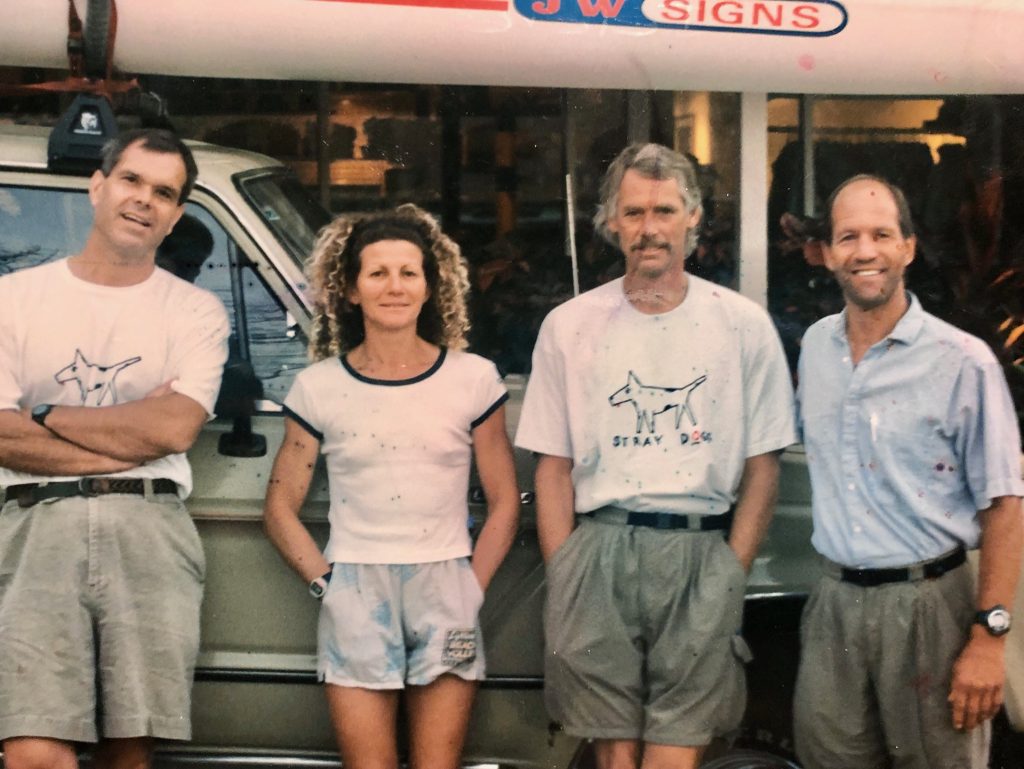
    Running ultramarathons was great, but Marshall decided to look for even more adventures. He was part of an adventure racing team that formed for the very first Eco Challenge adventure race. And his team, Stray Dogs, has competed in every Eco Challenge adventure race since. Adventure racing covered a variety of skills, running, mountain biking, paddling, hiking, horseback riding, and one time they had to ride camels. Their latest event was a few years ago in Fiji. There is a docu-series about the race on Amazon.

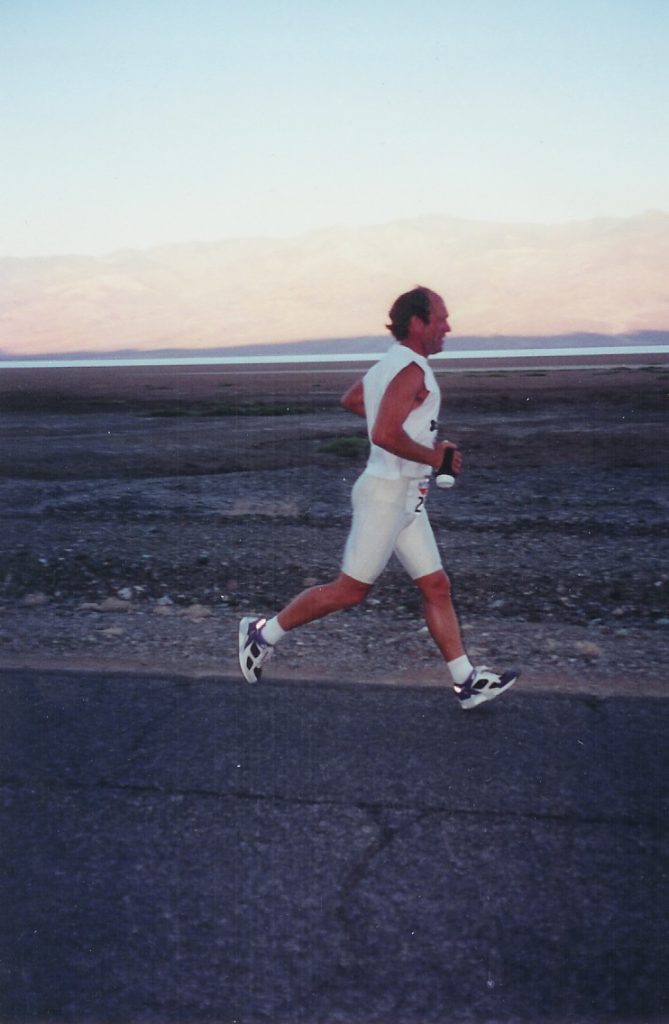
    Marshall ran the Badwater 135 when the entry fee was only $12 and runners were on the honor system while on the course. They started at the bottom of Death Valley and ran all the way to the top of Mt. Whitney. There were no checkpoints or cutoff times. And it was low-key enough that the runners went on up the trail to the top, making the race 145 miles or so. Marshall set the course record for Badwater for 2 years in a row. 

    Marshall also did a Death Valley circumnavigation, self-supported. His good friend Dave Heckman pestered him for 2 or 3 years to do it. They buried food, supplies, and over 450 gallons of water in caches spaced about 12 miles apart around the rim of Death Valley. They did their trek in July, the hottest month, and completed it with a distance of 425 miles. Marshall almost died, because they didn’t find a couple of the caches of water they had buried.

    Marshall is a firm believer that we all have a purpose in our lives. He has been involved in fundraising and awareness for charities and non-profit organizations. Currently, he is planning to  

    ite a bit of money for the Filippini religious teachers that they help and right now the most current thing is the Alzheimer’s association, his wife and he are going to go out and do a portion of Route 66 that is still intact, which is about 159 miles.

    For him you have to Make Life Meaningful, which is more than running, it’s more than the adventure of racing, it’s connecting with humanity and doing something good for other people.

    He is 70 years old and says that to stay mentally healthy it helps to be active. You can keep doing things for many years longer than most of us think.

    Bridge Questions

    The weirdest thing he has seen while out on the trails were birds like an emu but smaller. They were aggressive and could kill you by throwing themselves at you and impaling their feet in your chest.

     The food that should be at every aid station is some kind of greasy hamburger and a Coke.

    His philosophy of life is to do more than you can think you can do.

    Links:

    https://www.instagram.com/marshall.ulrich/

    https://twitter.com/marshallulrich

    https://www.facebook.com/marshallulrich/

    https://marshallulrich.com/

    Books on Amazon:
    https://amzn.to/3Ht4Tud

  • Monday Mindset: This is Your Life!

    Monday Mindset: This is Your Life!

    Where your limiting beliefs come from

    Imagine this. 5 monkeys in a room. Bananas hanging on ceiling. A ladder under the bananas.

    All monkeys sitting in corner. Occasionally one looks at bananas, but none move.

    New monkey comes in. Sees bananas, goes to bottom of ladder and starts to climb. All 5 of original monkeys attack the newcomer.

    What is gong on here?

    Story: Starts with one monkey in the room. Whenever he heads toward the ladder, he gets sprayed with cold water. After repeated tries, he gives up and sits in the corner.

    A new monkey is added. When he goes to get bananas, the first monkey attacks. Repeats until both are sitting in corner. 

    Repeat for 4 more new monkeys. 

    Original monkey is removed. But every new monkey is attacked. 

    All monkeys sit in the corner and never go near the ladder. 

    None of the monkeys know why.

    I heard this story as a “scientific study.” But it’s only a story. 

    But it is an illustration of how we as humans get our limiting beliefs.

    3 ways limiting beliefs get into your mindset.

    1. Folklore

    Beliefs and customs passed down from family and culture.

    Most of what you believe about yourself and how the world works comes from what you see, hear, and experience between 2 and 7 years old. Family has biggest influence. 

    The following years, until about 20, you are still influenced by “folklore.”

    1. The Flea Circus

    These limiting beliefs come from bumping your head against circumstances.

    Flea circus training. Jar with lid.

    Confirmation bias. You take your beliefs from Folklore and expect life to be the way you believe.

    What usually happens is that you find even more limiting factors and turn those into beliefs.

    1. You must cut off the end of the roast

    Newlyweds: Wife cooking tenderloin. Cut 3’ off the end and set it aside. The put roast in the pan.

    Husband: Why cut off the end.

    Wife: That’s the way to cook tenderloin.

    Wife calls mom: That’s what your grandma taught me.

    Mom calls grandma: My roasting pan wasn’t big enough. Had to cut off the end.

    We all have patterns of how to do things. Hang toilet paper . . . squeeze toothpaste. . . eat pizza – some eat crust first.

    Some of these beliefs serve you well. “Don’t reinvent the wheel.”

    But some of these beliefs make no sense and limit you from the kind of life you want.

    3 steps to a better life:

    1. See what you believe. Pay attention to the things you are doing and how is that working out for you.

    If you have a small oven and roast pan, trim off 3”

    But if you’re looking at the ladder and bananas and you’re sure that you aren’t supposed to climb up and get them. Then go to step 2.

    1. Ask yourself, “Why?”

    From Folklore . . . 

    Flea circus – your own failures . . . 

    Cutting the roast – tradition

    1. Ask yourself, “Why not?”

    Is the folklore true for me?

    Is the lid still on the jar?

    Do I have capacity for more – a bigger pan for the roast?

    Typical person: Going through routine that isn’t terrible. But it isn’t awesome either.

    Breaking free from limiting beliefs takes some work. Imagine it to be too hard.

    Some of us reach the point where we can’t take it any more. Is this all there is to life?

    The answer is whatever you decide.

    Limits are in your mindset.

    1. Pay attention to what you believe
    2. Why?
    3. Why not?

    Will answer the question, “No! This is not all there is to my life. I’ve only just started to know what I can do!”

  • Last Man Standing Wedding: Becca Jones

    Last Man Standing Wedding: Becca Jones

    Becca is a running coach and started running in high school, she did track and field and along the way did an ultra probably 6 or 7 years ago and fell in love with the sport, the challenge and adventure of running which is how she defines herself as a person and it’s what she thinks she was meant to do, her purpose on earth.

    She didn’t do anything after high school, she was working in the restaurant industry for about 16 years in bar management and one day she was drinking with her best friend’s brother and he told her that he wanted to do an ultra marathon on his birthday and told her to do it with him and to her that sounded great. They were doing 4 or 5 miles a couple of times a week to stay in shape.

    The first time she ran was maybe 10 miles in high school. She felt like it all fit because it was like a trail and she loved being in the woods, it was a happy place for her. She then got a small training group to run her first 50k with so she found her way in an unconventional way.

    She tells us that her first ultramarathon was tough, she ran with a friend and before that they had only run 20 miles, they had some training but not that much and realized there was a lot more they needed. She was surprised at how slow those last few miles were and how they got injured too fast, they spend so many hours running and they are not going to run that fast after 7 hours. When she finished she didn’t even want to drink her beer because she was in so much pain, she thinks it was like 8 laps and even though it was hard she thinks it was super fun unlike the southeast trail series. 

    After that she did a couple more 50’s which she liked, because she really liked the hilly stuff, hiking and stuff so the harder the better for her. She also did a couple 40 mile runs, did 100 and then her first 200 miles, all in one year.

    Her first 200 mile attempt was in Washington and it was the first time she had ever run in the west and she went out on her own, no gear or anything. She ran 131 miles. She ruptured the tendon on the top of her foot at mile 80 so everything became enormously slow and it was very painful, it made it a much more intense experience.

    She remembers feeling like a knife was being stuck in her foot, it was a very intense pain and it burned. In her recovery time she did not take that time off, what she did was bandage her foot. It took at least 3 months to heal. 

    Becca runs in sandals and tried to do a 100 the first time in sandals and said never again, she says it was the most horrible decision she ever had because the design made her so uncomfortable, her feet were so bad, she was tucking her socks under the arches to cushion her feet a little bit. But she loves sandals because she doesn’t get blisters and her feet dry out and she can go 1,000 miles in a pair of $50 sandals.

    When I asked her what the strategy was for the second time in 10 hours as a significant time reduction she said the first time was very traumatizing and she had a lot of downtime, she thinks it was like 9 hours of total downtime, it was very stressful and she really wasn’t prepared. The second time was different and much healthier and she only had about 2 hours of downtime that time.

    On the last man standing in Tennessee she did it the first year and had very good competition between Chad and Greg Armstrong and they had it again this year.

    Becca says John loves the last man standing format, it seemed like they had to work with it because it was a fixed distance and it’s hard to sell a fixed distance on a one mile loop, it just doesn’t sound as fun. They put it together and had to do it under the guise of a wedding because of all the restrictions because the governor has made an executive order that you can have as many people as you want to gather if it was a funeral or wedding.

    She was training people for 3 years for Ultras and thought she wasn’t really good, she put on that little box that she just had to stay in the same place and not advance but with all the down time, she had time to how to do the certification and learn all the things.

    Becca has a different training philosophy, she practices individualized plans, she finds them more appealing to her philosophy and core and strength training is a big part of it. In many plans they just run for the sake of running and they practice a little more low mileage, everything has a purpose and they incorporate strength training, she says her big thing is longevity and sustainability you know what it is.

    She works out all day at her job cleaning, she weights her ankles when she moves, when she scrubs the baseboards she gets in the plank position.It slows down the cleaning a little bit but it makes it really hard and she did that 2 or 3 months before the race. And in that race he didn’t have any injuries, he didn’t feel any twinges or anything bad and his body felt very strong and very prepared for all the hours of movement.

    Becca has always admired people who rock and thought she couldn’t do it. There were people out there carrying 30 pounds all the way up to 50. In that race she felt like the road was kicking her ass. John got her into that world and she said she would have to learn to carry that weight sooner or later. To do it you have to be aware of what you are doing and be aware that you are not slouching but the routes are hard and once you start getting to the top you really have to work on your posture and stay focused and make sure you are climbing with your hips like you should.

    She really works on her heart rate because it’s something that makes a difference to her and being in tune with her body because if you’re not breathing correctly and you’re going up a hill, that could cause your heart rate to skyrocket, but you can help get a better control of it if you have a proper breathing technique.

    Being in tune with her body is important to Becca, she practices meditation and is a big believer in visualization and intention, it’s her way of having the mental energy it takes to run.

    In her schedule Becca has the crucial 50, because for the 50 you get a belt and for the 0 you get a buckle, and you can only wear those two things together, they are made for each other, you can’t wear them with anything else and then she has a 100 in Colorado and it will be her first time there.

  • Monday Mindset: Trying to Kill Olympic Dreams

    Monday Mindset: Trying to Kill Olympic Dreams

    Tweet from Penny Oleksiak

    “I just googled ‘Canada’s most decorated Olympian’ and my name came up. I want to thank that teacher in high school who told me to stop swimming to focus on school (because) swimming wouldn’t get me anywhere. This is what dreams are made of,” she tweeted.

    Most of my teachers saw the vision and pushed me towards it. But that one who constantly dragged me down though,, WOAT (Worst of All-Time).”

    Oleksiak was a part of Canada’s team that won a silver medal in the women’s 4×100-meter freestyle relay and a bronze medal in the 4×100-meter medley relay. She also picked up a bronze medal in the women’s 200-meter freestyle.

    She won a gold in the 100-meter freestyle, a silver in the 100-meter butterfly and bronze medals in the 4×100-meter freestyle and 4×200-meter freestyle.

    Mindset: The story you tell yourself about yourself.

    The story we tell comes from “people who matter” in childhood and teenage years. Family & teachers. To a lesser extent, friends.

    Most of the time we believe the “people who matter” and negative words end up as mental prison walls we call “limiting beliefs.”

    Last podcast (Ep. 84) with Susan Donnelly – coach told her “don’t even try to get on the college track team.”

    She quit running. After college started running again: now has over a hundred 100 mile races.

    But some people develop an “I’ll show you” attitude.This is very rare.

    And I’m going to guess in Penny’s case that her parents were cheering her on. It was only one teacher trying to kill her dreams.

    You may not have had Olympic size dreams, but you can probably point to people in your life who were dream killers. Teachers, coaches, friends, family.

    • Be sensible
    • Think of your future
    • Don’t set yourself up for failure
    • That’s too risky
    • Wait until you retire, then go do what you want

    And even as adults, you have people who will try to keep you held back.

    Woman trying to start freelance – Husband: You have good people skills, but you know you don’t have a good mind for business.

    And, if you’re keeping score, the dream killers usually outnumber the dream builders in your life.

    There are a lot of reasons for this, but in general, the people who know you best will be the ones who try to hold you back when you decide to change your life.

    So, if you want to do something EPIC with your life. If you decide that you’ve held on to this dream long enough.

    You have to develop a strong mindset first. Your mindset has to be able to overcome the resistance of your limiting beliefs coming from your past. AND the resistance from people in your life who will feel uncomfortable when you become someone new.

    In general: Who I decide to be and what I believe about myself trumps every other opinion.

    1.  Find someone who supports you and you can trust to be truthful so you don’t end up being an arrogant asshole.
    2. Find a group of people who are going after similar goals. If the group doesn’t both challenge you and encourage you, keep looking.
  • Mindset to Run 100+ Hundred Milers – Susan Donnelly

    Mindset to Run 100+ Hundred Milers – Susan Donnelly

    Getting started as a lifelong runner

    Susan started running when she was in junior high school, right around the time when the kids begin looking for “their thing.” She saw some students running around the concrete track in white gym uniforms. She discovered that it was the track team, and she decided to join. 

    Road running and racing became popular in the United States in the late 70s, but it didn’t make it to her area. There were no “joggers” on the streets where she lived. She discovered road races when she was a freshman in high school and an upperclassman invited her to sneak away and race a 10K in a neighboring town. Since they were both on the track team, they were not supposed to enter any races other than school-sponsored ones. 

    In her senior year of high school her coach called her aside in the hallway of the gym and told her not to bother signing up for the college team. She hadn’t yet given thought to trying to get a college scholarship, but this comment elimited any confidence she had to try. When she got to college, she heard of a girl from Scotland who had received a scholarship. This became further proof that her coach was right and that she wasn’t “good enough” as a runner.

    Running for happiness

    She was miserable in her last year of college. She was working on an engineering degree, and at that time, women were not well accepted in the field. She wasn’t running at all. She was not in a good place, mentaly. She started thinking about the last time she felt happy and the first thing that came to her mind was running. That day, she decided to start over and ran a mile in the neighborhood she was living in.

    When she resumed running she started with a mile, then a 5K, then a 10K until she finally got to her first marathon. A defining moment was a visit to a local bookstore. She found a black and white magazine called “Wild Trails.” She never imagined that trail running was even a thing. She saw a picture of a woman running a race called “Western States” and she decided that she was going to be that woman, a trail runner in Western States.

    At the time she felt that trail running and her goal for Western States was love at first sight, but the truth is she put it aside for 10 years. She was at the end of her senior year of college, and she had to make an extreme effort because she had failed her first class and had to wait a whole year to retake it. This added an extra year to her time in college. She was focused on graduating and getting a job to support herself. But once she settled into a regular job, the idea of running once again came back to her.

    It  was in the early nineties, there was no internet. She found another magazine for runners, and in the very back was a small classified ad that read “ultramarathon.” She blindly signed up and entered a 50 mile race because it was close, and she began training. She ended up with appendicitis a few weeks before the race. She thought she could recover quickly and run another ultramarathon in a few months, but she had a setback and another surgery. So she laid off of running and focused on her work.

    In 1991 she moved back to the town where she grew up in Tennessee, and by chance she joined a local running group. She joined the group for a New Year’s Day run. She casually mentioned that she was interested in ultramarathons. The people told her there was a guy who was part of the group who ran ultramarathons and that she should talk to him. They connected and became friends and training partners. He introduced her to other veteran ultramarathon runners. The group of them were all in the same town, and it was likely they were the only ultramarathon trail runners in the state of Tennessee at that time.

    First ultramarathon

    Her first ultramarathon was actually a road race called the Strolling Jim 40. It was close and running on the road was familiar to her. The race differed from the traditional marathon in that the course was marked with arrows painted on the road instead of volunteers giving directions. Aid stations were jugs of water stashed along the side of the road. She made her transition to the trails, eventually she got to do a 50K in Alabama, a very old and very technical trail. She fell in love with trails and decided that it was where she wanted to focus her efforts on.

    Her first 100 was the Superior 100 in Minnesota. She thought it was perfect. The weather in September would be mild, and it was out of town so that none of her running friends would know if she had a DNF. She and her friends would run 30 miles together on the weekends, so she ran a “stealth” 40 mile training run to prepare for the race. She ran an extra 10 miles without telling anyone. She has since run 131 races of 100 miles each. It is her favorite distance, and is the one she plans to do for many years.

    Susan got into life coaching because she didn’t like her first life experience with a DNF. She saw people going through the same thing and quitting the sport. She didn’t want to end up doing that because she really loved running ultramarathons.

    Susan works to help her clients see that their thoughts don’t define them. Thoughts determine results, so questioning them is a method that can help you evaluate whether those thoughts are helping or hurting you. She is grateful that she started her running journey before social media. She wasn’t influenced by the “comparison trap” some runners fall into. She was able to approach ultra running with a sense of curiosity and a mindset to discover what she was capable of. She kept the mindset that it was fun and an adventure.

    She keeps this sense of adventure, curiosity, and wonder as an approach to every race. Every race is a new experience for her, even if she’s done it before. The variables are always different:people, weather, race director, course, you and your physical condition, and that’s one of the things she likes most about it. The unknown can be scary for people, but she revels in the unknown because you don’t know what’s going to happen in the next mile.

    Susan’s clients are usually people who are going to tackle a 100-miler for the first time, or someone who wants to move up in distance or is facing a big race or their dream race. But she also has clients who need life coaching like getting their family time back but also having some limits to still have time to run. And also anyone who is willing to change their mindset and work on it.


    Connect with Susan

    www.susanidonnelly.com

    Instagram

    https://www.instagram.com/susanidonnelly/
    https://www.instagram.com/susanidonnelly/
  • The Pursuit of Happiness

    The Pursuit of Happiness

    Speaking Notes

    We hold these truths to be self-evident, that all men are created equal, that they are endowed by their Creator with certain unalienable Rights, that among these are Life, Liberty and the pursuit of Happiness.

    How are you doing in your pursuit of happiness? If you feel like you’re playing a game of hide and seek, you’re not alone. Only 19% of Americans describe themselves as “very happy.”

    I think we have the wrong mindset about the pursuit of happiness.

    Our idea is that we chase after it. Hunt it down. Go out and find it.

    What we think we need to be happy

    • “Right” Career
    • Perfect house
    • Car
    • Money
    • Attention
    • Accomplishments
    • Relationship

    When I get married . . . when I get a better job . . . when we have kids . . . if I could find a partner who understands my needs.

    Problem is that it’s never enough. You won’t be happy if you think you have to find it “out there” somewhere.

    What we believe: Have Do Be
    If I can only have the things I want . . . I could do the things I want . . . so then I’ll be happy.

    Reality:Be Do Have
    You have to Be the kind of person who does what it takes to have what you want.

    Happiness is an inside job.

    You mean that all I have to do is decide to be happy?
    Yes . . . and no.
    No, you can’t just decide to flip a switch and be happy.
    Yes, happiness comes from making a decision.

    You can decide to be happy when you are living in and acting from your identity.
    When you know who you are you respond to circumstances rather than react to them. 

    Ultramarathon example: Marathon runners wanting to run ultramarathon

    Runner 1 – Plans splits for each mile. Sets aggressive goal for total time. Motivation is to prove his ability as a runner and go to next level.

    Runner 2 – Plans pace and strategy. Has A, B, and C goals. Motivation is that she thinks she has more inside than just 26.2 miles.

    Both runners DNF at mile 24. Runner 1 – I’m a failure. What will people think? Runner 2 – I failed. I will learn and do better next time.

    The best part about living from your identity – you decide who you are.

    Pursuit of happiness isn’t out there. It’s in you. It’s becoming the best version of yourself. It’s about having confidence and satisfaction with who you are.

    Takeaway: The most important mindset work you can do is to know who you are. You don’t “find yourself.” You create yourself.